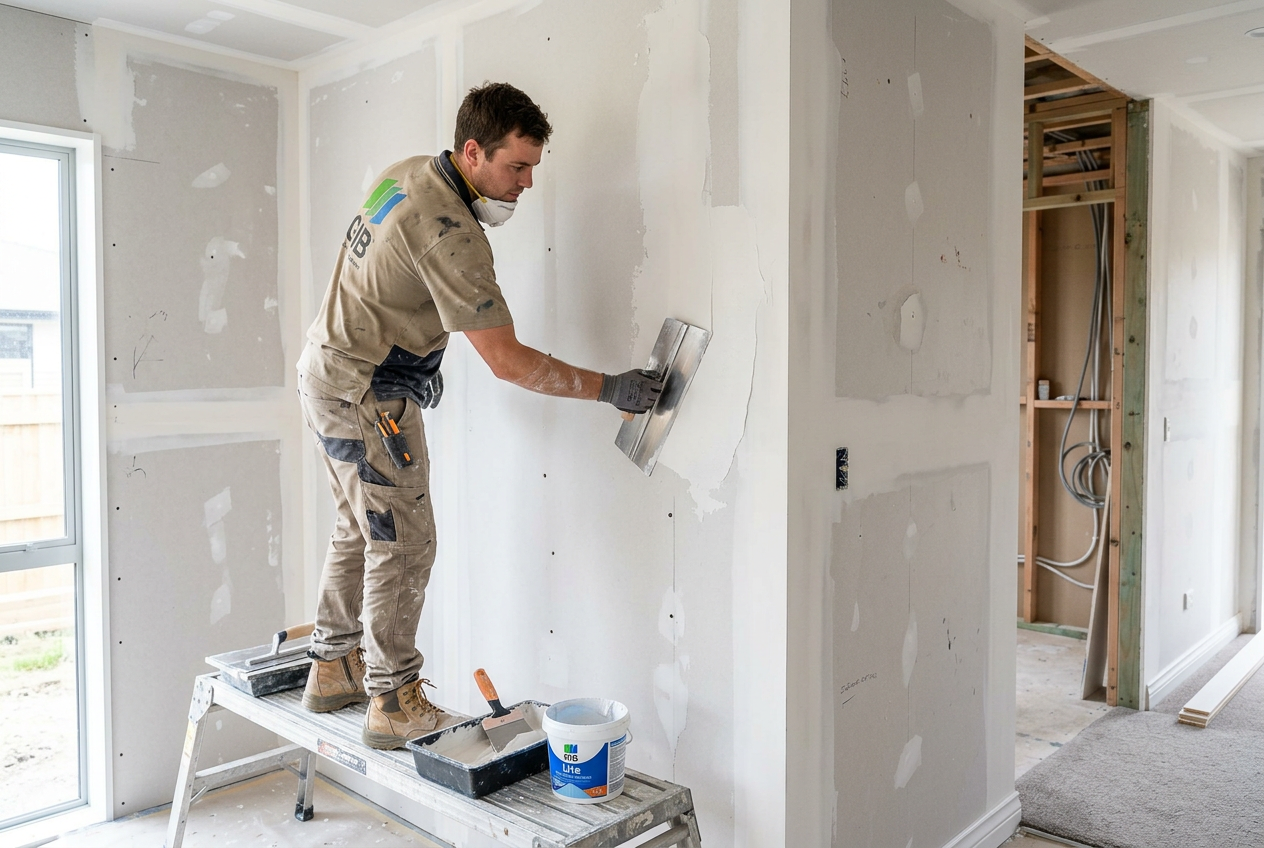
If you're building or re-cladding a home in New Zealand, you've likely come across two popular plaster-based exterior wall systems: solid plaster and EIFS (Exterior Insulation and Finish System). While they can look similar from the street, they are quite different in how they're built, how they perform, and what they cost to maintain. Here's what every NZ homeowner should know before making a decision.
What Is Solid Plaster?
Solid plaster cladding is a traditional system where a cement-based render is applied directly over a rigid substrate — typically fibre cement sheet (such as James Hardie products), masonry, or a metal lath system. The plaster is usually applied in two or three coats, building up to a total thickness of around 20–25 mm. It has been used in New Zealand for well over a century and is well understood by the building industry.
Solid plaster is dense and hard, giving walls a robust, solid feel when knocked. It provides good fire resistance and is relatively resistant to impact damage.
What Is EIFS?
EIFS (pronounced "eefs") stands for Exterior Insulation and Finish System. It is sometimes called composite plaster, textured coating, or by brand names common in the NZ market. In an EIFS system, a layer of rigid polystyrene (EPS) insulation board is fixed to the wall framing or substrate, then coated with a reinforced base coat (embedded with fibreglass mesh), and finished with a textured acrylic or polymer render.
The total plaster thickness in EIFS is much thinner — typically only 5–10 mm of render over the insulation board. The insulation layer itself can range from around 25 mm to 100 mm or more, depending on the thermal performance required.
Key Differences at a Glance
| Feature | Solid Plaster | EIFS |
|---|---|---|
| Thickness (render) | ~20–25 mm | ~5–10 mm |
| Insulation built in | No | Yes (EPS board) |
| Impact resistance | High | Lower (softer surface) |
| Thermal performance | Moderate | Excellent |
| Weight on structure | Heavier | Much lighter |
| Moisture risk if breached | Moderate | Higher (requires careful detailing) |
| Typical lifespan | Very long (decades) | Long, with maintenance |
| Relative installed cost | Moderate–high | Moderate–high |
Thermal Performance and the NZ Building Code
One of the biggest practical differences is thermal performance. EIFS wraps the building in a continuous layer of insulation, which significantly reduces thermal bridging through the framing. This can make a real difference to heating and cooling costs, particularly in colder regions like Canterbury, Otago, or the Central Plateau.
New Zealand's Building Code clause H1 sets minimum energy efficiency requirements, and EIFS can help meet or exceed these more easily than solid plaster alone. If you're building new or doing a significant renovation, it's worth checking the current H1 requirements with your designer or council.
BRANZ has published extensive research on the thermal and moisture performance of both cladding types, and their guidance is a valuable resource for builders and homeowners alike.
Moisture and the Leaky Building Legacy
Many New Zealanders associate EIFS with the leaky building crisis of the late 1990s and 2000s. To be clear: EIFS itself was not inherently flawed — the problems arose from poor detailing, inadequate cavity drainage, and the use of direct-fixed (no cavity) systems that trapped moisture.
Modern EIFS installations in NZ must comply with NZS 3604 (for timber-framed buildings) and Building Code clause E2 (External Moisture). A drained and ventilated cavity is now standard practice and is generally required. Properly installed, modern EIFS performs well — but the detailing around windows, penetrations, and junctions is absolutely critical.
Solid plaster systems also require careful detailing, but because the render itself is thicker and more vapour-permeable, they are generally considered more forgiving if minor moisture ingress occurs.
Impact Resistance and Durability
Solid plaster wins clearly on impact resistance. The dense cement render is hard to dent or crack from everyday knocks. EIFS, with its soft polystyrene core, can be dented or punctured more easily — this is a consideration if the lower walls of your home are exposed to foot traffic, garden equipment, or children playing.
Some EIFS systems offer higher-density EPS or additional reinforcing mesh layers in vulnerable areas to improve impact resistance, so ask your renderer about these options.
Maintenance Requirements
Both systems require periodic maintenance, but the nature of that maintenance differs:
- Solid plaster may develop hairline cracks over time as the building moves. These should be filled and repainted promptly to prevent moisture ingress.
- EIFS relies heavily on its acrylic finish coat for weather resistance. This coating needs to be kept in good condition and repainted on a regular cycle (typically every 10–15 years, depending on exposure and product). Sealants around windows and penetrations must also be inspected and replaced as needed.
For repainting either system, consult a specialist renderer or a paint supplier like Resene or Dulux to ensure you use a compatible, breathable exterior coating.
When to Call a Professional
Both solid plaster and EIFS installation are specialist trades work. Incorrect installation — particularly around flashings, junctions, and penetrations — is one of the leading causes of building defects in NZ. Always use a qualified, experienced renderer.
If your home has existing plaster cladding showing signs of cracking, staining, or moisture damage, get a professional assessment before attempting DIY repairs. Significant re-cladding work may require a building consent from your local council, and work on certain elements (such as structural framing) must be carried out or supervised by a Licensed Building Practitioner (LBP).
You can find qualified local renderers and LBPs on tradedirectory.co.nz.