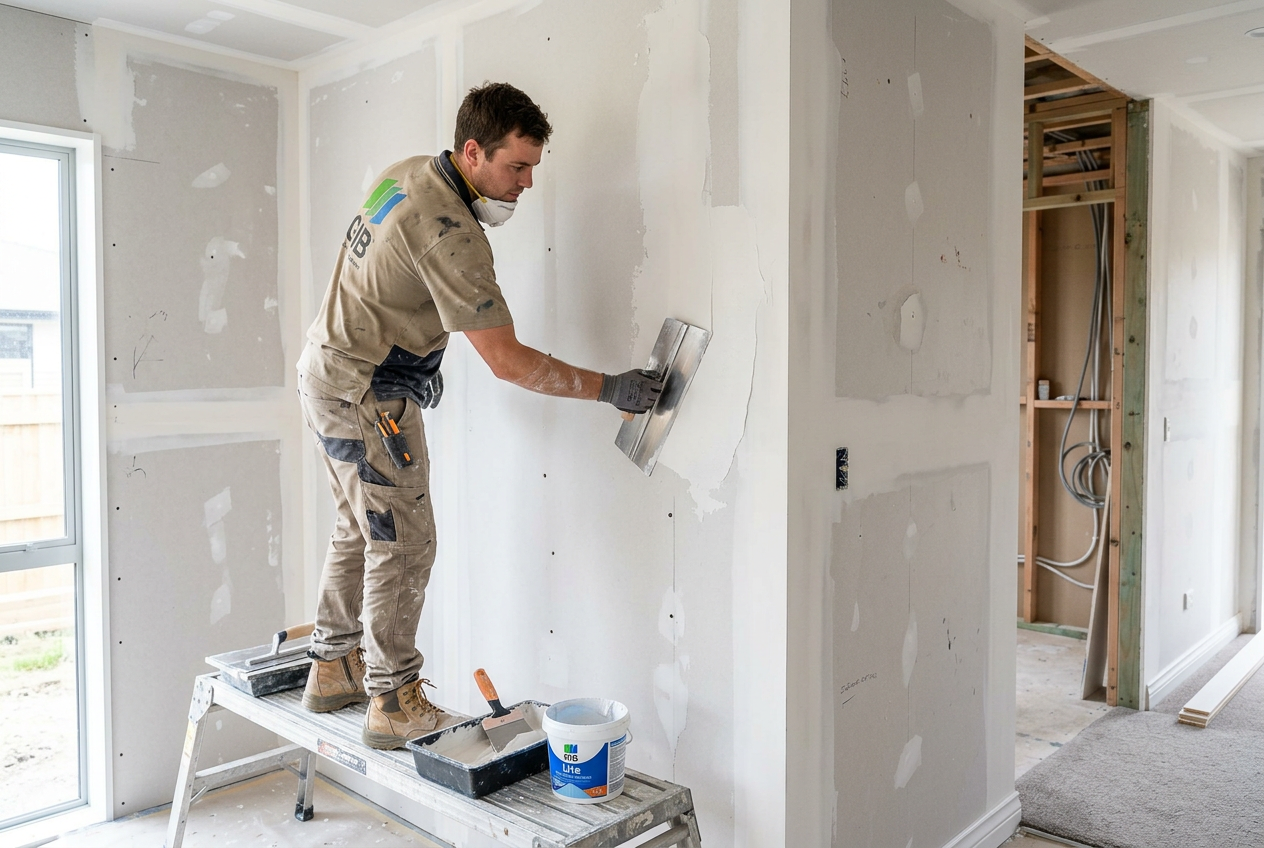
If you've ever asked a tradie to quote on your walls and heard three different terms thrown around, you're not alone. Plasterboard, GIB and plaster are often used interchangeably in New Zealand, but they're not quite the same thing. Understanding the difference helps you have better conversations with tradespeople and make smarter decisions for your home.
What Is Plasterboard?
Plasterboard (also called drywall or wallboard) is a manufactured sheet product made from a gypsum plaster core sandwiched between two layers of paper or fibreglass facing. It's fixed to timber or steel framing to form interior walls and ceilings. Plasterboard is the dominant interior lining system used in New Zealand homes today because it's fast to install, relatively affordable, and provides good fire resistance and acoustic performance when used correctly.
Plasterboard comes in a range of types suited to different situations:
- Standard board – for general walls and ceilings
- Moisture-resistant board – for bathrooms and laundries (important under the NZ Building Code's E3 Internal Moisture requirements)
- Fire-rated board – for walls requiring a specific fire-resistance level
- Acoustic board – for improved sound insulation between rooms
So What Is GIB?
GIB is simply a brand name — it's New Zealand's most recognised manufacturer of plasterboard, and their products are so widely used here that "GIB" has become the everyday Kiwi term for plasterboard in general, much like "Sellotape" for sticky tape. GIB is made locally by Winstone Wallboards and offers a comprehensive range of boards, jointing systems, and technical support tailored to New Zealand conditions.
When a builder or plasterer says "we'll GIB the walls," they mean they'll line the walls with plasterboard — it may or may not literally be the GIB brand, but the process is the same. Other plasterboard brands are available in NZ, but GIB dominates the market and their installation guidelines are widely referenced by tradespeople and building inspectors alike.
What Is Plaster?
Plaster is a broader term that refers to a wet, workable material applied by hand or machine to create a smooth, hard surface. Traditionally, plaster meant a lime- or cement-based mix applied in multiple coats directly to brick, stone, or a timber-and-mesh substrate (called lath and plaster). Many older New Zealand homes — particularly those built before the 1970s — have this type of solid plaster construction, which is noticeably thicker and harder than modern plasterboard linings.
Today, "plaster" in a residential context most often refers to the stopping compounds and finishing coats applied over plasterboard joints, screw holes, and corners to create a seamless, paint-ready surface. This process is called stopping or plastering, and it's a skilled trade in its own right.
How They Work Together
In a modern NZ build or renovation, plasterboard and plaster work as a system:
| Step | What happens | Material used |
|---|---|---|
| 1. Lining | Sheets fixed to framing | Plasterboard (e.g. GIB) |
| 2. Stopping | Joints, screws and corners filled | Stopping compound / plaster |
| 3. Sanding | Surface smoothed | Abrasive paper |
| 4. Finishing | Final skim coat (optional) | Finish plaster or compound |
| 5. Painting | Colour and protection applied | Paint (e.g. Resene or Dulux) |
The quality of the stopping work has a huge impact on the final look — poor stopping shows up badly under paint, especially with low-sheen finishes or raking light.
Old Plaster vs Modern Plasterboard
If you're renovating an older home, you may be dealing with solid plaster walls rather than plasterboard. Here's how to tell the difference:
- Solid plaster feels very hard and dense, is usually 15–25 mm thick, and makes a dull thud when knocked
- Plasterboard feels slightly hollow, is typically 10–13 mm thick, and makes a more resonant sound when tapped
Repairing solid plaster requires different skills and materials than patching plasterboard. A qualified plasterer will assess which system you have and recommend the right approach. BRANZ has useful technical guidance on both systems for those wanting to dig deeper.
Wet Areas and the NZ Building Code
In bathrooms, ensuites, and laundries, the choice of plasterboard matters legally. The NZ Building Code clause E3 requires that internal wet areas resist moisture penetration. Standard plasterboard is not suitable directly behind tiles or in high-humidity zones — you'll need moisture-resistant board and, in tiled shower areas, a waterproof membrane system. Always check that your plasterer and tiler are working to the correct specification for your situation.
When to Call a Professional
While a confident DIYer can patch small holes in plasterboard, most plastering work is best left to a qualified tradesperson. Stopping large areas, achieving a level 4 or level 5 finish (the standard expected under most NZ paint jobs), or working with solid plaster all require real skill and the right tools.
For structural wall linings in new builds or significant alterations, work must comply with NZS 3604 (Timber-framed buildings) and the NZ Building Code — your Licensed Building Practitioner (LBP) or plasterer will ensure this is met. If you're unsure, you can find qualified local plasterers on tradedirectory.co.nz.
Safety note: When cutting or sanding plasterboard and old plaster, wear a dust mask rated P2 or better. Older homes may contain asbestos in textured ceilings or solid plaster — if your home was built before the 1990s, get a sample tested before disturbing any surfaces. WorkSafe NZ has clear guidance on managing asbestos safely.