Choosing a new floor can feel overwhelming when the showroom is full of options that all look remarkably similar. Laminate, vinyl plank (LVP), and engineered wood are three of the most popular choices for NZ homeowners right now — but they're built very differently and suit different situations. Here's a plain-English guide to help you decide.
What Is Laminate Flooring?
Laminate flooring is a synthetic product made from a high-density fibreboard (HDF) core with a photographic image layer on top, protected by a clear wear layer. The image can mimic timber, stone or tile convincingly, but the core is essentially compressed wood fibre.
- Pros: Affordable, hard-wearing surface, wide range of styles, easy DIY installation with click-lock systems.
- Cons: The HDF core swells when wet, so it's not suitable for bathrooms, laundries or areas prone to flooding. It can also sound hollow underfoot without good underlay.
- Best for: Living rooms, bedrooms, hallways and rental properties where budget matters.
What Is Vinyl Plank (LVP) Flooring?
Luxury vinyl plank (LVP) is made entirely from PVC layers — typically a rigid or semi-rigid core (often called SPC or WPC), a printed design layer, and a tough wear layer on top. It contains no wood fibre at all.
- Pros: 100% waterproof, comfortable and quiet underfoot, very durable, suitable for slab-on-ground and below-grade areas, and generally easier to install over slightly uneven subfloors.
- Cons: Can feel less premium than real timber; cheaper products may off-gas VOCs initially; not as heat-stable as engineered wood in very sunny rooms.
- Best for: Kitchens, bathrooms, laundries, open-plan living areas, and anywhere moisture is a concern — making it a strong choice for many NZ homes near the coast or in high-humidity regions.
What Is Engineered Wood Flooring?
Engineered wood has a real timber veneer on top (typically 2–6 mm thick) bonded to multiple layers of plywood or HDF underneath. It looks and feels like solid hardwood but is more dimensionally stable because the cross-ply construction resists expansion and contraction.
- Pros: Genuine timber surface, can be sanded and refinished (depending on veneer thickness), warmer and more authentic feel, good acoustic properties.
- Cons: More expensive than laminate or LVP; the timber veneer can still be damaged by standing water; requires a flatter, drier subfloor; generally not a DIY-first product.
- Best for: Living areas, dining rooms and bedrooms where you want the warmth and prestige of real timber without the movement issues of solid hardwood.
Side-by-Side Comparison
| Feature | Laminate | Vinyl Plank (LVP) | Engineered Wood |
|---|---|---|---|
| Core material | HDF (wood fibre) | PVC / SPC / WPC | Plywood + timber veneer |
| Water resistance | Low | High (waterproof) | Moderate |
| Real wood surface | No | No | Yes |
| Can be refinished | No | No | Sometimes |
| Underfloor heating | Limited | Check product specs | Yes (most products) |
| Typical durability | Good | Very good | Very good |
| Relative cost (guide) | $ | $$ | $$$ |
| DIY-friendly | Yes | Yes | Moderate |
Cost ratings are relative only. Get quotes from local suppliers for accurate pricing.
NZ Climate and Subfloor Considerations
New Zealand's varied climate — from the humid north to the cold, damp south — plays a big role in which product suits your home. BRANZ research highlights that moisture management under floors is critical, particularly in older homes with suspended timber subfloors that may have limited underfloor ventilation.
- Concrete slabs (common in newer NZ builds): LVP is often the safest choice as it tolerates residual moisture. If using engineered wood or laminate, a moisture barrier is essential.
- Suspended timber subfloors: All three products can work, but the subfloor must be flat, firm and dry. Engineered wood is generally preferred here for its natural feel.
- Underfloor heating: Check the manufacturer's specifications carefully. Many engineered wood and LVP products are compatible; most laminates have restrictions.
The NZ Building Code (particularly clause E3 — Internal Moisture) requires that floor coverings in wet areas like bathrooms be waterproof or water-resistant. Vinyl plank is the clear winner in those spaces.
Installation: What Can You DIY?
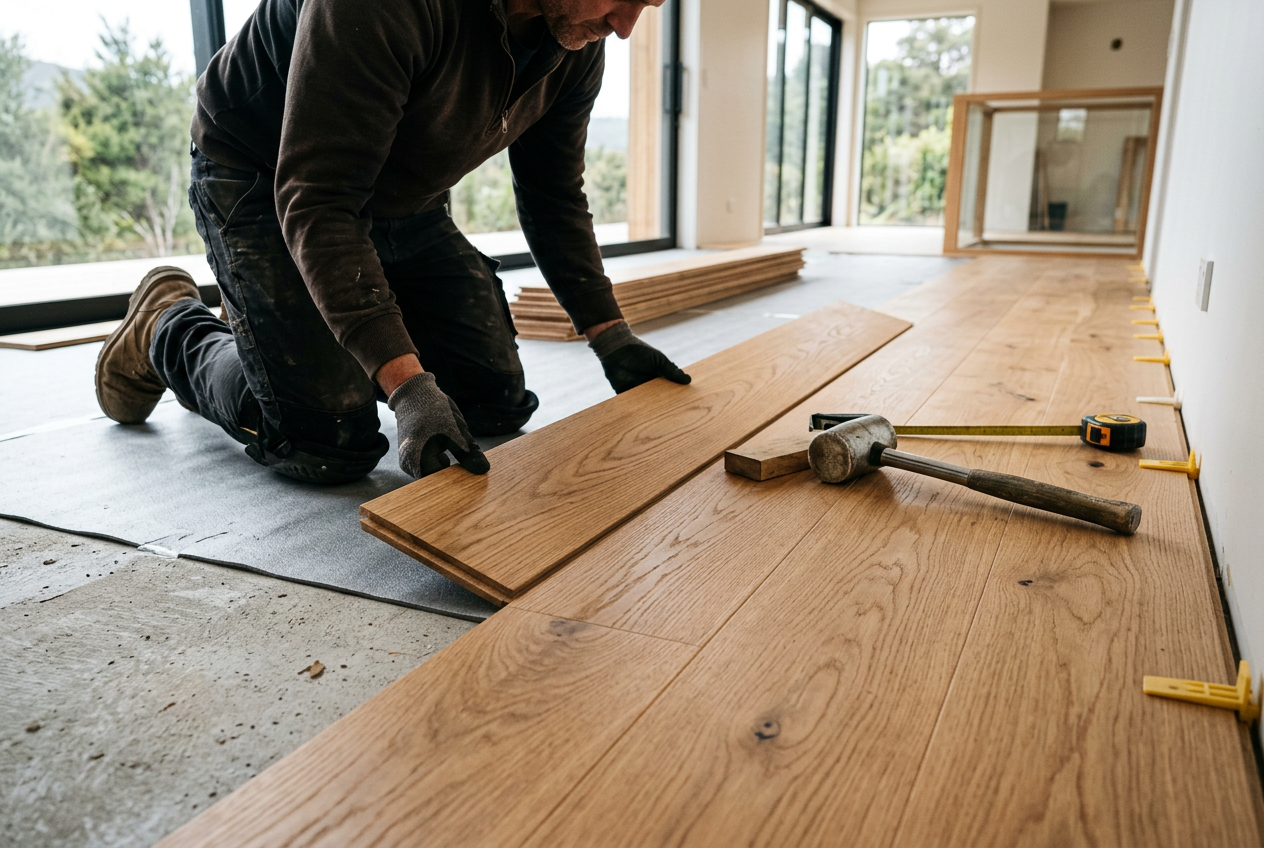
All three products are commonly sold as click-lock floating floors, meaning they're not glued or nailed to the subfloor — they float on top of an underlay. This makes them accessible for confident DIYers.
Key DIY tips:
- Always acclimatise flooring in the room for at least 48 hours before installation.
- Ensure the subfloor is flat to within the manufacturer's tolerance (typically within 3 mm over a set span).
- Use the correct underlay — some LVP products have it pre-attached; laminate and engineered wood usually need a separate underlay.
- Leave expansion gaps around all fixed edges (walls, cabinets, door frames).
For large or complex areas, glue-down engineered wood, or any floor requiring subfloor grinding or levelling, it's worth calling in a professional flooring installer.
When to Call a Professional
While floating floors are DIY-friendly, there are situations where a qualified flooring installer is the smarter choice:
- Subfloor preparation — grinding, levelling or repairing a concrete slab or fixing a bouncy timber subfloor.
- Glue-down installations — engineered wood glued directly to concrete requires the right adhesive and technique.
- Large open-plan areas — managing expansion joints and transitions across big spaces.
- Stairs — cutting and fitting stair nosings neatly is a skilled job.
- Moisture testing — a professional will use a moisture meter to check your slab before installation, potentially saving you from a costly failure.
You can find experienced, local flooring installers on tradedirectory.co.nz to get quotes and compare tradespeople in your area.