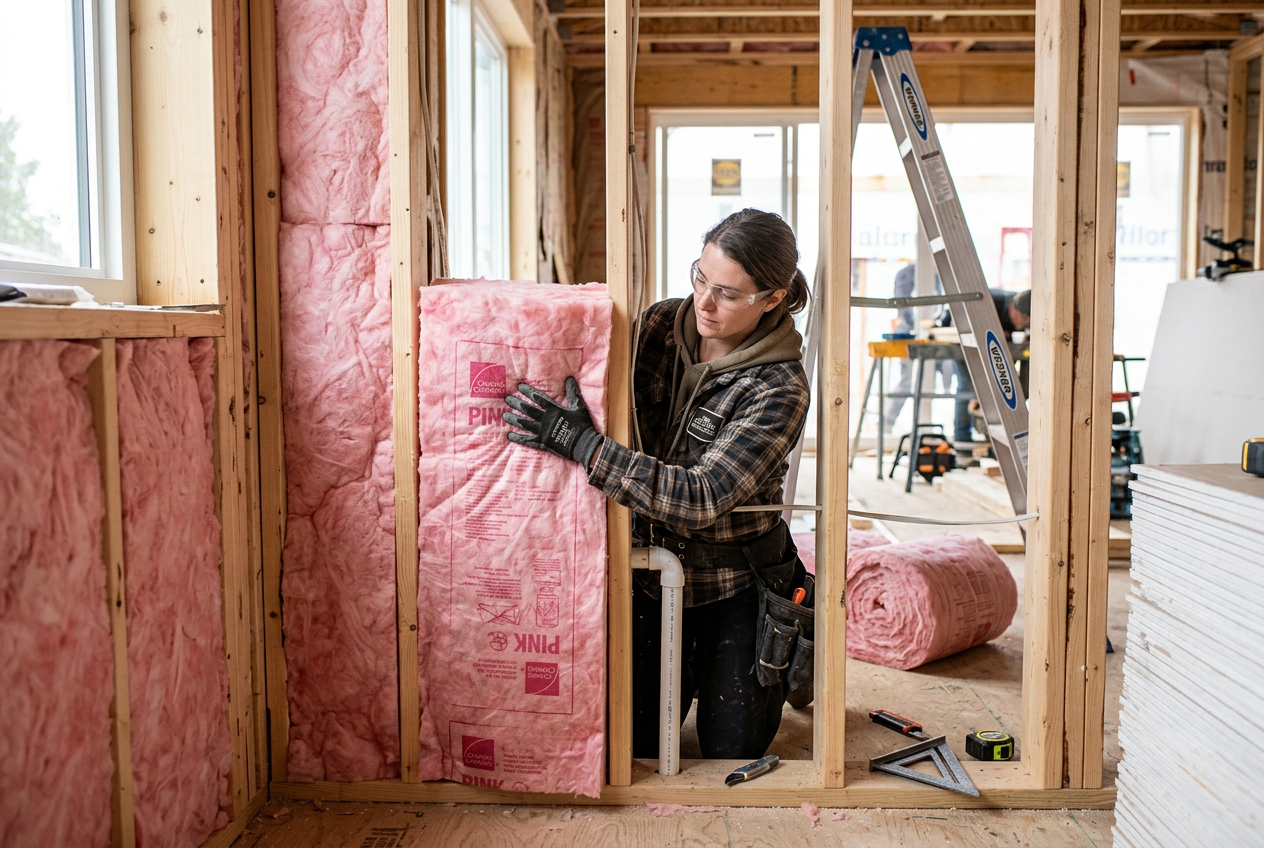
Choosing the right insulation for your New Zealand home can feel overwhelming, but it comes down to a few key factors: thermal performance, budget, health considerations, and where you're installing it. The three most common bulk insulation types you'll find at NZ suppliers are glasswool, polyester, and natural wool — and each has its own strengths and trade-offs.
What Is Glasswool Insulation?
Glasswool (sometimes called fibreglass insulation) is made from recycled glass spun into fine fibres and formed into batts or rolls. It's been the go-to insulation product in New Zealand for decades and is widely available at stores like Bunnings and Mitre 10.
Key characteristics:
- Generally the most affordable bulk insulation option
- Good thermal and acoustic performance per dollar
- Non-combustible — it won't contribute to a house fire
- The fine fibres can irritate skin, eyes, and airways during installation, so PPE is essential: wear a dust mask (P2 rated), safety glasses, gloves, and long sleeves
- Once installed and covered, it poses no ongoing health risk to occupants
- Can absorb moisture if not properly detailed, which reduces performance over time
Glasswool is a solid choice for ceiling and underfloor spaces where cost is a priority and installation conditions are dry.
What Is Polyester Insulation?
Polyester insulation is made from recycled PET plastic fibres (similar to plastic bottles) bonded together into soft, fluffy batts. It has grown in popularity in NZ over the past decade.
Key characteristics:
- Soft and itch-free to handle — no PPE required beyond basic precautions
- A good option for DIY installation in wall cavities and ceilings
- Moisture-resistant and won't absorb water like glasswool can
- Slightly higher cost than glasswool for equivalent R-values
- Made from recycled materials, which appeals to environmentally conscious homeowners
- Non-combustible in standard building applications
Polyester is particularly popular for wall insulation retrofits and in homes where occupants or installers have respiratory sensitivities.
What Is Wool Insulation?
Natural wool insulation uses sheep's wool — often blended with a small amount of polyester fibre to help it hold its shape — formed into batts. New Zealand has an obvious local advantage here, with wool a familiar and renewable resource.
Key characteristics:
- Naturally breathable and able to absorb and release moisture without losing significant thermal performance
- Comfortable and safe to handle with minimal irritation
- Naturally fire-resistant (wool chars rather than melts or spreads flame)
- Generally the most expensive of the three options
- Considered the most environmentally sustainable choice, being a renewable, biodegradable material
- Performs well in NZ's varied climate, particularly in areas with higher humidity
Wool insulation suits homeowners who prioritise sustainability and natural materials, and it's well suited to older homes with less airtight construction.
Side-by-Side Comparison
| Feature | Glasswool | Polyester | Wool |
|---|---|---|---|
| Cost (relative) | Lower | Mid-range | Higher |
| Handling comfort | Itchy/irritating | Soft, itch-free | Soft, comfortable |
| Moisture resistance | Moderate | Good | Very good |
| Fire resistance | Non-combustible | Non-combustible | Naturally fire-resistant |
| Eco credentials | Recycled glass | Recycled plastic | Renewable/biodegradable |
| DIY-friendly | Yes (with PPE) | Yes | Yes |
| Typical use | Ceiling, underfloor | Walls, ceiling | Walls, ceiling, underfloor |
Understanding R-Values in NZ
Regardless of material, what matters most for thermal performance is the R-value — a measure of resistance to heat flow. Higher R-values mean better insulation. The NZ Building Code sets minimum R-value requirements that vary by climate zone. New Zealand is divided into three climate zones, with colder southern regions (Zone 3) requiring higher R-values than the warmer north (Zone 1).
BRANZ research consistently shows that meeting or exceeding minimum R-values makes a significant difference to home warmth, energy bills, and health outcomes — particularly relevant under the Healthy Homes Standards for rental properties.
All three insulation types are available in a range of R-values, so you can match the product to your climate zone requirements regardless of which material you choose.
Which Insulation Is Right for Your Home?
- On a tight budget? Glasswool delivers solid performance at the lowest cost — just suit up properly when installing.
- DIY-ing and want easy handling? Polyester is the most user-friendly to work with.
- Prioritising sustainability or have a damp home? Wool's breathability and renewable credentials make it worth the extra investment.
- Renting out a property? All three can meet Healthy Homes insulation requirements — what matters is achieving the correct R-value for your zone.
When to Call a Professional
Installing ceiling and underfloor insulation batts is generally considered non-restricted work that a capable homeowner can tackle. However, there are situations where you should bring in a qualified insulation installer:
- Wall insulation in existing homes often requires cutting into linings or using blown-in insulation — best left to a professional
- Working in confined or poorly ventilated subfloor spaces carries health and safety risks
- If your home has older insulation containing asbestos (common in pre-1990s homes), do not disturb it — contact a licensed asbestos removalist and check guidance from WorkSafe NZ
- Any work near electrical wiring should be done carefully; if in doubt, consult a registered electrician (see EWRB)
For peace of mind and a quality result, you can find experienced local insulation installers on tradedirectory.co.nz.