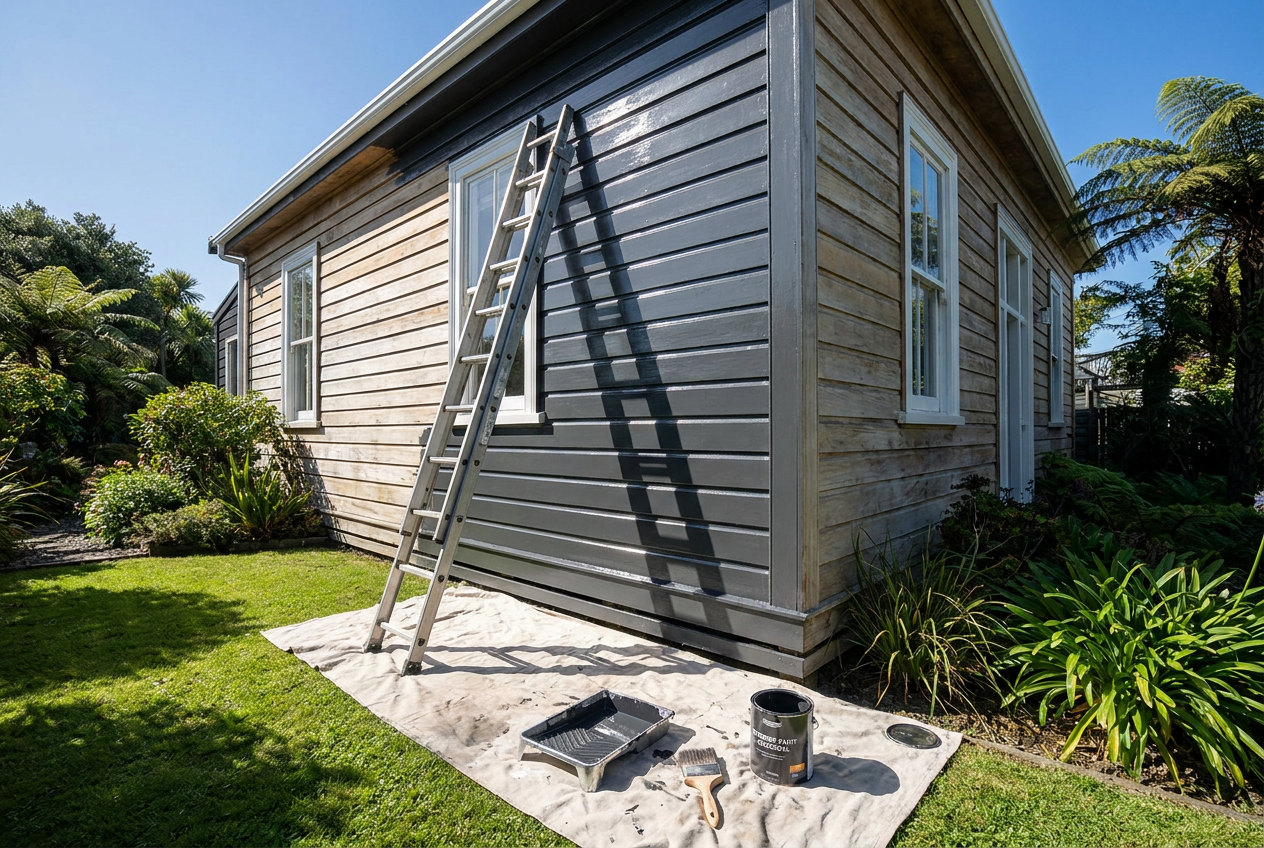
Choosing the right exterior paint can feel overwhelming, especially when you're staring at a wall of tins at your local hardware store. Two of the most common options you'll come across are acrylic and enamel — and while both can be used outdoors, they behave quite differently in New Zealand's varied climate. Here's a plain-English breakdown to help you make the right call.
What Is Acrylic Paint?
Acrylic paint is water-based and uses acrylic resins as its binder. It dries by evaporation, which means it's generally touch-dry within an hour or two, and it cleans up easily with water. Modern exterior acrylics are specifically formulated to handle UV exposure, rain, and temperature swings — all things NZ homes face regularly, from the humid north to the frosty south.
Brands like Resene and Dulux have invested heavily in acrylic technology, and their premium exterior acrylic ranges are widely regarded as the go-to choice for most NZ house painting projects.
What Is Enamel Paint?
Enamel paint is a broader term that refers to paints that dry to a hard, smooth, often glossy finish. Traditionally, enamels were solvent-based (oil-based), but today you'll also find water-based enamels (sometimes called acrylic enamels) that combine the hardness of traditional enamel with the easier clean-up of acrylics.
Solvent-based enamels require mineral turpentine or a similar solvent for thinning and clean-up, have stronger fumes, and take longer to dry — sometimes 6–8 hours or more between coats. They do, however, produce an exceptionally hard, durable finish that resists knocks and abrasion well.
Key Differences at a Glance
| Feature | Acrylic (Water-Based) | Enamel (Solvent-Based) |
|---|---|---|
| Dry time | Fast (1–2 hrs touch-dry) | Slow (6–8+ hrs) |
| Flexibility | High — resists cracking | Lower — can become brittle |
| UV resistance | Excellent | Moderate to good |
| Fumes/VOCs | Low | Higher |
| Clean-up | Water | Mineral turps |
| Finish | Matt to gloss | Typically high gloss |
| Adhesion to old enamel | Needs prep | Good |
| Best for | Weatherboards, cladding, walls | Trims, doors, metal, high-wear areas |
How NZ's Climate Affects Your Choice
New Zealand's UV levels are among the highest in the world, and our weather can shift dramatically — hot summers, wet winters, and coastal salt air in many regions. Flexibility is critical for exterior paint here. Timber weatherboards and fibre cement cladding expand and contract with temperature and moisture changes, and a paint that can't flex with the substrate will crack and peel prematurely.
This is where modern exterior acrylics have a clear advantage. Their flexibility means they move with the substrate rather than cracking away from it. BRANZ (the Building Research Association of NZ) consistently highlights the importance of using paints suited to the substrate and local conditions — worth a read if you want the technical detail.
Solvent-based enamels, while tough, can become brittle over time when exposed to ongoing UV and temperature cycling, which can lead to cracking and flaking — particularly on timber.
Where Enamel Still Shines Outdoors
Don't write enamel off entirely. It remains an excellent choice for:
- Exterior doors — high-traffic surfaces that need a hard, washable finish
- Window frames and sills — especially aluminium or steel frames
- Metal railings, gates, and fences — where a tough, corrosion-resistant coat is needed
- Trims and fascias — where a crisp, durable gloss finish is desired
For these applications, a quality water-based enamel (acrylic enamel) can give you the best of both worlds — hardness and easy clean-up. Wattyl and Dulux both offer water-based enamel products suited to NZ exterior conditions.
Painting Over Existing Coats
If you're repainting, the existing paint type matters. As a general rule:
- Acrylic over acrylic — straightforward with good surface prep
- Acrylic over old enamel — possible, but the surface must be thoroughly cleaned, sanded, and primed to ensure adhesion
- Enamel over acrylic — generally not recommended, as solvent-based products can cause water-based coats beneath to lift
When in doubt, use a bonding primer or consult the paint manufacturer's technical data sheet. Suppliers like Mitre 10 and Bunnings stock a range of primers suited to different situations.
Surface Preparation: The Real Secret
Regardless of which paint type you choose, surface preparation is everything. Exterior paint failure in NZ is almost always traced back to poor prep — not the paint itself. At minimum:
- Wash the surface thoroughly (a sugar soap solution works well)
- Sand back any flaking or peeling areas
- Fill cracks and gaps with an appropriate exterior filler
- Apply a suitable primer, especially on bare timber or metal
- Allow adequate drying time between coats
When to Call a Professional
While painting is generally a DIY-friendly job, there are times when it pays to bring in a qualified painter:
- Multi-storey homes — working at height carries real risk; WorkSafe NZ has clear guidelines on working safely at height
- Lead paint — homes built before the 1980s may have lead-based paint; disturbing it without proper precautions is a health hazard
- Large or complex surfaces — fibre cement cladding like James Hardie products often have specific coating requirements that a professional will know well
- Warranty requirements — some cladding warranties require professionally applied paint systems
A qualified painter will also know which products are best suited to your specific substrate, region, and conditions. You can find licensed local painters on tradedirectory.co.nz.
Sources & Further Reading
- Resene — Paint technical information and product guides
- BRANZ — Building research and best practice guidance
- Dulux NZ — Exterior paint range and advice
- WorkSafe NZ — Working at height safety
- James Hardie NZ — Fibre cement cladding coating requirements
- MBIE Building Performance — NZ Building Code guidance