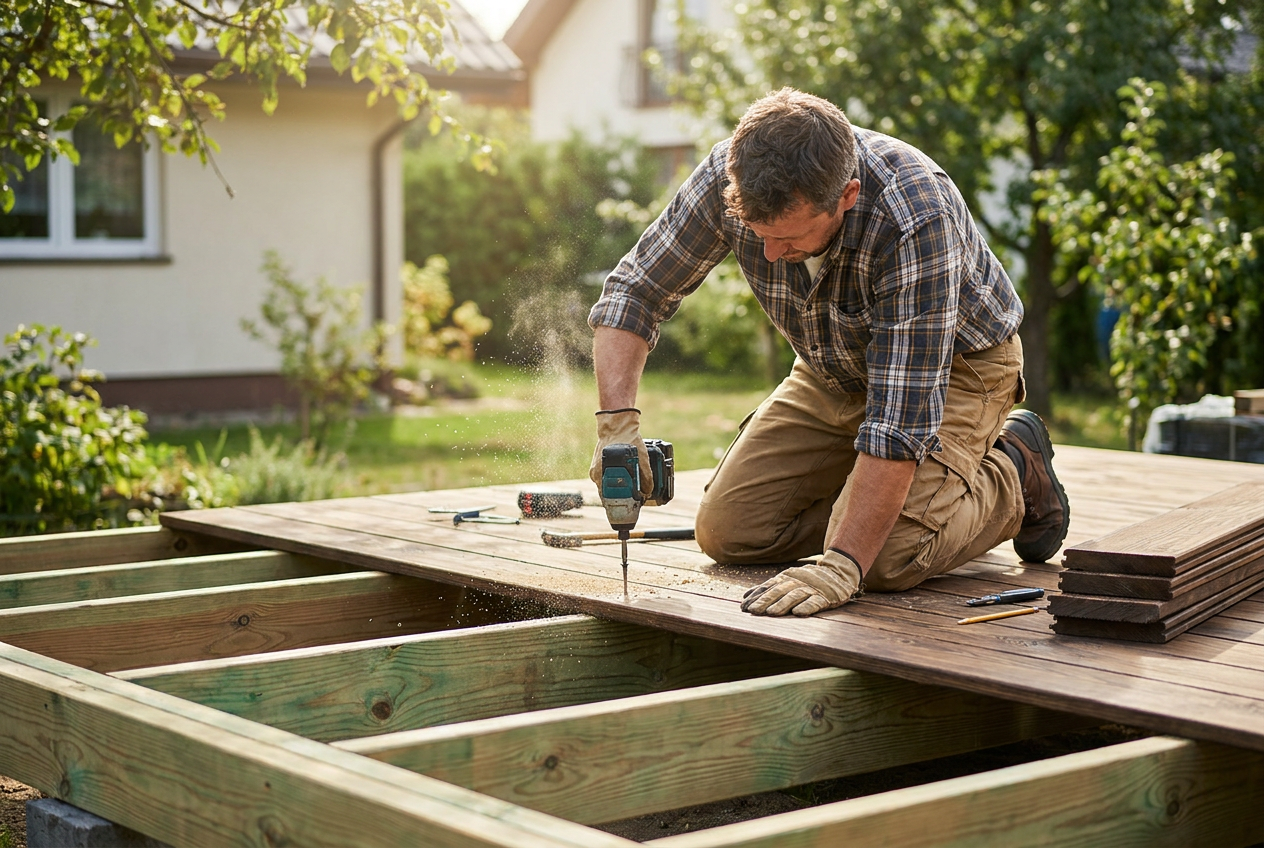
Choosing between timber and composite decking is one of the biggest decisions you'll make when building or replacing an outdoor deck in New Zealand. Both materials have genuine strengths, but they suit different budgets, lifestyles, and environments. Here's a practical breakdown to help you make the right call.
What Is Timber Decking?
Timber decking uses natural wood boards — either treated pine (the most common and affordable option in NZ) or hardwoods such as kwila, vitex, or garapa. Treated pine must meet H3.2 or H4 hazard class requirements under the NZ Building Code to be suitable for outdoor use above or in contact with the ground respectively. Hardwoods are naturally durable but come at a higher price point.
Timber has been used for decades on Kiwi homes and is well understood by builders and DIYers alike. It's widely available at Bunnings, Mitre 10, and PlaceMakers.
What Is Composite Decking?
Composite decking is an engineered product made from a blend of recycled timber fibres and plastic (usually polyethylene or PVC). It's designed to look like wood while offering improved resistance to rot, splintering, and fading. Composite boards are available in a range of colours and profiles, and most come with a manufacturer's warranty of 10–25 years depending on the brand and product tier.
Composite decking has grown significantly in popularity across NZ over the past decade, particularly in coastal and high-humidity areas where timber can struggle.
Key Differences at a Glance
| Feature | Timber | Composite |
|---|---|---|
| Upfront cost | Lower (treated pine especially) | Higher |
| Maintenance | Regular oiling/staining required | Minimal — occasional wash down |
| Lifespan | 15–30+ years (with upkeep) | 25–30+ years (low maintenance) |
| Appearance | Natural, warm, authentic | Consistent, wood-look finish |
| Splinters | Possible, especially as it ages | Rare to none |
| Eco credentials | Sustainable if FSC-certified | Often uses recycled materials |
| Heat retention | Stays cooler underfoot | Can get hot in direct sun |
| Repairability | Easy to replace individual boards | Boards must match — harder to patch |
Cost Comparison
As a general guide, treated pine decking is the most budget-friendly option for the boards themselves. Hardwood timber sits in the mid-to-upper range, and composite decking typically costs more upfront per lineal metre than treated pine — though this gap narrows when you factor in long-term maintenance costs like oils, stains, and sanding.
Over a 10–15 year period, a composite deck can work out to be cost-competitive with a timber deck once you account for the ongoing maintenance products and labour a timber deck requires. Always get a full quote from a qualified deck builder to compare total installed costs.
Maintenance Requirements
This is where the two materials differ most in day-to-day ownership.
Timber maintenance
- Needs oiling or staining every 1–2 years to prevent weathering, greying, and cracking
- May require sanding before recoating if the surface has deteriorated
- Prone to cupping, warping, or checking if not properly maintained or if moisture gets underneath
- Quality exterior timber oils from Resene or Wattyl can extend the life of your deck significantly
Composite maintenance
- Generally just needs a wash down with soapy water or a composite-safe cleaner a couple of times a year
- No oiling, staining, or sanding required
- Some lighter-coloured composites can show mould or algae in shaded, damp areas — check the manufacturer's care guide
NZ Climate Considerations
New Zealand's climate varies enormously — from the humid, wet winters of Auckland and Northland to the UV-intense summers of Hawke's Bay and Nelson, and the freeze-thaw conditions of the South Island. BRANZ research highlights that UV exposure and moisture cycling are the two biggest enemies of outdoor timber in NZ.
- In coastal or high-rainfall areas, composite or naturally durable hardwood tends to outperform treated pine
- In sheltered, drier climates, well-maintained treated pine can perform excellently
- Composite boards can get hot underfoot in full sun — worth considering for north-facing decks in warmer regions
Building Code and Structural Considerations
Regardless of which decking material you choose, the subframe (joists, bearers, and piles) must comply with NZS 3604 for timber-framed construction, and the overall deck must meet the NZ Building Code. Composite boards are surface material only — the structural frame beneath is almost always treated timber or steel.
Decks over 1.5 metres above ground, or attached to the house in certain ways, typically require a building consent. Check with your local council before starting work.
When to Call a Professional
While experienced DIYers can tackle straightforward deck builds, a Licensed Building Practitioner (LBP) is required to carry out or supervise restricted building work — which includes decks that are attached to the house or are part of the weathertight envelope. You can verify a builder's licence at LBP.govt.nz.
For anything involving electrical work (outdoor lighting, power points), you must use a registered electrician — see EWRB for details. Plumbing connections for outdoor showers or drainage must be handled by a licensed plumber registered with the PGDB.
A qualified deck builder will also help you navigate consent requirements, choose the right materials for your specific site, and ensure the structure is safe and compliant. You can find experienced local deck builders on tradedirectory.co.nz.