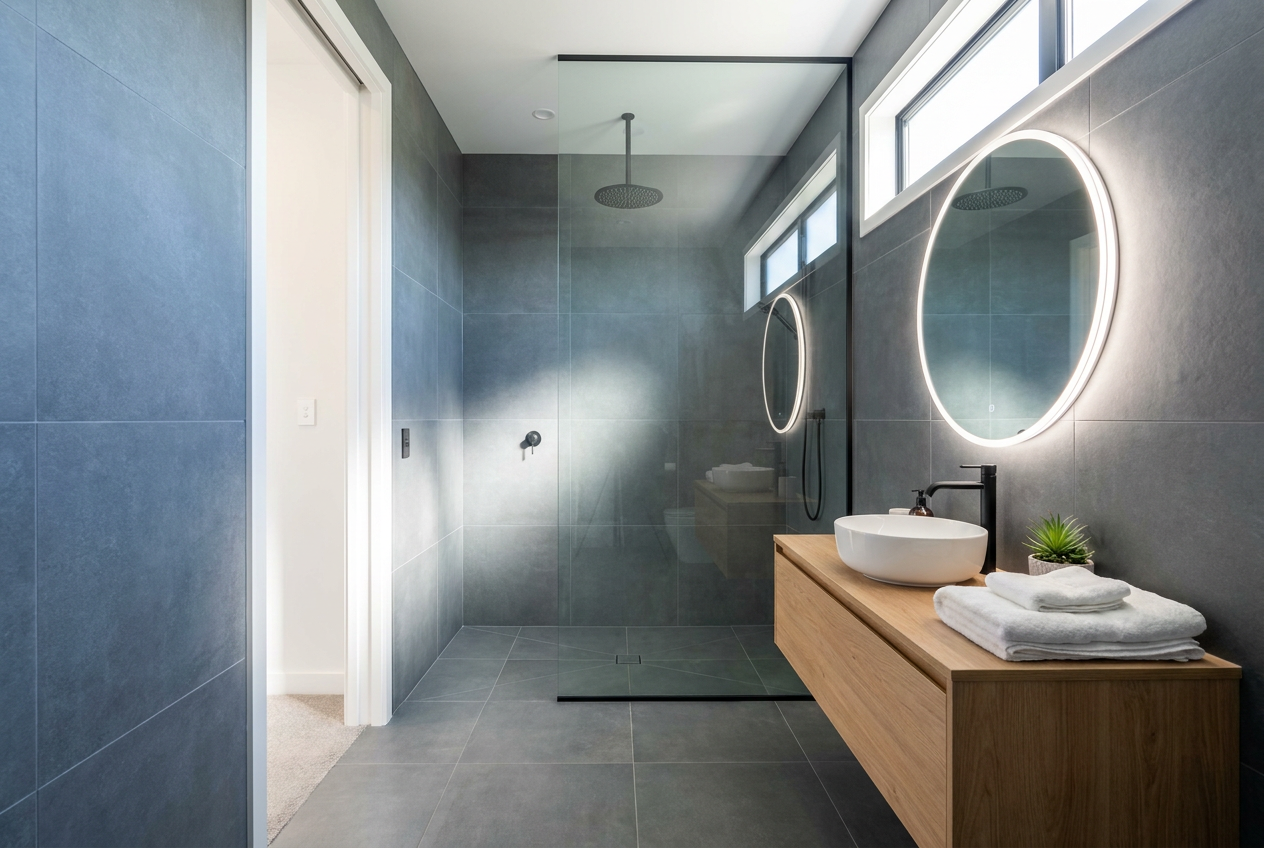
Choosing between a tanked shower and a pre-formed shower base is one of the first decisions you'll face in a bathroom renovation. Both systems can deliver a watertight, compliant shower — but they work very differently, suit different situations, and come with different trade-offs around cost, flexibility, and installation complexity.
What Is a Tanked Shower?
A tanked shower (also called a wet-area membrane system) is built in place on-site. A waterproof membrane is applied over a prepared substrate — typically GIB Aqualine or fibre-cement sheet — on the floor and walls of the shower recess. Tiles are then laid over the top. The membrane forms a continuous "tank" that catches any water that penetrates the tile and grout layer, directing it to the drain.
Tanking is governed by NZS 4858:2004 (Wet Areas) and must comply with Clause E3 of the NZ Building Code, which covers internal moisture. Products used must be fit for purpose and installed to the manufacturer's specifications.
How tanking works
- A liquid membrane (such as products from Ardex or Mapei) is brush- or roller-applied to the floor and walls
- Fabric reinforcing tape is embedded at all junctions (floor-to-wall, wall-to-wall corners)
- Multiple coats are applied to achieve the required dry film thickness
- Tiles are bonded over the cured membrane
What Is a Pre-Formed Shower?
A pre-formed shower uses a factory-manufactured base (also called a shower tray or shower pan) that arrives on-site ready to install. These bases are typically made from acrylic, fibreglass, or a solid composite material. The base already incorporates the fall to the drain and a waterproof surface, so there's no need to membrane the floor separately.
Walls above the tray still need to be waterproofed — either with a membrane system or purpose-made wall liners — to comply with E3. Pre-formed bases are popular in new builds and straightforward renovations because they're quick to install and the floor waterproofing is essentially built in.
Key Differences at a Glance
| Feature | Tanked Shower | Pre-Formed Base |
|---|---|---|
| Floor waterproofing | Applied on-site membrane | Factory-built into the tray |
| Design flexibility | High — any shape or size | Limited to available tray sizes |
| Tile finish on floor | Yes | No (tray surface is the finish) |
| Installation time | Longer (membrane cure time) | Faster |
| Skill level required | High — membrane application is critical | Moderate |
| Suitability for custom layouts | Excellent | Limited |
| Typical longevity | Very long if installed correctly | Dependent on tray material/quality |
| Accessibility/low-threshold options | Easier to achieve | Some low-profile trays available |
Waterproofing: The Critical Factor
Regardless of which system you choose, waterproofing is the most important element. A failed shower membrane is one of the leading causes of hidden moisture damage in NZ homes — damage that can be extremely costly to remediate. BRANZ research consistently highlights wet-area failures as a significant source of building defects.
For tanked showers, the membrane must be applied correctly — the right product, the right thickness, with all junctions properly reinforced. This is skilled work. For pre-formed bases, the tray-to-wall junction and the wall waterproofing above still need careful attention.
Sika and Ardex both manufacture membrane systems widely used by NZ waterproofing professionals, and their technical data sheets specify minimum application requirements that must be followed for warranty and Code compliance.
Which Option Suits Your Situation?
Choose a tanked shower if you want:
- A fully tiled floor for a seamless, high-end look
- A custom shape, size, or walk-in layout
- A low-threshold or barrier-free (accessible) shower
- To match existing floor tiles throughout the bathroom
Choose a pre-formed base if you want:
- A faster, more straightforward installation
- A cost-effective solution for a standard-sized shower
- Reduced reliance on on-site membrane application quality
- A renovation with minimal downtime
DIY Considerations
Installing a pre-formed shower tray is within reach of a competent DIYer for the base itself — but connecting the drain to the plumbing is restricted work that must be carried out by a licensed drainlayer or plumber registered with the Plumbers, Gasfitters and Drainlayers Board. You cannot legally connect or alter drain pipework yourself.
Applying a tanking membrane is technically DIY-possible, but it is not recommended for inexperienced homeowners. Incorrect application — wrong thickness, missed junctions, inadequate cure time — can result in a shower that appears fine but leaks slowly behind the tiles for years. By the time damage is visible, remediation often means stripping the entire shower back to the framing.
Safety note: Always ensure adequate ventilation when working with membrane products. Check the Safety Data Sheet (SDS) for the product you're using and follow WorkSafe NZ guidelines for working with chemical products in enclosed spaces.
When to Call a Professional
For tanked showers, engaging a qualified waterproofer is strongly recommended. A professional will:
- Select the right membrane system for your substrate
- Apply it to the manufacturer's specification and NZS 4858 requirements
- Provide documentation useful for insurance and future sale of your home
For either system, a licensed plumber or drainlayer must handle all drain connections. If your renovation involves moving walls or structural elements, you may also need a Licensed Building Practitioner (LBP).
You can find qualified local waterproofers, tilers, and plumbers on tradedirectory.co.nz — look for tradespeople with experience in wet-area work and ask to see examples of previous shower installations.