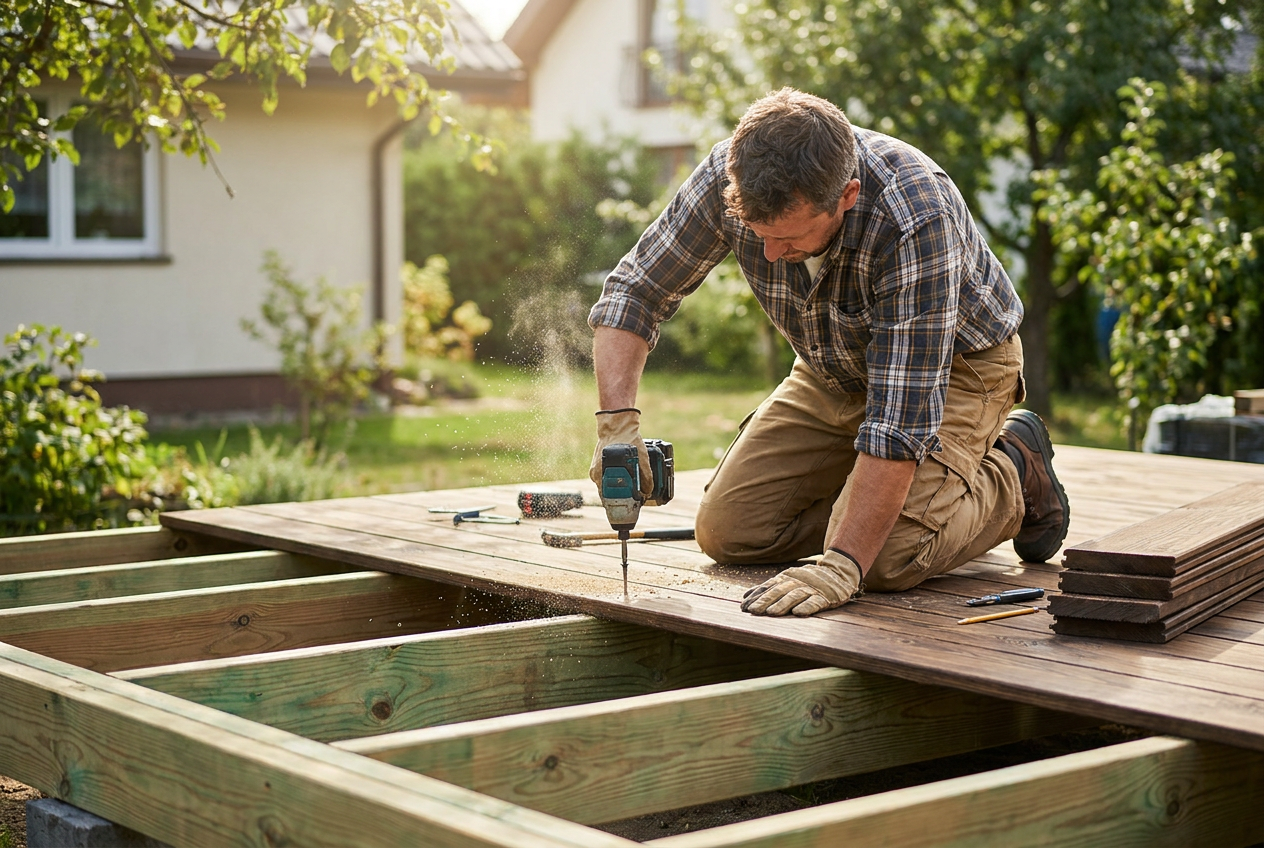
When it comes to framing walls, floors, or roofs in a New Zealand home, one of the most common questions is whether to reach for a nail gun or a box of screws. The short answer is that nails — typically driven by a nail gun — are the standard fastener for structural timber framing in NZ, but screws have their place too. Understanding the difference can save you time, money, and potential headaches down the track.
Why Nails Are the Go-To for Structural Framing
In New Zealand, residential timber framing is governed by NZS 3604:2011 (Timber-framed buildings), which specifies the type, size, and number of fasteners required for structural connections. This standard is referenced by the NZ Building Code, and it overwhelmingly calls for nails — not screws — for most framing connections.
The reason comes down to how each fastener handles load. Nails are designed to resist shear forces (loads acting sideways across the fastener), which is exactly what framing joints experience during wind, seismic events, and everyday loading. A nail bends slightly under shear, absorbing energy without snapping. Screws, by contrast, are more brittle under shear and can fracture — which is the last thing you want in a structural connection during an earthquake.
New Zealand's seismic and wind environment makes this especially important. BRANZ research consistently supports nailed connections for structural timber framing as the most reliable option in our conditions.
Nail Guns: Speed, Consistency, and Code Compliance
A nail gun (also called a framing nailer or pneumatic nailer) drives large framing nails — typically 75 mm to 90 mm galvanised flathead nails — quickly and consistently. Here's why professional carpenters use them:
- Speed: A nail gun can drive a nail in a fraction of a second. Hand-nailing an entire wall frame is exhausting and slow by comparison.
- Consistency: Every nail is driven to the same depth, reducing the risk of under- or over-driving.
- Code compliance: When using the correct nail type and size specified in NZS 3604, a nail gun makes it straightforward to meet the required fastener schedule.
- Holding strength: Framing nails have excellent shear resistance for structural joints.
Common nail gun types used in NZ framing include pneumatic (air-powered) and gas-actuated (cordless) models. Brands like Paslode are widely used on NZ job sites and are available from Bunnings and Mitre 10.
Where Screws Have Their Place
Screws aren't useless in framing — they're just not the right tool for primary structural connections. Here's where screws genuinely shine:
- Temporary fixing: Screws are easy to remove if you need to adjust or reposition framing members during a build.
- Non-structural applications: Fixing noggings for lining attachment, securing blocking, or attaching non-load-bearing elements.
- Fixing sheet materials: Screws are ideal for attaching GIB plasterboard or flooring sheets to framing.
- Decking and cladding: Screws provide excellent pull-out resistance for these applications.
- Repair work: When you need to pull something apart later, screws make life much easier.
Nail Gun vs Screws: Quick Comparison
| Feature | Nail Gun (Framing Nails) | Screws |
|---|---|---|
| Structural framing (NZS 3604) | ✅ Compliant | ❌ Generally not compliant |
| Shear strength | Excellent | Poor to moderate |
| Speed | Very fast | Slower |
| Removability | Difficult | Easy |
| Cost of tool | Higher upfront | Lower |
| Seismic performance | Excellent | Not recommended |
| Sheet fixing (GIB, flooring) | Not ideal | ✅ Preferred |
| Temporary fixing | Not ideal | ✅ Preferred |
Choosing the Right Nails
Not all nails are equal. For exterior or treated timber framing, you must use hot-dipped galvanised (HDG) nails to prevent corrosion — especially important in NZ's coastal and high-humidity environments. Using the wrong nail type can lead to rust staining, weakened connections, and potential structural failure over time. Always check the NZS 3604 fastener schedule or the timber treatment manufacturer's specifications for the correct nail type and size.
Safety: Nail Guns Are Serious Tools
Nail guns cause a significant number of serious injuries on construction sites. If you're hiring or borrowing a nail gun, treat it with the same respect as any power tool:
- Never point it at anyone, even when not in use.
- Keep your free hand well clear of the muzzle.
- Use the sequential trigger setting (not bump-fire) if you're not experienced.
- Wear safety glasses and hearing protection at all times.
- Check WorkSafe NZ guidelines for safe nail gun use before you start.
When to Call a Professional
Structural framing is restricted building work under the NZ Building Act if it affects the primary structure of a home. This means it must be carried out or supervised by a Licensed Building Practitioner (LBP). If you're framing a new room, adding a load-bearing wall, or doing anything that requires a building consent, you'll need an LBP carpenter involved. You can verify a tradesperson's licence at LBP.govt.nz.
Even for smaller framing jobs, an experienced carpenter will ensure your fastener schedule meets NZS 3604, your connections are correct, and your work will pass a building inspection. Find a qualified local carpenter on tradedirectory.co.nz to get the job done right.