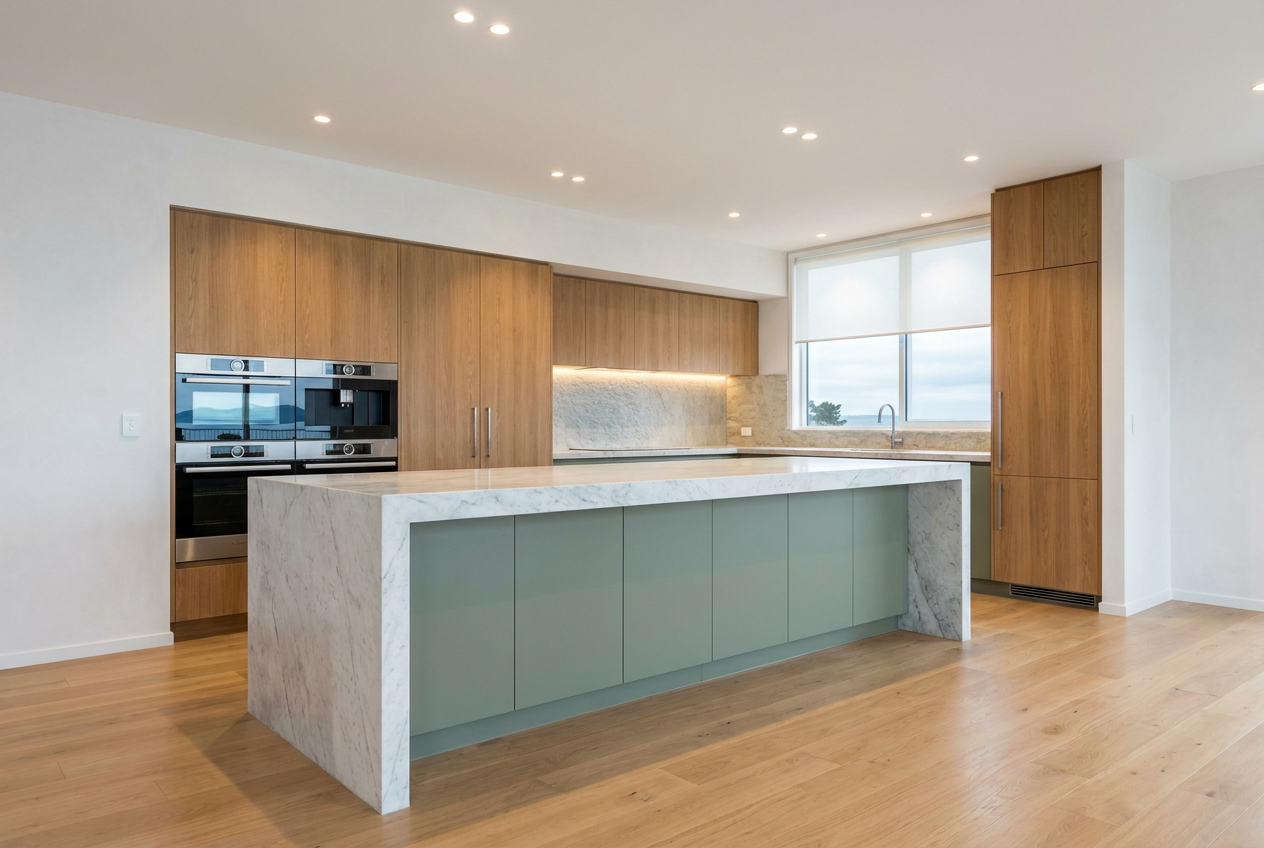
If you've ever tried to book someone to fit a new kitchen or install a set of built-in wardrobes, you've probably wondered whether you need a joiner or a cabinet maker — and whether there's even a difference. In New Zealand, the two trades overlap in some areas but have distinct specialisations. Understanding the difference will help you hire the right person for the job and avoid costly miscommunications.
What Does a Joiner Do?
A joiner is a skilled tradesperson who works with timber to create and install fixed elements of a building. The name comes from the craft of joining pieces of wood together — traditionally without nails, using mortise-and-tenon joints, dovetails, and similar techniques.
In the NZ context, joiners typically work on:
- Doors and door frames (both interior and exterior)
- Windows and window frames
- Staircases and balustrades
- Skirting boards, architraves, and cornices
- Built-in furniture such as bookshelves and window seats
- Shopfitting and commercial fit-outs
Joiners often work closely with builders on new builds and renovations, and their work must comply with the NZ Building Code — particularly where structural or weathertight elements are involved. For example, exterior joinery must meet performance requirements under clauses like E2 (External Moisture) to keep your home dry and warm.
What Does a Cabinet Maker Do?
A cabinet maker specialises in crafting and fitting furniture and cabinetry — typically items that are freestanding or semi-fixed. Their focus is on precision woodworking, finishing, and the functional design of storage and furniture pieces.
Cabinet makers typically produce:
- Kitchen cabinetry (carcasses, doors, drawers)
- Bathroom vanities
- Wardrobes and storage units
- Custom furniture (tables, beds, entertainment units)
- Office fit-outs and shelving systems
Much of a cabinet maker's work happens in a workshop, where they cut, assemble, and finish pieces before bringing them to site for installation. The quality of joinery (in the general sense — how pieces fit together) is a hallmark of a good cabinet maker's work.
How Do the Two Trades Overlap?
In practice, many NZ tradespeople are trained in both disciplines, and the terms are sometimes used interchangeably — especially for kitchen and bathroom fit-outs. A joiner may well build and install your kitchen cabinetry, and a cabinet maker may also hang doors or fit skirting boards.
The key distinction is often:
| Aspect | Joiner | Cabinet Maker |
|---|---|---|
| Primary focus | Fixed building elements (doors, windows, stairs) | Furniture and cabinetry |
| Main work location | On-site | Workshop, then on-site |
| Typical projects | New builds, renovations, fit-outs | Kitchens, wardrobes, custom furniture |
| Building Code involvement | Often (especially exterior joinery) | Sometimes (wet areas, fixings) |
| Freestanding work | Less common | Common |
Which Trade Do You Need for Your Project?
Here's a quick guide to help you decide:
- Replacing or installing windows and exterior doors → Joiner
- New staircase or balustrade → Joiner
- Custom kitchen or bathroom cabinetry → Cabinet maker (or a joiner who specialises in kitchens)
- Built-in wardrobes → Either, depending on complexity
- Skirting boards and architraves → Joiner
- Custom dining table or bed frame → Cabinet maker
- Shopfitting or commercial fit-out → Joiner (often working alongside cabinet makers)
When in doubt, describe your project in detail when requesting quotes. A good tradesperson will tell you honestly if the work falls outside their speciality.
Training and Qualifications in NZ
Both joiners and cabinet makers in New Zealand typically complete a Level 4 New Zealand Certificate in Joinery through a polytechnic or industry training organisation, often while working as an apprentice. The qualification covers both disciplines to varying degrees, which is part of why the trades overlap.
BRANZ provides useful technical guidance that both trades reference for best-practice installation, particularly around moisture management and building performance.
For work that touches on the Building Code — such as installing exterior joinery or structural elements — it's worth checking with MBIE Building Performance whether a building consent is required. Some joinery work on existing homes may be restricted building work, meaning it must be carried out or supervised by a Licensed Building Practitioner (LBP).
A Note on Wet Areas
If your cabinet maker or joiner is working in a bathroom or kitchen, the installation must comply with NZ Building Code clause E3 (Internal Moisture). This means appropriate waterproofing around vanities and cabinetry near water sources. Always confirm your tradesperson is familiar with these requirements — or that a separate waterproofing specialist is involved.
When to Call a Professional
For most joinery and cabinet making work, a qualified tradesperson is strongly recommended — not just for quality, but because poorly fitted exterior joinery can lead to water ingress and expensive damage down the track. If the work involves:
- Exterior doors or windows (weathertightness risk)
- Structural modifications to walls or openings
- Restricted building work under the Building Code
…you should ensure your tradesperson holds the relevant LBP licence or works under one.
Note that joiners and cabinet makers do not carry out electrical or plumbing work — if your kitchen or bathroom fit-out requires new wiring or pipework, you'll need a licensed electrician (EWRB) and/or a licensed plumber (PGDB) as well.
You can find qualified local joiners and cabinet makers on tradedirectory.co.nz — look for tradespeople with strong reviews and relevant experience in your type of project.