Choosing the right heat pump for your New Zealand home can feel overwhelming when you're faced with terms like "high wall", "ducted", and "floor console". Each system works on the same basic refrigeration principle — moving heat rather than generating it — but they differ significantly in how they distribute air, how they look, and how much they cost to install. Here's a plain-English guide to help you decide.
How Heat Pumps Work (Quick Recap)
All three types use a refrigerant cycle to transfer heat between indoors and outdoors. In winter they extract heat from outside air and pump it inside; in summer they reverse the process to cool your home. Because they move heat rather than create it, they're far more efficient than resistive heaters. Energywise has useful guidance on heat pump efficiency and running costs for NZ conditions.
High Wall Heat Pumps
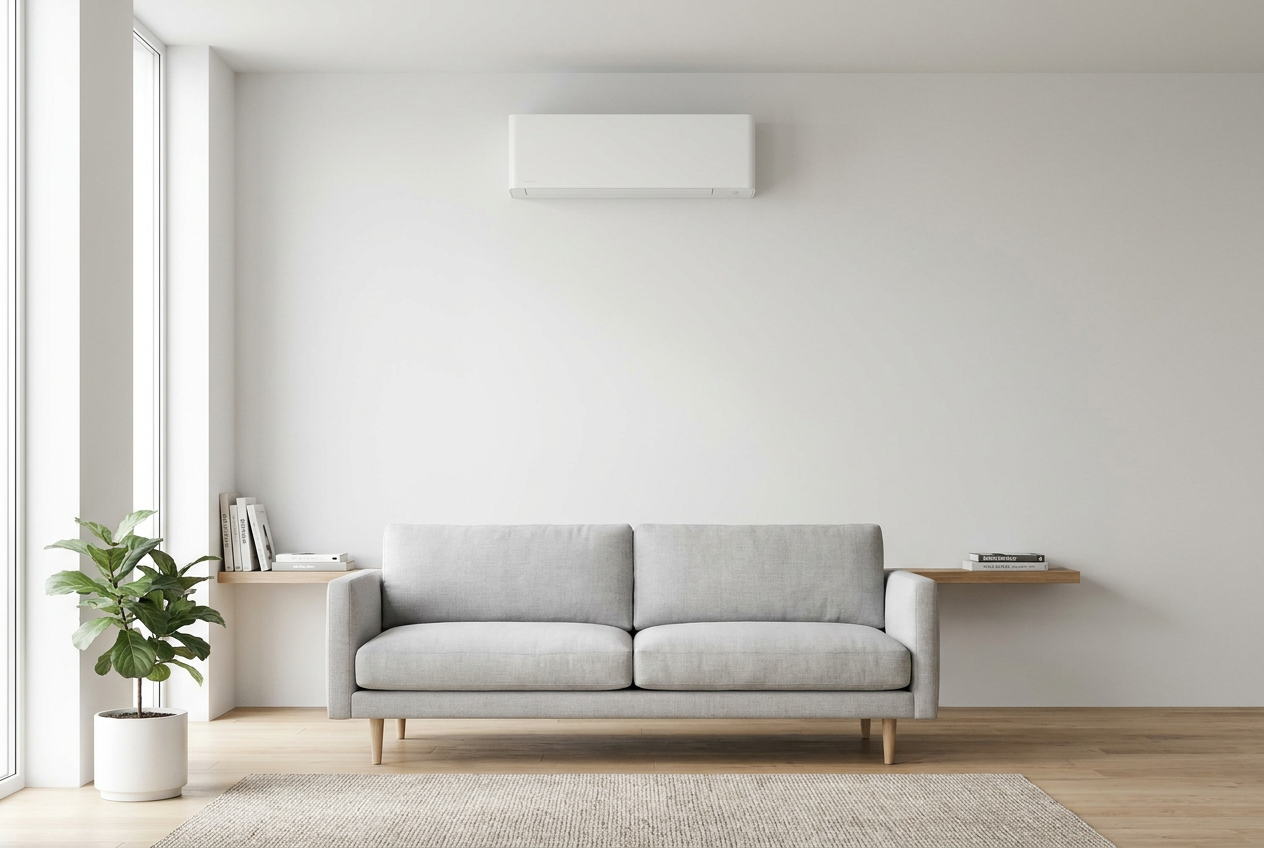
The high wall unit (sometimes called a wall-mounted split system) is by far the most common type installed in NZ homes. The indoor unit mounts high on an interior wall and blows conditioned air across the room, while a compact outdoor unit sits outside.
Pros
- Generally the most affordable to purchase and install
- Wide range of sizes and brands available at retailers like Mitsubishi Electric, Daikin, Fujitsu, and Panasonic
- Quick and straightforward installation — typically done in a day
- Ideal for heating or cooling a single room or open-plan living area
- Most models include inverter technology for efficient, variable-speed operation
Cons
- Visible on the wall — not everyone loves the aesthetic
- Airflow is directional, so larger or oddly shaped rooms may have cold spots
- Each unit only conditions one zone; multiple rooms need multiple units
Best for
Single rooms, open-plan living/dining areas, bedrooms, and rentals needing to meet Healthy Homes heating standards.
Ducted Heat Pumps
A ducted system (also called a central heat pump) uses a single, larger unit — usually hidden in the ceiling cavity or under the floor — connected to a network of ducts and grilles throughout the home. Air is distributed invisibly to multiple rooms from one system.
Pros
- Heats and cools the whole home from one system
- Completely hidden — no visible indoor units in living spaces
- Can be zoned so you only condition the rooms you're using
- Consistent, even temperature throughout the house
- Adds to the premium feel and resale value of a home
Cons
- Significantly higher upfront cost than a high wall unit — ducted systems are a major investment
- Requires adequate ceiling or underfloor space for ducts and the air handler
- Installation is more complex and disruptive, often taking several days
- Duct design must comply with the NZ Building Code and good practice guidelines
- Less practical to retrofit into an existing home without significant work
Best for
New builds, large homes, or homeowners who want whole-home climate control with a clean, uncluttered look.
Floor Console Heat Pumps
A floor console unit sits low on the wall, similar in position to a traditional panel heater. Like a high wall unit it's a split system, but because warm air rises naturally from floor level, it can be very effective — particularly in rooms where a high wall mount isn't practical (e.g., rooms with large windows or cathedral ceilings).
Pros
- Excellent for rooms where high wall mounting isn't suitable
- Warm air rises naturally from floor level, which can feel more comfortable
- Good option for bedrooms — quieter airflow at a lower level
- Generally similar cost to a high wall unit
- Can double as a bench or have a cover installed to blend with décor
Cons
- Takes up floor/wall space at a low level
- Furniture placement needs to allow clearance around the unit
- Slightly less common, so fewer model choices than high wall
Best for
Rooms with limited high wall space, conservatories, bedrooms, and homes with large glazed areas.
Side-by-Side Comparison
| Feature | High Wall | Ducted | Floor Console |
|---|---|---|---|
| Visibility | Visible on wall | Hidden | Visible at floor level |
| Zones covered | Single room | Whole home | Single room |
| Typical install complexity | Low | High | Low |
| Relative upfront cost | $ | $$$ | $ |
| Best for | Rooms, rentals | New builds, large homes | Awkward rooms |
| Retrofit friendly | Yes | Sometimes | Yes |
| Aesthetic impact | Moderate | Minimal | Low–moderate |
Cost indicators are relative only. Get quotes from qualified installers for accurate pricing.
NZ Climate Considerations
New Zealand's climate varies enormously — from the cold, damp winters of Otago and Southland to the humid summers of Northland. BRANZ research highlights that heating is the biggest energy use in most NZ homes. Make sure any heat pump you choose is rated for low ambient temperatures (look for models that operate efficiently down to around -15°C outside if you're in a colder region). Ducted systems in particular need careful sizing by a professional to account for your home's insulation levels and local climate zone.
When to Call a Professional
Heat pump installation in New Zealand involves restricted electrical work — connecting to your home's wiring must be carried out by a registered electrician, as required by the Electrical Workers Registration Board (EWRB). Refrigerant handling is also regulated and must be done by a certified technician. In short: the entire installation should be carried out by a qualified heat pump installer.
For ducted systems, a Licensed Building Practitioner (LBP) may also be involved if structural work is needed to accommodate ductwork.
A good installer will assess your home's size, insulation, layout, and local climate before recommending the right system. You can find qualified, local heat pump installers on tradedirectory.co.nz.