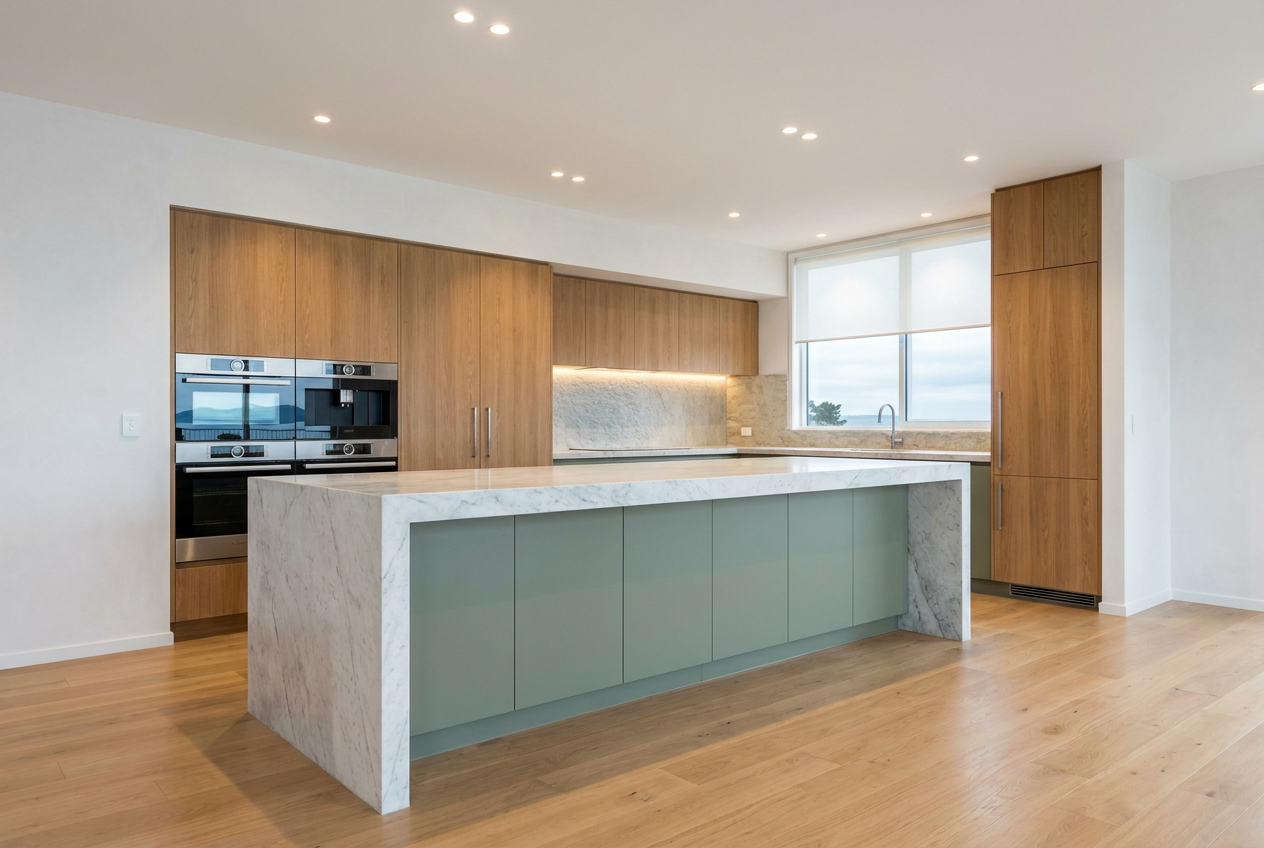
Choosing a new kitchen is one of the biggest decisions you'll make as a homeowner, and the first fork in the road is usually this: flat-pack or custom? Both options have genuine merit, but they suit very different budgets, timelines, and homes. Here's what you need to know before you commit.
What Is a Flat-Pack Kitchen?
A flat-pack kitchen (sometimes called a kit-set kitchen) comes as pre-manufactured cabinet carcasses and doors that you — or a tradesperson — assemble on site. The components are made to standard sizes in a factory, flat-packed for transport, and sold through retailers. In New Zealand, you'll find flat-pack kitchens at stores like Bunnings and Mitre 10, as well as specialist kitchen retailers.
Typical flat-pack features
- Standard cabinet widths (usually in 100 mm increments)
- Melamine or thermofoil door finishes in a set range of colours and styles
- Flat-pack carcasses you assemble with cam locks and dowels
- Benchtops purchased separately (laminate, stone, or timber)
- Limited ability to accommodate unusual room shapes or sizes
What Is a Custom Kitchen?
A custom kitchen is designed and built specifically for your space by a professional cabinet maker. Every cabinet is measured, cut, and finished to suit your exact room dimensions, your preferred materials, and your lifestyle. There are no standard sizes — if your ceiling is 2.55 m high or your wall has an awkward angle, a custom kitchen can work around it.
Typical custom kitchen features
- Cabinets built to the millimetre for your specific space
- Wide choice of materials: solid timber, plywood carcasses, two-pack paint finishes, veneer, and more
- Integrated appliances, pull-out pantries, and bespoke storage solutions
- Joinery that meets the NZ Building Code requirements for wet areas (particularly around sinks and dishwashers, covered under clause E3)
- Longer lead times but a result tailored entirely to you
Key Differences at a Glance
| Feature | Flat-Pack | Custom |
|---|---|---|
| Cost (as a guide) | Lower — budget to mid-range | Mid to premium |
| Lead time | Days to weeks | Several weeks to months |
| Fit to your space | Standard sizes only | Built to exact dimensions |
| Material choice | Limited range | Extensive options |
| Finish quality | Good to very good | Very good to exceptional |
| DIY-friendly? | Yes, with care | Typically installed by the maker |
| Resale appeal | Moderate | High |
Cost Considerations
Flat-pack kitchens are generally the more affordable starting point. As a broad guide, a modest flat-pack kitchen (excluding appliances, benchtop, and installation) can cost significantly less than an equivalent custom fit-out — but the gap narrows once you factor in professional installation, a stone benchtop, and quality hardware. Custom kitchens command a higher price because you're paying for skilled labour, bespoke materials, and a design service.
It's worth remembering that a kitchen is a long-term investment. BRANZ research consistently shows kitchens and bathrooms have a strong influence on a home's value, so quality joinery often pays back over time.
Quality and Durability
Not all flat-pack kitchens are created equal. Entry-level flat-pack uses particleboard carcasses with a melamine lining — perfectly serviceable in a dry environment, but vulnerable to moisture swelling if water gets in around the sink or dishwasher. Better-quality flat-pack ranges use moisture-resistant board and soft-close hardware.
Custom cabinet makers typically use plywood carcasses as standard, which are significantly more resistant to moisture and racking. Doors can be finished in two-pack polyurethane, real timber veneer, or solid timber — finishes that are difficult or impossible to achieve with flat-pack. Hardware (hinges, drawer runners) on a custom kitchen is usually commercial-grade.
Fit and Flexibility
This is where custom kitchens really shine. New Zealand homes — especially older villas, bungalows, and character houses — rarely have perfectly square, level, or standard-sized kitchens. Flat-pack cabinets rely on filler strips and scribe mouldings to hide gaps, which can look less refined. A custom cabinet maker measures your space precisely and builds to suit, so there are no awkward gaps or compromises.
If you're renovating a rental property and need to meet Healthy Homes standards (for example, adequate ventilation near cooking areas), a custom design can incorporate rangehood ducting and extraction more cleanly.
DIY vs Professional Installation
Flat-pack kitchens are designed to be assembled by a competent DIYer, and many homeowners do exactly that. However, getting cabinets level, plumb, and properly secured to walls (especially on timber-framed walls to NZS 3604 standards) takes patience and the right tools. Mistakes can be costly to fix.
Custom kitchens are almost always installed by the cabinet maker or their team — it's part of the service and ensures the warranty remains valid.
When to Call a Professional
Regardless of which kitchen type you choose, some work must be carried out by licensed tradespeople:
- Electrical work — connecting your oven, cooktop, or rangehood to the mains is restricted electrical work under the Electricity Act. Only a registered electrician can do this. Check credentials at the Electrical Workers Registration Board.
- Plumbing — connecting or modifying water supply and waste pipes is restricted work under the Plumbers, Gasfitters, and Drainlayers Act. Use a licensed plumber registered with the PGDB.
- Gas connections — connecting a gas cooktop or oven is restricted gasfitting work. Again, check the PGDB.
For the cabinetry itself, a qualified cabinet maker (you can find local ones on tradedirectory.co.nz) will ensure your kitchen is built and installed to a professional standard, with proper fixings and finishes that last.
Which Option Is Right for You?
Choose flat-pack if you have a standard-sized kitchen, a tighter budget, and you're comfortable with a DIY project or want a straightforward renovation. Choose custom if your space is unusual, you want premium materials and finishes, or you're building a forever home where quality and longevity matter most.
When in doubt, get quotes from both a flat-pack supplier and a local custom cabinet maker — the difference in price may be smaller than you expect, especially once installation and extras are included.