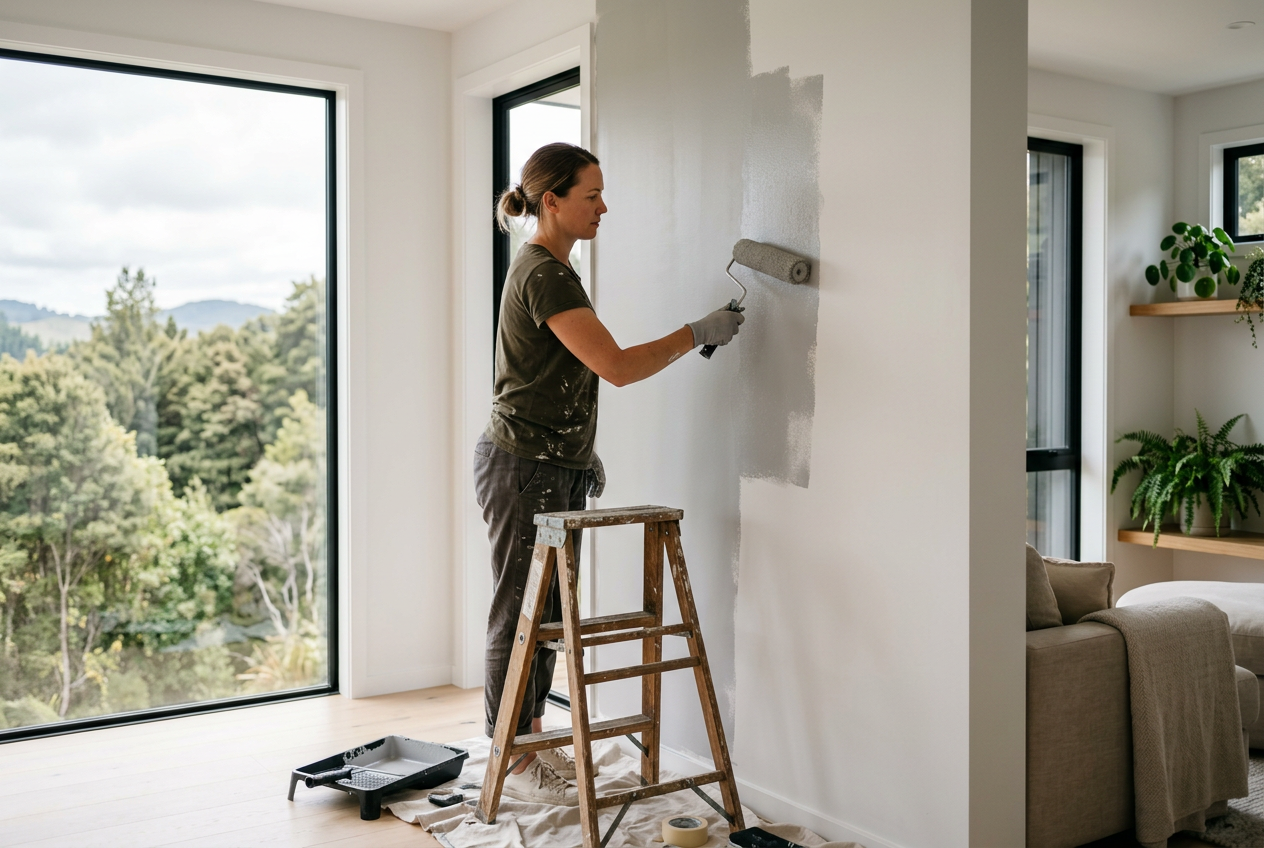
Hallways cop more punishment than almost any other room in the house — scuffed walls, grubby fingerprints, school bags dragging along the surface, and the constant opening and closing of doors. Choosing the right paint makes a real difference to how long your walls stay looking fresh. Here's what you need to know to make a smart choice for a New Zealand home.
Why Paint Choice Matters in Hallways
Hallways are narrow, busy, and often poorly ventilated. Walls get touched, bumped, and wiped down regularly. A paint that works beautifully in a bedroom can look tired and patchy in a hallway within a year. The key factors to consider are sheen level, washability, and durability — and in New Zealand's varied climate, moisture resistance can matter too, especially in older homes with less insulation.
The Best Sheen Level for Hallways
Sheen (or finish) is the single biggest decision you'll make. Here's how the main options compare:
| Finish | Sheen Level | Washability | Best For |
|---|---|---|---|
| Flat / Matt | None | Poor | Low-traffic rooms, ceilings |
| Low Sheen / Eggshell | Low | Moderate | Bedrooms, living areas |
| Semi-Gloss | Medium-high | Very good | Hallways, kitchens, trims |
| Gloss | High | Excellent | Doors, skirting boards, trims |
For most hallways, a low sheen or semi-gloss finish strikes the best balance. It's washable enough to handle regular cleaning, but doesn't highlight every imperfection on the wall the way a full gloss can. If your walls are in great condition, semi-gloss is a top pick. If they're a bit uneven, a quality low sheen is more forgiving.
Top NZ Paint Brands to Consider
New Zealand has excellent locally available options. Here are three well-regarded brands worth looking at:
- Resene – Their Lustacryl semi-gloss waterborne enamel is a popular choice for high-traffic areas. Resene paints are widely respected for durability and colour consistency.
- Dulux – The Wash & Wear range is specifically formulated for washability and is a go-to for busy family homes.
- Wattyl – Their Solagard and interior enamel ranges offer solid durability for interior walls and trims.
All three brands are available at major NZ retailers. Always check the product's technical data sheet for washability ratings and recommended applications.
Key Features to Look For
When reading paint labels or talking to your paint store, look for these qualities:
- Scrubbability – Can it handle repeated wiping with a damp cloth or mild cleaner?
- Stain resistance – Some paints include additives that repel marks before they soak in.
- Mould resistance – Useful in older NZ homes or hallways near bathrooms.
- Low VOC – Better for indoor air quality, especially important in enclosed spaces like hallways. BRANZ has useful guidance on healthy indoor environments.
- Coverage – A quality paint with good coverage means fewer coats and a more even finish.
Prep Is Everything
Even the best paint won't last if the surface underneath isn't properly prepared. For hallways:
- Fill any holes or cracks with a suitable interior filler and sand smooth once dry.
- Clean the walls thoroughly — remove grease, dust, and any mould with an appropriate cleaner.
- Sand glossy surfaces lightly so the new paint can bond properly.
- Apply a primer if you're painting over a dark colour, bare plaster, or GIB plasterboard that hasn't been sealed.
- Mask off skirting boards, door frames, and light switches before you start.
Skipping prep is the number one reason DIY paint jobs fail early in high-traffic areas.
Application Tips for a Long-Lasting Finish
- Apply two full coats, allowing proper drying time between coats as specified on the tin.
- Use a quality roller (a 10–12 mm nap is good for standard interior walls) and a brush for cutting in around edges.
- Paint in good lighting so you can spot missed patches or runs as you go.
- In cooler months, make sure the room is adequately ventilated and above the minimum temperature recommended on the paint tin — cold conditions can affect how paint cures.
- Don't wash the walls for at least two to four weeks after painting, even if the paint feels dry. It needs time to fully harden.
Colour Considerations for Hallways
Darker colours can hide marks better day-to-day, but they also show dust more readily. Light neutrals make narrow hallways feel larger and brighter. A practical middle ground is a mid-tone warm neutral — it's forgiving and timeless. Whatever colour you choose, test a sample pot on the actual wall and view it at different times of day before committing.
When to Call a Professional
Painting is one of the more DIY-friendly home improvement tasks, but there are times when it's worth bringing in a qualified painter:
- If your hallway has high ceilings or a stairwell, working safely at height requires proper scaffolding or a platform — don't risk it on a wobbly ladder.
- If walls have significant damage, cracking, or moisture issues that need diagnosing before painting.
- If you want a flawless, professional finish — experienced painters know how to prep, cut in, and roll without lap marks or streaks.
- If the job involves lead paint in an older home (pre-1980s), which requires safe handling procedures. WorkSafe NZ has guidance on working with hazardous materials.
You can find qualified, local painters on tradedirectory.co.nz — it's a good idea to get two or three quotes and check their references before you commit.