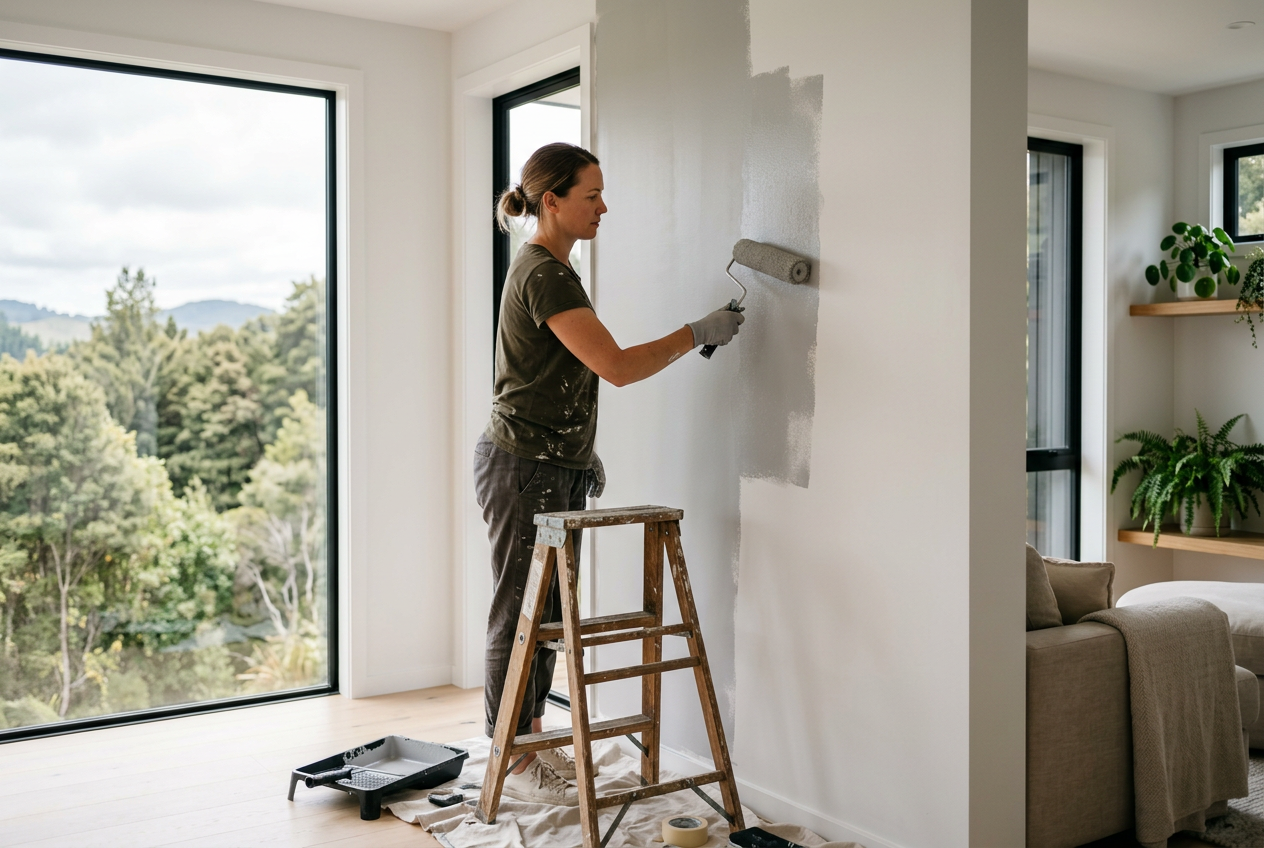
Laundry and utility rooms are among the hardest-working spaces in a New Zealand home — they deal with steam, splashes, detergent residue, and constant humidity. Choosing the wrong paint can lead to peeling, mould, and a shabby finish within a year or two. The good news is that with the right product and a bit of preparation, you can get a durable, good-looking result that stands up to the daily grind.
Why Laundry Rooms Are Tough on Paint
Washing machines and dryers generate significant heat and moisture. In many NZ homes — especially older villas and bungalows with limited ventilation — this moisture has nowhere to go, condensing on walls and ceilings. Over time, standard interior paint blisters, peels, and can harbour mould and mildew. The BRANZ guidelines on moisture management highlight that wet-area surfaces need coatings specifically formulated to resist water vapour transmission and fungal growth.
The Key Features to Look For
When shopping for laundry room paint, prioritise these properties:
- Moisture and humidity resistance — the coating should cope with repeated steam exposure without blistering
- Mould and mildew inhibitors — look for products with built-in fungicide or anti-mould additives
- Washability and scrub resistance — detergent splashes and dirty handprints need to wipe off easily
- Good adhesion — especially important on previously painted or slightly glossy surfaces
- Low or zero VOC — useful in a small, sometimes poorly ventilated space
Choosing the Right Sheen Level
Sheen (finish) matters as much as the paint formula itself. Here's a quick guide:
| Finish | Moisture Resistance | Washability | Best Used On |
|---|---|---|---|
| Flat / Matt | Low | Poor | Not recommended for laundries |
| Low Sheen / Eggshell | Moderate | Moderate | Walls in well-ventilated laundries |
| Semi-Gloss | High | Very good | Walls, trims, splashback areas |
| Gloss | Very high | Excellent | Trims, doors, cabinetry |
For most laundry walls, a semi-gloss or low-sheen finish strikes the right balance — easy to wipe down without looking too shiny. Ceilings can go one step lower in sheen, but avoid flat paint entirely in this environment.
Recommended NZ Paint Products
Several well-known NZ paint brands offer suitable products:
Resene
Resene offers a range of interior waterborne paints with mould-resistant formulations. Their Resene Zylone Sheen and Resene SpaceCote Low Sheen ranges are popular for wet-area walls, and Resene's in-store colour consultants can advise on the best system for your specific situation.
Dulux
Dulux produces interior paints with moisture and mould resistance built in. Their Dulux Wash & Wear range is well regarded for high-traffic, high-humidity rooms thanks to its scrub-resistant finish.
Wattyl
Wattyl offers interior acrylic paints suited to humid environments. Their Wattyl I.D. Advanced range includes low-sheen and semi-gloss options with good washability.
All three brands are widely available at Mitre 10, Bunnings, and PlaceMakers, as well as dedicated paint stores.
Surface Preparation — Don't Skip This Step
Even the best paint will fail on a poorly prepared surface. Follow these steps:
- Clean the walls thoroughly — wash off any grease, detergent residue, or soap scum with sugar soap and rinse well
- Treat existing mould — kill mould with a diluted bleach solution or a proprietary mould treatment before painting; never paint over active mould
- Sand and fill — sand any flaking paint back to a firm edge, fill holes and cracks with a suitable interior filler, and sand smooth
- Prime if needed — bare plasterboard (GIB), repaired areas, or surfaces with heavy staining should receive a coat of appropriate primer before the topcoat
- Allow to dry fully — moisture in the substrate is a common cause of paint failure; ensure walls are completely dry before you start
Ventilation and the NZ Building Code
Paint alone won't solve a moisture problem. The NZ Building Code clause G4 requires adequate ventilation in rooms where moisture is generated. If your laundry lacks an openable window or an exhaust fan, consider installing one — it will dramatically extend the life of any paint job and reduce mould risk. Under the Healthy Homes Standards, rental properties must meet specific ventilation requirements, which you can check at Tenancy Services.
When to Call a Professional
For most homeowners, painting a laundry is a manageable DIY project. However, consider hiring a qualified painter if:
- There is significant mould damage behind the walls or on the plasterboard — this may indicate a leak or structural moisture issue requiring investigation
- The existing paint is in very poor condition and needs extensive preparation
- You want a guaranteed, high-quality finish that will last many years
- The room has GIB Aqualine or wet-area plasterboard that needs specialist treatment
A professional painter will also be able to identify underlying issues that a DIYer might miss. You can find qualified, local painters on tradedirectory.co.nz.
Safety note: If your home was built before the 1980s, older paint layers may contain lead. Sanding or scraping lead paint creates hazardous dust — check with WorkSafe NZ for guidance before disturbing old paint surfaces.