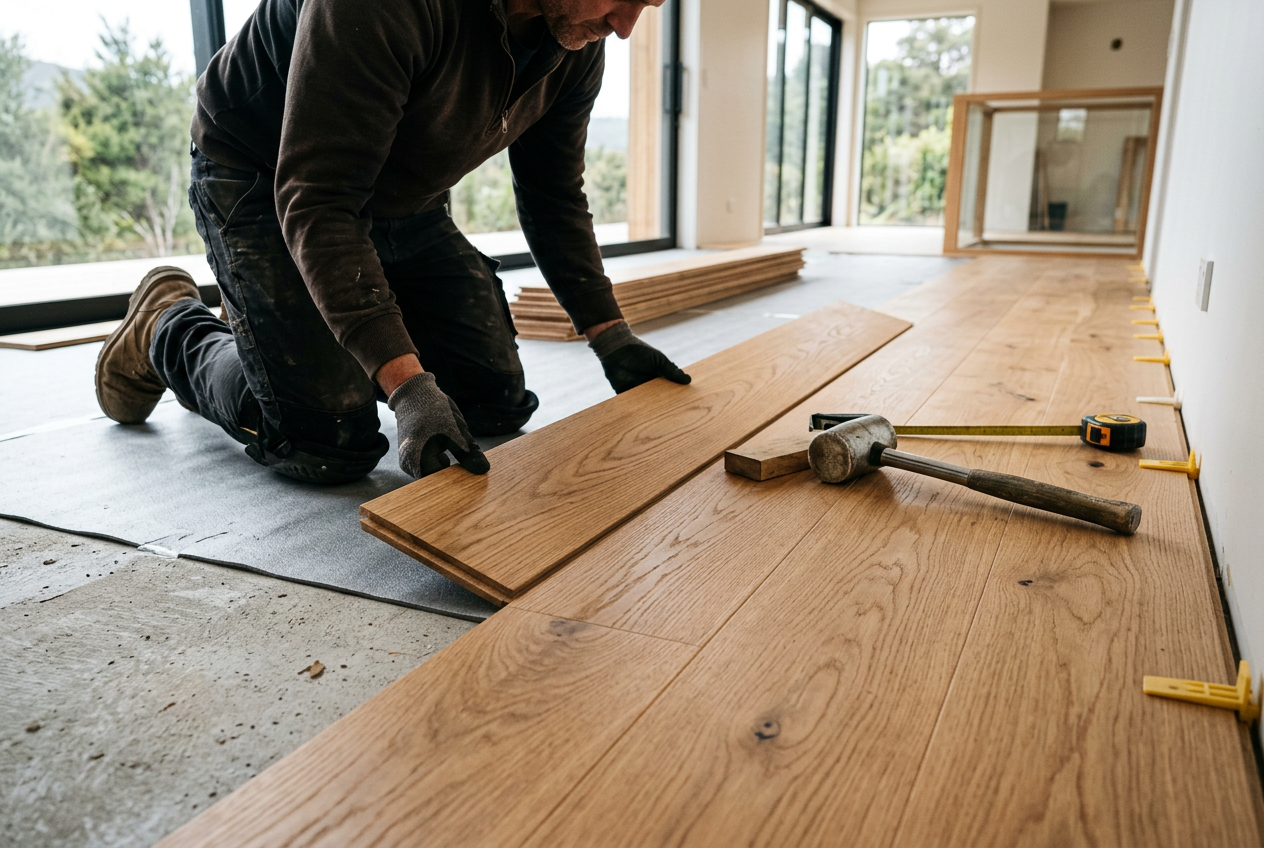
Choosing the right flooring for a rental property is one of the smartest investments a New Zealand landlord can make. The wrong choice means frequent replacements, unhappy tenants, and ongoing maintenance costs — while the right flooring can last a decade or more with minimal fuss. Here's a practical guide to help you make the best decision for your investment property.
What Makes Good Rental Flooring?
Rental flooring needs to tick several boxes that owner-occupier flooring doesn't always have to:
- Durability — it must withstand high foot traffic, furniture dragging, and the occasional rough treatment
- Easy to clean — tenants and property managers need to maintain it without specialist products
- Moisture resistance — especially important in NZ's damp climates and under the Healthy Homes Standards, which require adequate insulation and moisture control
- Cost-effective — a balance between upfront cost and lifespan
- Neutral appearance — broad appeal to attract a wide range of tenants
Luxury Vinyl Plank (LVP) — The Top Pick for Most Rentals
Luxury vinyl plank (LVP) or rigid core vinyl is widely considered the best all-round flooring for NZ rental properties, and for good reason. It's waterproof, extremely durable, comfortable underfoot, and looks great. Modern LVP convincingly mimics timber or stone at a fraction of the cost.
Why landlords love it:
- Fully waterproof — ideal for kitchens, bathrooms, and laundries
- Resistant to scratches and dents
- Easy to clean with a damp mop
- Comfortable and warm underfoot compared to tile
- Available at Bunnings, Mitre 10, and specialist flooring suppliers
- As a guide, mid-range LVP typically costs somewhere in the range of $30–$70 per m² for supply and install, though prices vary widely by product and region
Look for products with a wear layer of at least 0.3 mm (ideally 0.5 mm or more) for rental use — thicker wear layers last significantly longer under heavy use.
Carpet — Still a Solid Choice for Bedrooms
Carpet remains popular in NZ rental bedrooms and living areas, particularly in colder regions like Canterbury, Otago, and the Central Plateau. It adds warmth and sound insulation, which tenants genuinely appreciate during winter.
Tips for rental carpet:
- Choose a commercial-grade or heavy-duty residential carpet with a dense, low pile — it resists flattening and staining better than plush styles
- Opt for solution-dyed nylon fibres, which are more stain-resistant than wool or polyester
- Mid-toned, neutral colours (warm greys, beiges) hide everyday dirt between cleans
- Avoid light colours or very dark shades — both show wear and staining quickly
- Always use a quality underlay; it extends carpet life and improves warmth
Carpet is generally not recommended for wet areas, kitchens, or high-traffic hallways in rentals.
Ceramic and Porcelain Tile — Best for Wet Areas
Tiles are the gold standard for bathrooms, laundries, and kitchen splashbacks. They're hygienic, waterproof, and virtually indestructible when properly installed. Under the NZ Building Code (specifically clause E3 — Internal Moisture), wet areas like showers must be properly waterproofed, and tiles over a correct membrane system satisfy this requirement.
Rental tile tips:
- Choose porcelain over ceramic where possible — it's denser and more durable
- Use a slip-resistant finish (R10 or higher rating) in bathrooms and laundries for safety
- Keep grout lines narrow and use an epoxy or stain-resistant grout to reduce maintenance
- Tiles can feel cold underfoot — consider in-slab or under-tile heating in colder climates if budget allows
For waterproofing products and tile adhesives, Ardex and Mapei are well-regarded NZ trade brands.
Comparing Your Main Options
| Flooring Type | Durability | Water Resistance | Warmth | Maintenance | Relative Cost |
|---|---|---|---|---|---|
| Luxury Vinyl Plank | ★★★★★ | ★★★★★ | ★★★★ | Very easy | Mid |
| Carpet (heavy duty) | ★★★ | ★ | ★★★★★ | Moderate | Low–Mid |
| Porcelain Tile | ★★★★★ | ★★★★★ | ★★ | Easy | Mid–High |
| Laminate | ★★★ | ★★ | ★★★ | Easy | Low–Mid |
| Solid Timber | ★★★ | ★★ | ★★★★ | High | High |
What About Laminate Flooring?
Laminate is a budget-friendly option but has real limitations in a rental context. Most laminate is not waterproof — moisture from spills or leaks can cause swelling and delamination. If you do use laminate, choose a water-resistant (not just moisture-resistant) product and avoid installing it in kitchens or bathrooms. LVP is generally a better investment for a similar price point.
Healthy Homes Compliance
If you're a landlord, you must comply with the Healthy Homes Standards, which include requirements around insulation, heating, ventilation, moisture, and draught stopping. While flooring itself isn't directly mandated, subfloor moisture barriers and adequate underfloor insulation are required — and your flooring choice can affect how well these systems perform. BRANZ provides excellent technical guidance on moisture management in NZ homes.
When to Call a Professional
While keen DIYers can lay some flooring types (like floating LVP), there are situations where a qualified flooring installer is strongly recommended:
- Tile installation in wet areas — incorrect waterproofing can lead to Building Code non-compliance and costly damage
- Subfloor preparation — uneven or damaged subfloors need professional assessment before new flooring goes down
- Large areas or complex layouts — mistakes are expensive to fix
- Carpet stretching and seaming — poor installation leads to early failure
A professional flooring installer will also help you choose the right product for your specific property and climate. You can find qualified local flooring installers on tradedirectory.co.nz.