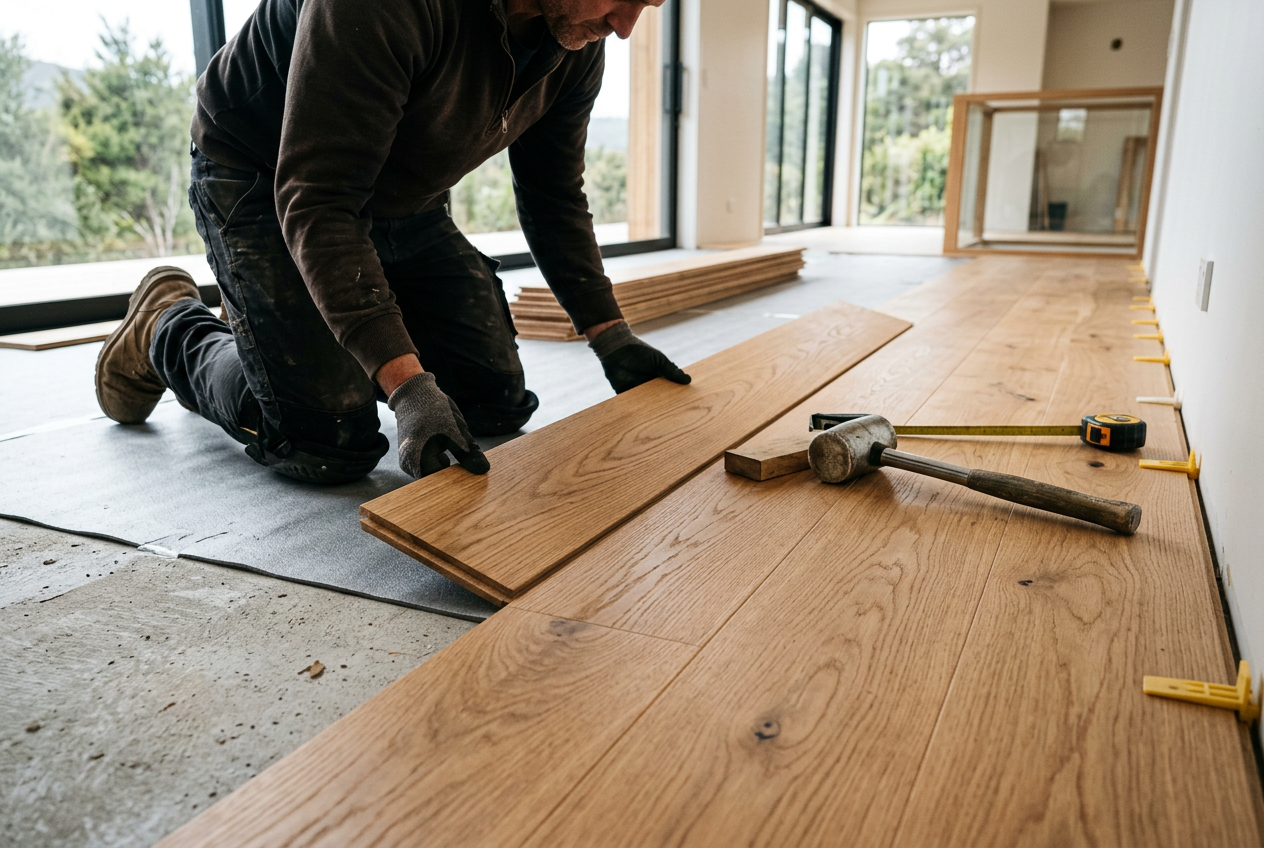
The kitchen is one of the hardest-working rooms in your home — it sees spills, dropped utensils, heavy foot traffic, and everything in between. Choosing the right flooring means finding a surface that can handle all of that while still looking great and feeling comfortable underfoot. Here's a practical guide to the most popular kitchen flooring options available in New Zealand.
What to Look for in Kitchen Flooring
Before diving into specific materials, it helps to know what properties matter most in a kitchen environment:
- Water and moisture resistance — kitchens are wet areas, so your floor needs to cope with spills and splashes
- Durability — heavy foot traffic, dropped pots, and chair legs all take a toll
- Ease of cleaning — smooth, non-porous surfaces are much easier to keep hygienic
- Comfort underfoot — if you spend long periods cooking, a softer or cushioned surface makes a real difference
- Slip resistance — especially important when the floor gets wet
- Compatibility with underfloor heating — increasingly popular in NZ homes
For rental properties, landlords should also be aware of Tenancy Services Healthy Homes standards, which include requirements around moisture and drainage that can influence flooring choices.
Vinyl and Luxury Vinyl Plank (LVP) — The Popular All-Rounder
Luxury vinyl plank (LVP) and vinyl sheet flooring are among the most popular kitchen choices in New Zealand, and for good reason. Modern vinyl is 100% waterproof, highly durable, comfortable underfoot, and available in a huge range of realistic timber and stone looks.
- LVP clicks together like a floating floor — no glue required in most cases
- Vinyl sheet is seamless, making it especially resistant to water getting underneath
- Both are generally compatible with underfloor heating systems
- Relatively budget-friendly compared to timber or stone
As a rough guide, expect to pay somewhere in the range of $30–$80+ per square metre for supply and installation, depending on the product quality and subfloor preparation required.
You'll find a wide range of vinyl flooring options at Mitre 10 and Bunnings.
Ceramic and Porcelain Tiles — Tough and Timeless
Tiles are a classic kitchen choice and remain extremely popular in NZ homes. Porcelain tiles in particular are very hard-wearing, fully waterproof, and easy to clean.
Pros
- Extremely durable and long-lasting
- Completely waterproof
- Huge range of styles and sizes
- Works well with in-slab or electric underfloor heating
Cons
- Hard and cold underfoot (though underfloor heating addresses this)
- Grout lines can collect dirt and require regular cleaning
- Can be slippery when wet — always choose a tile with an appropriate slip rating (look for R10 or higher for wet areas)
- Heavier than other options — may require subfloor assessment
Tile installation in a kitchen is a job many confident DIYers tackle, but getting the substrate right is critical. BRANZ provides good guidance on substrate preparation and wet area requirements under the NZ Building Code.
Engineered Timber — Warmth and Character
Engineered timber flooring offers the warmth and beauty of real wood with better dimensional stability than solid timber. It's a good option for kitchens, though it requires more care around moisture than vinyl or tile.
- The real timber veneer on top can be sanded and refinished (usually once or twice)
- More stable than solid timber in humid or variable conditions
- Not fully waterproof — spills should be wiped up promptly
- Generally not recommended directly over a concrete slab without a moisture barrier
Solid hardwood timber is generally not recommended for kitchens due to its susceptibility to moisture swelling and cupping.
Polished Concrete — Modern and Durable
Polished or sealed concrete is a stylish, low-maintenance option increasingly seen in NZ kitchens, particularly in new builds. It's extremely durable, easy to clean, and works brilliantly with underfloor heating.
Comparing Kitchen Flooring Options
| Flooring Type | Water Resistance | Durability | Comfort | DIY Friendly | Relative Cost |
|---|---|---|---|---|---|
| Vinyl / LVP | Excellent | Very Good | Good | Yes | $ – $$ |
| Porcelain Tile | Excellent | Excellent | Low | Moderate | $$ – $$$ |
| Engineered Timber | Moderate | Good | Good | Moderate | $$ – $$$ |
| Polished Concrete | Excellent | Excellent | Low | No | $$$ |
Subfloor Preparation — Don't Skip This Step
No matter which flooring you choose, the condition of your subfloor is critical. An uneven, damp, or damaged subfloor will cause problems with any surface laid on top. In New Zealand, the NZ Building Code sets requirements around moisture barriers and subfloor ventilation that must be met. If you're unsure about your subfloor condition, get a professional assessment before spending money on new flooring.
When to Call a Professional
While some flooring types (like click-lock LVP) are genuinely DIY-friendly, there are situations where a qualified flooring installer is the smart choice:
- Large or complex areas with lots of cuts, angles, or patterns
- Tile work, especially if waterproofing membranes are required under the NZ Building Code's E3 (Internal Moisture) provisions
- Polished concrete — this always requires professional equipment and expertise
- Any work involving subfloor repairs, levelling compounds, or moisture barriers
- If your kitchen renovation also involves moving plumbing or electrical work — these are restricted trades in NZ. Plumbing must be carried out by a licensed tradesperson registered with the Plumbers, Gasfitters and Drainlayers Board, and electrical work by someone registered with the Electrical Workers Registration Board
For the best result, consider hiring a qualified local flooring installer — you can find experienced tradespeople in your area at tradedirectory.co.nz.