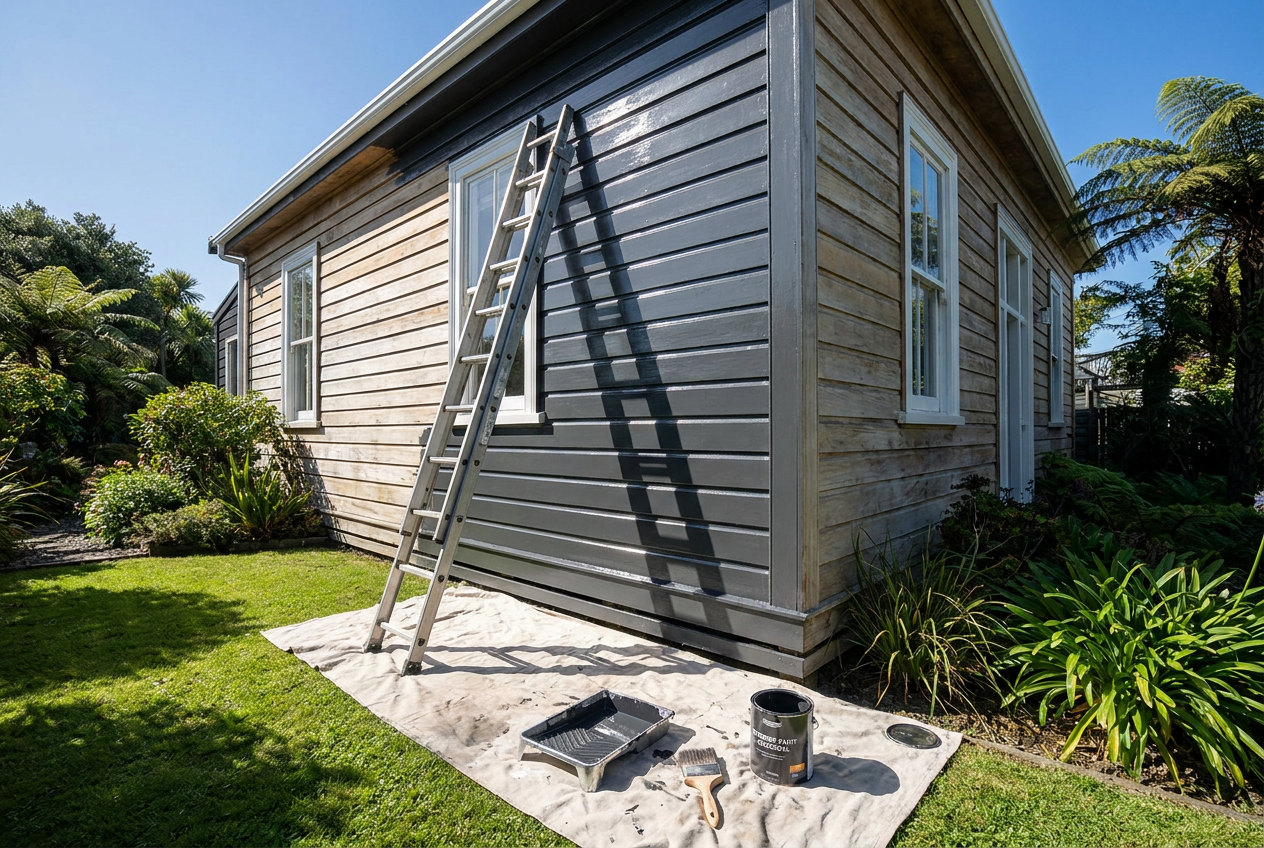
New Zealand's climate is tough on exterior paint. Between intense UV radiation, coastal salt spray, high humidity, and wild temperature swings, a coat of paint that looks great in spring can be peeling and faded by the following summer. Choosing the right product — and applying it correctly — makes all the difference.
Why NZ Conditions Are So Demanding
New Zealand sits close to the ozone hole, meaning UV levels here are among the highest in the world. UV breaks down paint binders and causes fading and chalking far faster than in many other countries. Add in:
- Coastal salt air, which accelerates corrosion on metal substrates and degrades paint films
- High rainfall and humidity, particularly in the upper North Island and West Coast, which encourages mould and mildew growth
- Freeze-thaw cycles in alpine and southern regions, which cause paint to crack and flake
- Timber movement in older NZ homes, which stresses paint films as wood expands and contracts
Understanding your local microclimate is the first step to picking the right product. BRANZ publishes excellent guidance on how NZ's varied climate zones affect building materials and coatings.
Water-Based vs Oil-Based Exterior Paints
| Feature | Water-Based (Acrylic) | Oil-Based (Alkyd) |
|---|---|---|
| Flexibility | High — handles timber movement well | Lower — can crack over time |
| UV resistance | Excellent (modern formulas) | Moderate |
| Dry time | Fast (2–4 hours recoat) | Slow (12–24 hours) |
| Mould resistance | Good with added biocides | Moderate |
| Clean-up | Water | Mineral turpentine |
| VOCs | Low | Higher |
| Best for | Most NZ exterior surfaces | Some metal primers, trim |
For most NZ homes, premium water-based acrylic is the go-to choice. Modern 100% acrylic formulations are flexible, breathable, and hold colour far better under UV than older oil-based products.
Top NZ Paint Brands for Exterior Use
Resene
Resene is a proudly NZ-owned brand and a favourite among local painters. Their Resene X-200 and Resene Lumbersider ranges are specifically formulated for NZ timber homes, offering excellent flexibility and mould resistance. Resene also offers a CoolColour technology range that reflects infrared heat — useful for dark-coloured homes in sunny regions.
Dulux
Dulux offers the Weathershield range, which is well-regarded for UV resistance and durability in harsh conditions. Their products are widely available and come with clear guidance on application for NZ substrates.
Wattyl
Wattyl produces the Solagard exterior range, which has long been popular with NZ painters for its durability on weatherboard and fibre cement homes.
All three brands offer dedicated primer and topcoat systems — always use the recommended primer from the same brand to ensure compatibility and warranty coverage.
Choosing by Substrate
Different surfaces need different products:
- Timber weatherboards — Use a flexible acrylic with a penetrating primer. Bare timber must be primed before topcoating.
- Fibre cement (e.g. James Hardie) — James Hardie recommends specific coating systems; always check their technical data sheets. A quality acrylic topcoat over a suitable primer works well.
- Concrete and masonry — Look for a masonry-specific acrylic or elastomeric coating that can bridge hairline cracks.
- Steel and iron — Requires a rust-inhibiting primer before any topcoat. In coastal zones, consider a two-pack epoxy system for maximum protection.
- Previously painted surfaces — Test for adhesion, clean thoroughly, and spot-prime any bare areas before recoating.
Key Features to Look For
When reading paint labels and data sheets, prioritise these features for NZ conditions:
- UV resistance — Look for products marketed for high-UV environments
- Mould and mildew resistance — Essential in humid regions; many premium acrylics include built-in biocides
- Flexibility — Critical for timber homes subject to seasonal movement
- Salt resistance — If you're within a few kilometres of the coast, this is non-negotiable
- Washability — A harder film sheds dirt and grime more easily
Surface Preparation: The Most Important Step
Even the best paint will fail on a poorly prepared surface. Before you open a tin:
- Wash down the entire surface with a suitable cleaner to remove mould, dirt, and chalking
- Sand or scrape any loose or flaking paint back to a firm edge
- Fill cracks and gaps with a flexible exterior filler or paintable sealant
- Prime all bare timber, metal, or repaired areas
- Allow to dry fully — painting over damp surfaces is one of the most common causes of paint failure
Don't paint in direct hot sun, high winds, or when rain is forecast within a few hours. Early morning on a mild, overcast day is often ideal.
How Many Coats Do You Need?
For most exterior repaints, one coat of primer plus two topcoats is the standard. New or bare substrates may need additional primer coats. Always follow the manufacturer's data sheet — it will specify minimum film thickness and recoat times.
When to Call a Professional
While painting is generally a DIY-friendly task, there are situations where hiring a qualified painter is the smart move:
- Multi-storey homes — Working at height carries serious fall risks. WorkSafe NZ has strict guidelines around working at height, and scaffolding is often required.
- Lead paint — Homes built before the 1980s may contain lead-based paint. Sanding or scraping this without proper precautions is a health hazard.
- Large or complex surfaces — A professional will achieve a more consistent finish and can identify underlying issues like moisture ingress or rot.
- Warranty requirements — Some product warranties require professional application.
A qualified painter will know which products suit your specific substrate, climate zone, and existing paint system. You can find experienced local painters on tradedirectory.co.nz.