Renovating a kitchen or bathroom is one of the most rewarding home improvement projects you can tackle — but when it comes to the electrical work, there are strict rules in New Zealand about who can legally do what. Understanding these rules upfront will save you time, money, and potentially serious risk.
Why Kitchens and Bathrooms Are High-Risk Electrical Zones
Kitchens and bathrooms combine electricity with water, heat, and steam — a genuinely hazardous mix. The NZ Building Code sets out specific requirements for these wet and high-demand areas, and the Wiring Rules (AS/NZS 3000) govern how electrical installations must be carried out. Getting it wrong isn't just a code violation — it can be fatal.
Zone requirements in bathrooms are particularly important. The area immediately around a shower, bath, or basin is divided into zones (Zone 0, 1, and 2), and only certain types of fittings and wiring methods are permitted in each zone. For example, standard power outlets cannot be installed within a specified distance of a shower or bath.
What Counts as Restricted Electrical Work?
In New Zealand, most electrical wiring work is restricted electrical work (REW) — meaning it must be carried out by, or under the supervision of, a registered electrician. The Electrical Workers Registration Board (EWRB) oversees licensing and registration of electricians in NZ.
For a kitchen or bathroom renovation, restricted work typically includes:
- Installing or altering any wiring in walls, ceilings, or floors
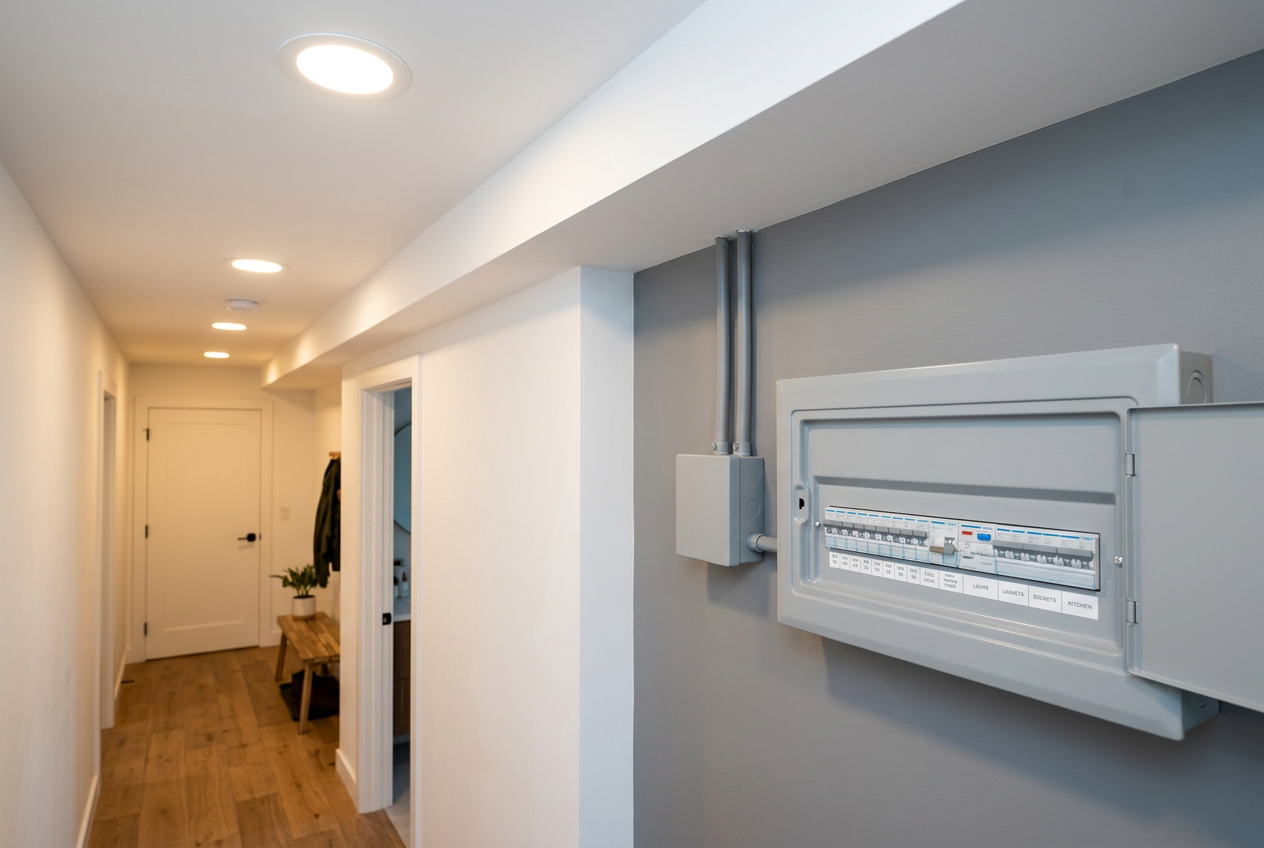
- Adding new circuits or circuit breakers to the switchboard
- Installing rangehood wiring, oven circuits, or dedicated appliance circuits
- Fitting bathroom exhaust fans with wiring connections
- Installing heated towel rails or underfloor heating elements
- Connecting any new lighting circuits or power outlets
- Installing safety switches (RCDs) or arc fault protection
All restricted electrical work must be certified by the electrician on completion. You should receive a Certificate of Compliance (CoC) — keep this document safe, as you'll need it when selling your home or making an insurance claim.
What Can a Homeowner Do Themselves?
As a homeowner, you are legally permitted to do some minor electrical work on your own property without being a registered electrician. This includes:
- Replacing a like-for-like light fitting (where no new wiring is involved)
- Changing a lightbulb or fluorescent tube
- Replacing a socket cover plate (not rewiring the socket itself)
- Installing a doorbell that runs on extra-low voltage (ELV)
However, any work that involves wiring, connections inside switchboards, or new circuits must be done by a licensed electrician. If in doubt, don't touch it — contact a professional.
Typical Electrical Work in a Kitchen Renovation
A kitchen renovation often involves significant electrical upgrades. Here's what a licensed electrician will typically assess and carry out:
- Dedicated circuits for high-draw appliances: ovens, cooktops, dishwashers, and refrigerators often need their own circuits to avoid overloading
- Power outlet placement: NZ kitchens require a minimum number of outlets, positioned safely away from sinks and cooking surfaces
- Rangehood wiring: hardwired rangehoods need a dedicated connection
- Lighting: task lighting under cabinets, LED downlights, and pendant lights all need proper circuit planning
- RCD protection: modern kitchens must have residual current device (RCD) protection on socket circuits
- Switchboard upgrade: older homes may need a switchboard upgrade to handle the additional load
Planning Tip
Before your electrician starts, have a clear plan of where appliances, benches, and cabinetry will go. Moving outlet positions after cabinetry is installed is expensive.
Typical Electrical Work in a Bathroom Renovation
Bathrooms have even tighter restrictions due to the proximity of water. A licensed electrician will typically handle:
- Zone-compliant lighting: only IP-rated (splash-proof or waterproof) fittings are permitted in wet zones
- Exhaust fan installation: hardwired fans require a proper circuit connection and may need to be interlocked with the light switch
- Heated towel rail wiring: hardwired towel rails need a dedicated connection and timer
- Underfloor heating: electric underfloor heating mats require a thermostat and dedicated circuit
- Shaver outlets: these must be a specific isolating transformer type and positioned outside Zone 1
- RCD protection: all bathroom circuits must be RCD protected
Understanding Costs — A General Guide
Electrical costs vary widely depending on the scope of work, your location, and the age of your home's existing wiring. As a very rough guide, a straightforward kitchen or bathroom electrical fit-out might range from a few hundred dollars for minor additions up to several thousand dollars for a full rewire with switchboard upgrades. Always get at least two or three quotes from licensed electricians before committing.
When to Call a Professional
For virtually all wiring work in a kitchen or bathroom, you need a registered electrician. This isn't just a recommendation — it's the law in New Zealand. Unlicensed electrical work can void your home insurance, result in fines, and create serious fire or electrocution hazards.
If your home is older (pre-1980s), your electrician may also identify outdated wiring such as aluminium wiring or deteriorated insulation that needs replacing before new work can be safely connected.
You can find qualified, vetted local electricians on tradedirectory.co.nz — always check that your electrician is registered with the EWRB and ask to see their licence before work begins.