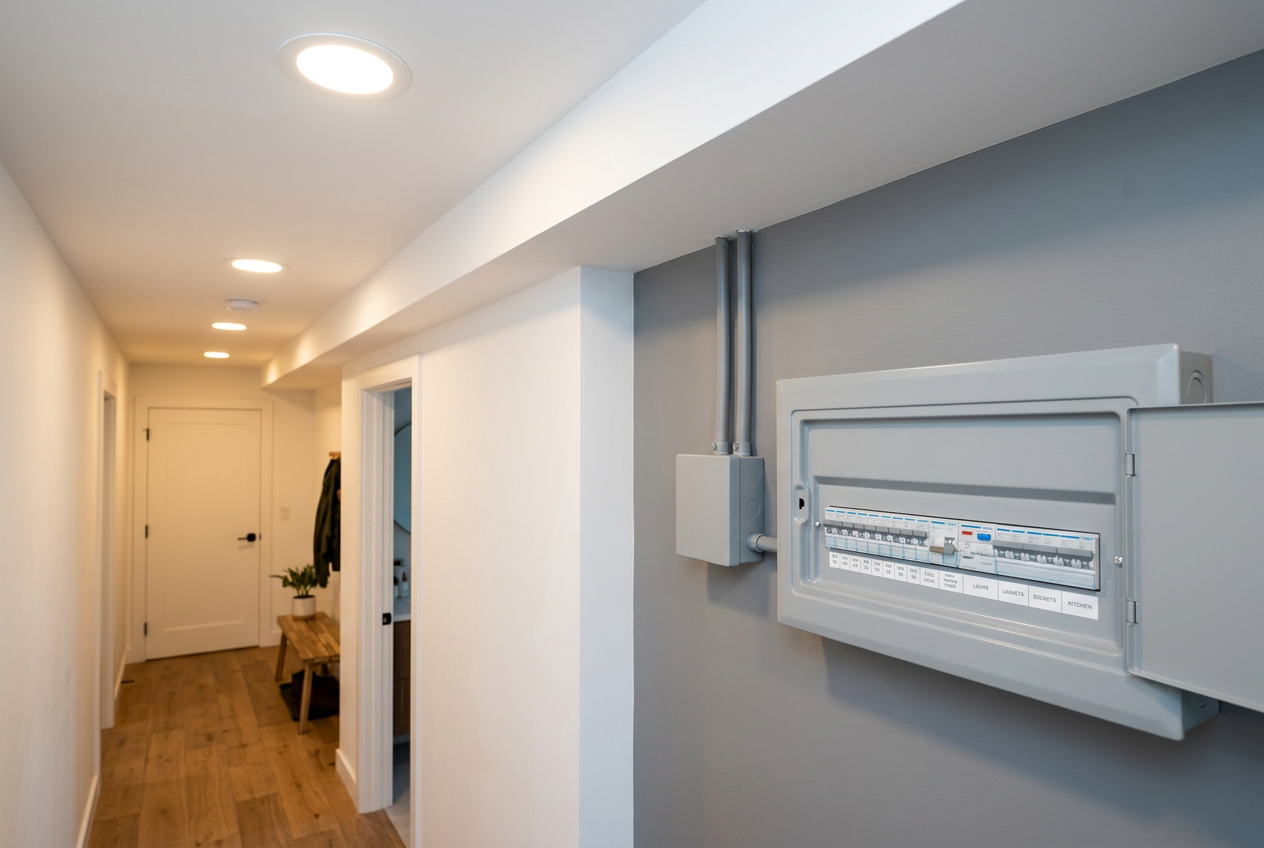
Electricity is one of those household essentials we rarely think about — until something goes wrong. A Residual Current Device (RCD) is one of the most important safety devices in your home, and understanding what it does could literally save your life. Here's what every New Zealand homeowner needs to know.
What Is an RCD?
An RCD (sometimes called a safety switch or earth leakage circuit breaker) is an electrical safety device that monitors the flow of current through a circuit. Under normal conditions, the current flowing out through the active wire should exactly match the current returning through the neutral wire. If there's a difference — even a very small one — it means current is leaking somewhere it shouldn't be, possibly through a person.
When an RCD detects this imbalance, it trips the circuit within milliseconds — far faster than a standard fuse or circuit breaker can react, and fast enough to prevent a fatal electric shock in most situations.
How Is an RCD Different from a Fuse or Circuit Breaker?
This is a common point of confusion. Here's a quick comparison:
| Device | Protects Against | Reaction Speed |
|---|---|---|
| Fuse / Circuit Breaker | Overloads and short circuits | Relatively slow |
| RCD | Electric shock and earth leakage | Extremely fast (milliseconds) |
A standard circuit breaker protects your wiring and appliances from damage caused by too much current. An RCD protects you from electrocution. They serve different purposes, which is why modern switchboards typically include both.
Why Are RCDs a Legal Requirement in New Zealand?
Under the New Zealand Electrical (Safety) Regulations, RCDs are required on certain circuits in residential properties. The regulations have been progressively strengthened over the years, and today any new electrical installation or significant alteration must comply with current standards — which include RCD protection on socket outlet circuits and other specified circuits.
The MBIE Building Performance website outlines the broader framework for safe building work in New Zealand, and electrical safety sits firmly within that framework. The Electrical Workers Registration Board (EWRB) oversees the licensing of electricians and enforces compliance with these safety standards.
For rental properties, the Healthy Homes Standards also intersect with electrical safety obligations. Landlords should check Tenancy Services for up-to-date requirements around electrical safety in rental homes.
Where Must RCDs Be Installed?
In New Zealand residential properties, RCDs are generally required on:
- All socket outlet (GPO) circuits — the standard power points throughout your home
- Lighting circuits in new installations
- Outdoor circuits — particularly important given our love of outdoor living
- Bathroom, laundry, and kitchen circuits — wet areas where shock risk is highest
- Garage and workshop circuits
If your home was built or rewired before the current regulations came into force, it may not have RCDs on all circuits. This is worth checking with a licensed electrician, especially if you're buying an older home.
How Do You Test Your RCD?
RCDs should be tested regularly — most manufacturers and electricians recommend every three to six months. Testing is simple and something a homeowner can safely do:
- Locate the RCD on your switchboard (it will have a small Test or T button).
- Press the test button firmly.
- The switch should trip immediately — cutting power to that circuit.
- Reset it by switching it back to the ON position.
If the RCD does not trip when you press the test button, or if it trips but won't reset, contact a licensed electrician promptly. A faulty RCD provides no protection.
What a Homeowner Can and Cannot Do
This is an important distinction in New Zealand law. Electrical work is restricted work under the Electricity Act 1992 and associated regulations. This means:
What you CAN do yourself:
- Test your RCD using the test button
- Replace a like-for-like light fitting (in some limited circumstances — check current rules)
- Reset a tripped RCD or circuit breaker
- Change a light bulb or plug a lamp into a socket
What you CANNOT do (restricted work — licensed electrician required):
- Install, replace, or relocate an RCD
- Add new circuits or power points
- Work inside your switchboard
- Any wiring work within walls or ceilings
Attempting restricted electrical work yourself is illegal and dangerous. It can also void your home insurance and create serious liability issues if something goes wrong.
When to Call a Professional
You should contact a licensed electrician if:
- Your home doesn't have RCDs on all socket and lighting circuits
- An RCD fails its test or won't reset
- Your RCD trips frequently without an obvious cause (this can indicate a wiring fault or faulty appliance)
- You're renovating, adding a new circuit, or upgrading your switchboard
- You're purchasing an older home and want a safety inspection
All electrical work must be carried out by a registered electrician and, for prescribed work, a licensed electrical inspector must issue a Certificate of Compliance. You can find qualified local electricians on tradedirectory.co.nz.
A Quick Safety Note
Never ignore a repeatedly tripping RCD. While it can be frustrating to lose power, the RCD is doing its job — detecting a real fault. Unplugging appliances one at a time can help identify the culprit, but if the fault isn't obvious, call a professional. Never tape or bypass an RCD.