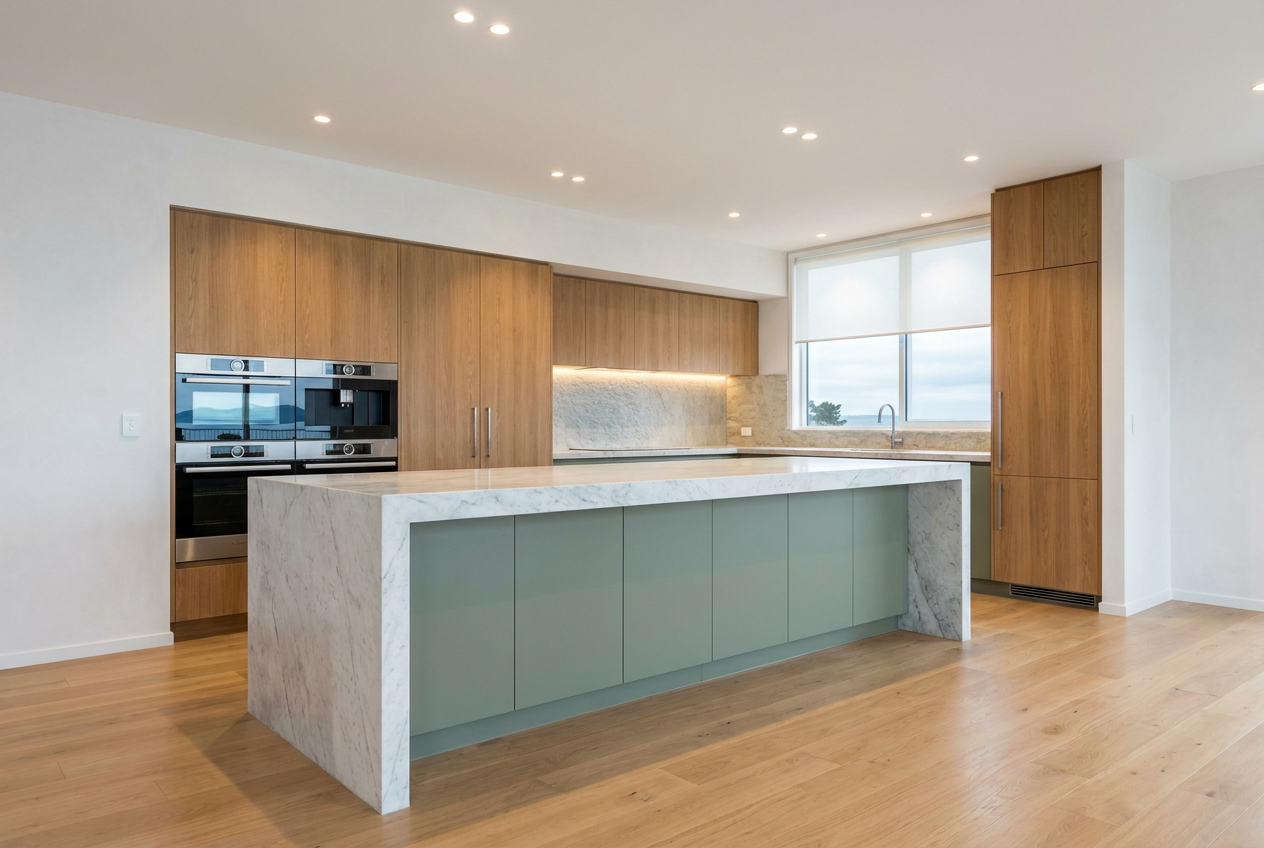
If you've ever winced at the sound of a drawer slamming shut — or watched a toddler discover just how satisfying that bang can be — soft-close drawers might already be on your radar. They've become one of the most popular upgrades in modern NZ kitchens and bathrooms, but are they genuinely worth the extra spend? Here's everything you need to know.
How Do Soft-Close Drawers Work?
Soft-close drawers use a hydraulic or pneumatic dampening mechanism built into the drawer slide (also called a runner). When you push the drawer to within roughly the last 30–50 mm of closing, the dampener takes over and pulls it gently and silently the rest of the way shut.
There are two main types:
- Integrated soft-close slides — the dampener is built directly into the runner system (common in full-extension undermount slides from brands like Blum, Hettich, and Grass).
- Add-on soft-close buffers — small clip-on or adhesive dampeners that can be retrofitted to existing drawers. These are a budget-friendly option but generally less reliable long-term.
The mechanism works in both directions on premium slides — meaning the drawer also has a gentle resistance when you pull it open too fast (called soft-open or push-to-open on some models).
What Are the Benefits?
Quieter home, less wear and tear
The most obvious benefit is noise reduction. No more slamming in the kitchen at 6 am or during late-night snack raids. Beyond comfort, soft-close hardware significantly reduces the mechanical stress on drawer boxes, cabinet carcasses, and joinery over time. Repeated slamming can loosen dovetail joints, crack MDF drawer boxes, and damage cabinet face frames — all of which are costly to repair.
Child and finger safety
Soft-close drawers are much less likely to trap little fingers. The controlled closing speed gives enough time for small hands to get clear. This is a genuine safety advantage in family homes.
Longevity and resale appeal
Quality soft-close hardware — particularly European brands like Blum (widely available through NZ cabinetry suppliers) — is rated for tens of thousands of open/close cycles. Well-maintained soft-close drawers can outlast the cabinet itself. From a real estate perspective, soft-close joinery is now an expected feature in mid-to-upper-range NZ homes and can positively influence buyer perception.
Keeps contents tidy
A gentle close means cutlery, utensils, and pantry items don't get jostled every time the drawer shuts — a small but genuinely appreciated daily convenience.
Are There Any Downsides?
| Factor | Soft-Close | Standard Slides |
|---|---|---|
| Upfront cost | Higher | Lower |
| Noise | Near silent | Can be loud |
| Finger safety | Better | Standard |
| Repairability | Replaceable parts | Simple to fix |
| Feel/feedback | Smooth, premium | Varies |
| Retrofit ease | Moderate | N/A |
The main downside is cost. Soft-close slides cost more than basic roller or ball-bearing runners, and in a full kitchen fit-out with many drawers, that difference adds up. As a rough guide, expect to pay noticeably more per drawer compared to standard slides — though exact pricing varies by brand and supplier, so get quotes from your cabinetmaker.
Some people also find the dampened close takes a little getting used to if they're accustomed to giving drawers a firm push.
New Build or Renovation: When Should You Specify Soft-Close?
If you're working with a cabinet maker on a new kitchen, bathroom vanity, laundry, or built-in wardrobe, it's almost always worth specifying soft-close slides from the outset. The incremental cost at the build stage is much lower than retrofitting later.
For a renovation or upgrade, retrofitting is possible in many cases — especially if your existing drawer boxes are in good condition. An experienced cabinet maker can assess whether your current runners can be swapped out or whether add-on buffers are a practical interim solution.
BRANZ research consistently highlights that quality fixtures and fittings contribute to the long-term performance and durability of NZ homes — soft-close hardware is a small but meaningful part of that picture.
Choosing the Right Hardware for NZ Conditions
NZ homes — particularly in coastal areas or regions with high humidity like Northland, the West Coast, or parts of Auckland — can be tough on hardware. Look for slides with corrosion-resistant finishes (stainless or zinc-plated steel, or quality polymer components). Your cabinet maker will be familiar with what performs well in your local climate.
For bathroom vanities and laundry cabinetry, this is especially important given the moisture exposure. The MBIE Building Performance guidelines around wet areas (NZ Building Code clause E3) are worth keeping in mind when specifying materials in those spaces.
DIY or Leave It to a Cabinet Maker?
Fitting add-on soft-close buffers to existing drawers is a straightforward DIY job — most clip onto the cabinet frame with no special tools. However, replacing full drawer slide systems requires accurate measurement, understanding of drawer box tolerances, and sometimes adjustment of the drawer box itself. If you get it wrong, drawers can bind, sit unevenly, or fail to close properly.
For new cabinetry or a full slide replacement, it's well worth engaging a qualified cabinet maker. They'll ensure the hardware is correctly specified for your drawer weight and box dimensions, and installed to manufacturer tolerances.
When to Call a Professional
Call a qualified cabinet maker if you're:
- Installing a new kitchen, bathroom, or laundry with multiple drawers
- Replacing damaged or worn drawer slide systems throughout a room
- Unsure whether your existing drawer boxes are compatible with new hardware
- Dealing with custom or non-standard drawer sizes
A skilled cabinet maker will also be able to advise on the best hardware brands and grades for your specific use case and budget. You can find qualified local cabinet makers on tradedirectory.co.nz.