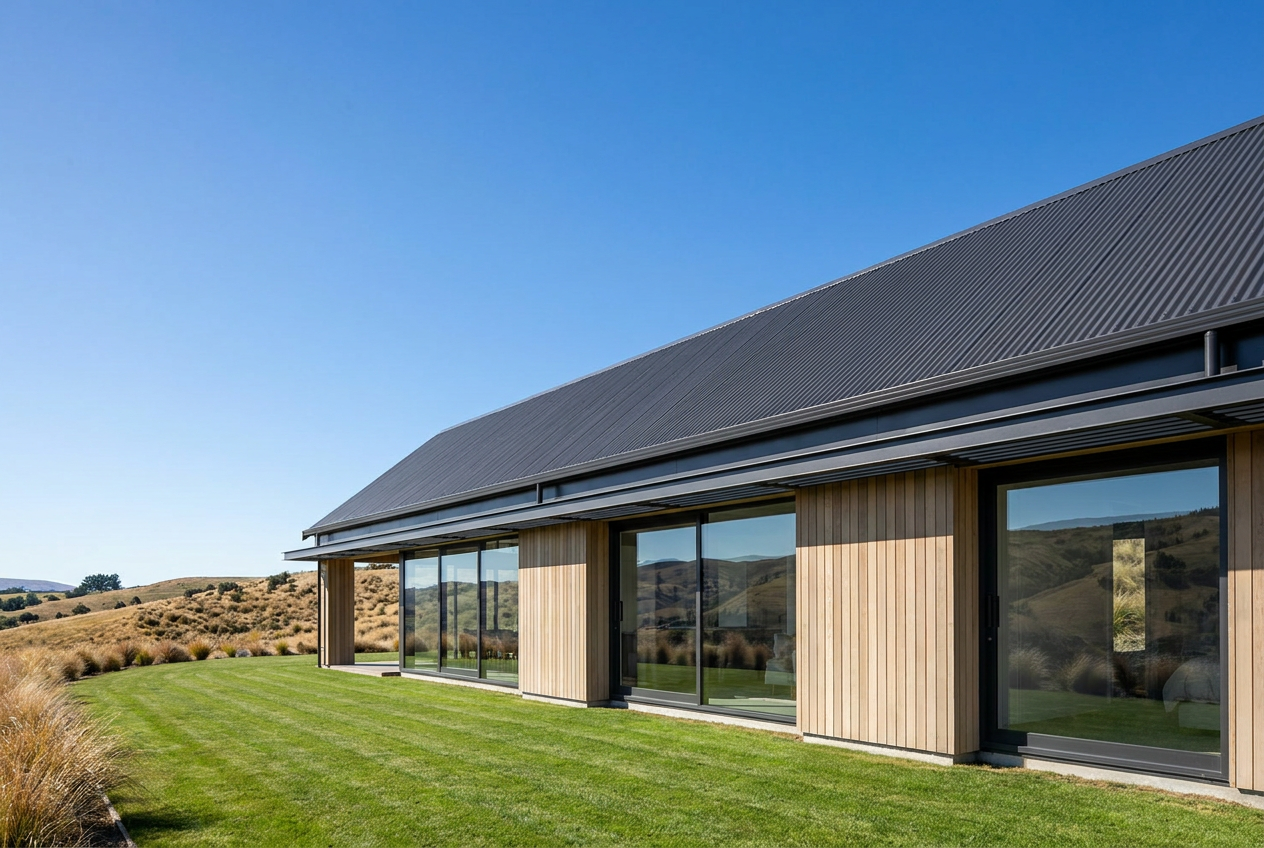
Living on the New Zealand coast or in a high-wind zone is a privilege — but it puts serious demands on your roof. Salt-laden air accelerates corrosion, and strong winds can lift, crack, or dislodge roofing that would perform perfectly well in a sheltered suburb. Choosing the right roofing system from the outset can save you thousands in repairs and give you decades of trouble-free protection.
Understanding NZ's Wind and Corrosion Zones
The NZ Building Code and the structural timber standard NZS 3604 divide New Zealand into wind zones — from Low through to Extra High — based on local topography and exposure. Coastal sites within roughly 500 m of the sea are also classified by corrosion zones (C3, C4, or C5 in some specifications), which dictate the minimum grade of metal and coatings required. Before choosing any roofing product, check your site's wind zone and corrosion classification with your local council or a licensed building practitioner.
BRANZ publishes guidance on exposure classifications and has tested many roofing systems under NZ conditions — a useful reference when comparing products.
Best Roofing Materials for Coastal and High-Wind Sites
Long-Run Steel (Corrugate and Tray Profiles)
Long-run steel is the most popular choice for exposed NZ sites, and for good reason. When specified correctly, it is lightweight, strong, and available in coatings engineered for coastal conditions. Look for:
- Zincalume® or Galvabond® substrate as a minimum, but for true coastal exposure, specify Colorsteel® Maxx or Endura® — these are LYSAERT/NZ Steel products with enhanced zinc-aluminium-magnesium coatings designed for C4/C5 environments.
- Concealed-fix (tray) profiles such as standing seam reduce the number of exposed fasteners, which are a common corrosion and leak point in high-wind areas.
- Corrugate remains a classic and performs well when fixed at the correct centres with the right screws and neoprene washers.
Concrete and Clay Tiles
Tiles are heavy, which actually helps with wind resistance in some respects, but they must be mechanically fixed (clipped or screwed) rather than just bedded in mortar in any wind zone above Low. In Very High or Extra High wind zones, tiles may not be appropriate at all without significant structural upgrades. Salt air can also degrade the mortar bedding and ridge cappings over time, requiring regular maintenance.
Fibre Cement Roofing
James Hardie produces fibre cement roofing products that are non-corrosive and well-suited to coastal environments. They won't rust, but they do need to be correctly fixed and painted to maintain weather resistance. Check the manufacturer's wind-zone specifications carefully.
Membrane Roofing (Low-Slope Roofs)
For low-slope or flat roofs, TPO, PVC, or torch-on modified bitumen membranes can perform well if installed correctly. The critical factor in high-wind areas is perimeter detailing and edge fixings — poor edges are where wind uplift begins. Always use a licensed roofer experienced with membrane systems in exposed locations.
Comparing Common Options
| Material | Corrosion Resistance | Wind Uplift Resistance | Maintenance | Relative Cost (guide only) |
|---|---|---|---|---|
| Colorsteel® Maxx long-run steel | Excellent (coastal grade) | Excellent (concealed fix) | Low | Moderate–High |
| Standard Zincalume® steel | Moderate | Good | Low–Moderate | Moderate |
| Concrete tiles (clipped) | Good | Moderate–Good | Moderate | Moderate |
| Clay tiles (clipped) | Excellent | Moderate–Good | Low–Moderate | High |
| Fibre cement | Excellent | Good | Moderate | Moderate |
| Membrane (TPO/PVC) | Excellent | Good (if detailed well) | Low–Moderate | Moderate–High |
Costs are a broad guide only and vary significantly by region, roof complexity, and supplier.
Key Design and Installation Factors
The material is only part of the story. How the roof is designed and installed matters just as much:
- Pitch: Steeper pitches (generally above 15°) shed water faster and can reduce wind uplift on some profiles. Very low pitches need laps and sealants specified for the exposure.
- Fastener specification: Use stainless steel or hot-dipped galvanised screws rated for the corrosion zone. Standard zinc-plated screws will fail quickly near the coast.
- Fixing centres: In high-wind zones, purlins and battens must be closer together, and the number of fixings per sheet increases. This must be designed to meet NZS 3604 or a specific engineering design.
- Flashings and penetrations: These are the most common failure points. All flashings should be the same material as the roof cladding (or compatible) and sealed with appropriate products — Sika and similar brands offer sealants rated for roofing applications.
- Roof-to-wall connections: In Very High and Extra High wind zones, the connection between the roof structure and the walls is critical and may require engineering sign-off.
Maintenance Tips for Coastal Roofs
- Wash the roof regularly — at least twice a year in heavy salt-spray areas — with fresh water to remove salt deposits. This single habit dramatically extends coating life.
- Inspect and re-seal flashings and penetrations annually.
- Clear gutters and valleys of debris, which trap moisture and accelerate corrosion.
- Check for any damaged or missing fixings after major storms.
When to Call a Professional
Roofing in high-wind and coastal zones is not a straightforward DIY project. Incorrect installation can void product warranties, breach the Building Code, and — most seriously — result in roof failure during a storm. Roofing work that requires a building consent (such as reroofing that changes the roof cladding type or structure) must be carried out or supervised by a Licensed Building Practitioner (LBP) with the relevant licence class.
For any electrical work associated with roofing (such as solar panels or heat-trace cables), only a registered electrician through the EWRB may carry out restricted electrical work.
Find a qualified local roofer experienced with coastal and high-wind conditions on tradedirectory.co.nz — it's always worth asking specifically about their experience with your wind zone and corrosion classification.