Pets are part of the family, but they can be tough on floors. Claws, accidents, muddy paws, and shedding fur all take their toll — so choosing the right flooring from the start makes a big difference. Here's a practical guide to the best flooring options for Kiwi pet owners, covering durability, comfort, and ease of maintenance.
What Makes Flooring 'Pet-Friendly'?
Not all floors are created equal when animals are involved. The key qualities to look for are:
- Scratch resistance — hard claws (especially from dogs) can gouge soft surfaces quickly
- Water and stain resistance — for accidents, spills, and wet paws
- Easy cleaning — smooth surfaces that don't trap pet hair or dander
- Comfort and grip — pets (and people) need traction to avoid slipping
- Durability — a floor that holds up to heavy traffic and energetic animals
Luxury Vinyl Plank (LVP) — The Top Pick for Most Pet Owners
Luxury vinyl plank (LVP) is widely regarded as the best all-round option for homes with pets. It's 100% waterproof, highly scratch-resistant, and comfortable underfoot. Modern LVP looks remarkably like timber but won't warp if your dog has an accident or shakes off after a swim.
LVP is also relatively affordable and straightforward to install as a floating floor, making it a popular DIY option. Look for products with a wear layer of at least 0.5 mm (20 mil) — the thicker the wear layer, the better it will resist scratching. You'll find a good range at Bunnings and Mitre 10.
Porcelain and Ceramic Tile — Hardest Wearing of All
Tiles are essentially scratch-proof and completely waterproof, making them excellent in high-traffic pet areas like laundries, mudrooms, and kitchens. They're easy to mop clean and won't absorb odours.
The downsides? Tiles are cold and hard underfoot — not ideal for older pets with joint issues — and they can be slippery when wet. Choose a matt or textured finish with a slip rating suitable for wet areas (look for a P4 or P5 rating for areas that get wet). Grout lines can trap dirt, so use an epoxy grout or seal your grout regularly.
Engineered Timber — A Good Middle Ground
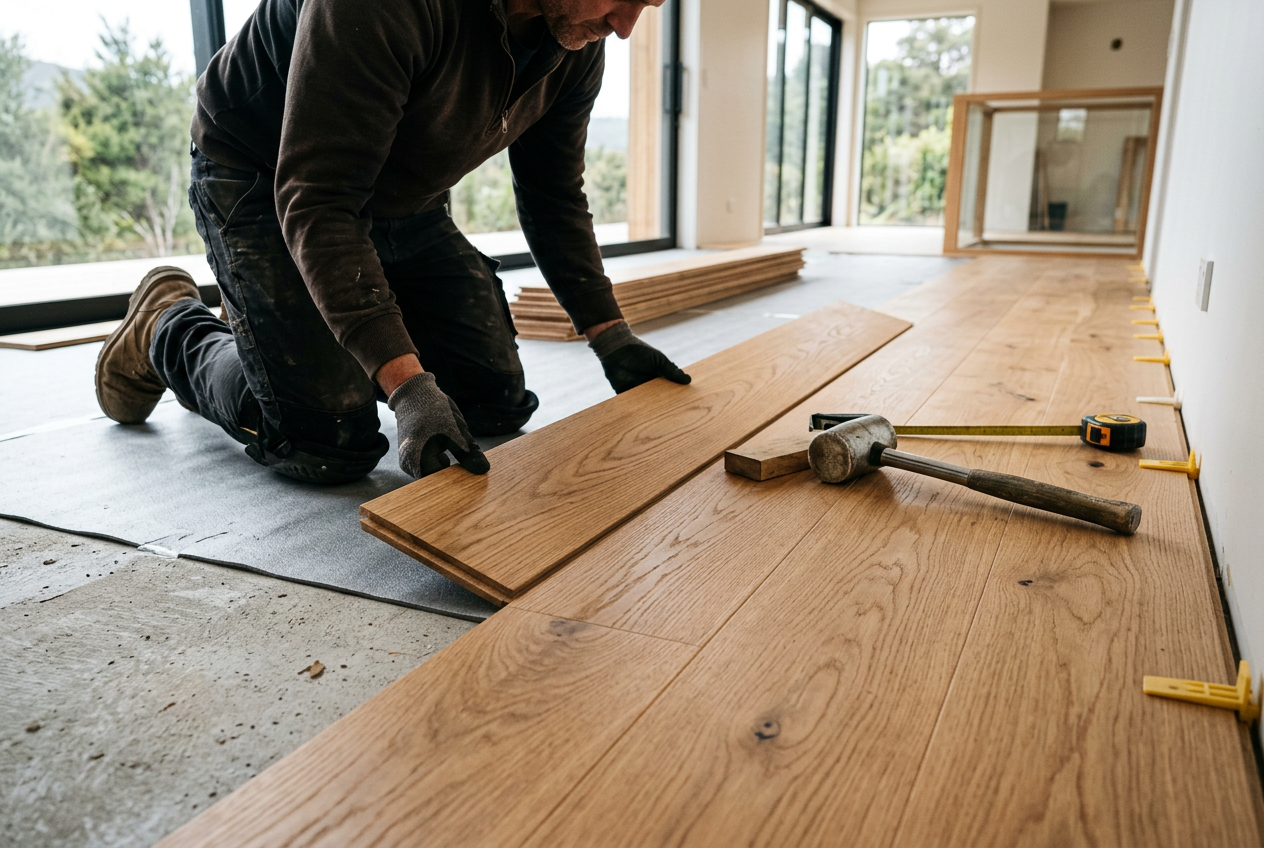
Engineered timber offers the warmth and look of real wood with better moisture resistance than solid timber. It's more stable in New Zealand's variable humidity — important in coastal or high-humidity regions. However, it's not waterproof and can still be scratched by dog claws.
If you love the timber look, choose a harder species (like oak or blackbutt) with a textured or wire-brushed finish that helps disguise minor scratches. Avoid high-gloss finishes, which show every mark. BRANZ has useful guidance on moisture management in NZ homes, which is worth reading before installing any timber-based floor.
Laminate — Proceed with Caution
Laminate can look great and is scratch-resistant, but most standard laminate is not waterproof. Pet accidents that aren't cleaned up immediately can cause the boards to swell and delaminate. If you prefer laminate, look specifically for waterproof laminate products, which have a sealed core. These are a step up in price but much more suitable for pet households.
Carpet — Generally Not Recommended for Pets
Carpet is soft and warm, but it's the hardest flooring to keep clean with pets. It traps hair, dander, and odours, and stains can be very difficult to remove fully. If you do want carpet in bedrooms or living areas, choose a low-pile, stain-treated option and be prepared to vacuum frequently.
Flooring Comparison at a Glance
| Flooring Type | Scratch Resistance | Waterproof | Easy to Clean | Pet Comfort | Cost (Guide Only) |
|---|---|---|---|---|---|
| Luxury Vinyl Plank | ★★★★ | ✅ Yes | ★★★★★ | ★★★★ | Moderate |
| Porcelain Tile | ★★★★★ | ✅ Yes | ★★★★★ | ★★ | Moderate–High |
| Engineered Timber | ★★★ | ❌ No | ★★★★ | ★★★★ | Moderate–High |
| Waterproof Laminate | ★★★★ | ✅ Yes | ★★★★ | ★★★ | Moderate |
| Standard Laminate | ★★★ | ❌ No | ★★★ | ★★★ | Low–Moderate |
| Carpet | ★★ | ❌ No | ★★ | ★★★★★ | Low–Moderate |
Cost ratings are a general guide only and will vary by product, supplier, and region.
Tips for Installation and Maintenance
- Trim your pet's nails regularly — this is the single most effective way to reduce floor scratching, regardless of which flooring you choose.
- Use rugs and mats in high-traffic areas and near food and water bowls.
- Clean up accidents immediately — even on waterproof floors, moisture sitting in joins over time can cause issues.
- Add felt pads under furniture legs to prevent dragging scratches.
- For tiled areas, consider underfloor heating to keep the surface comfortable for pets in winter — New Zealand winters can be chilly, especially in the South Island.
When to Call a Professional
While LVP and laminate floating floors are manageable DIY projects for a confident homeowner, some flooring work is best left to a qualified installer. Tiled floors — particularly in wet areas like bathrooms — must comply with NZS 4223 and the NZ Building Code's E3 (Internal Moisture) requirements. Poorly installed wet-area tiling can lead to water damage and mould, which is a serious issue under the Healthy Homes Standards for rental properties.
For large areas, complex layouts, or if you're unsure about subfloor preparation, hiring a professional flooring installer will save you headaches down the track. You can find qualified local flooring installers on tradedirectory.co.nz.