Electrical work in New Zealand is tightly regulated for good reason — mistakes can cause fires, serious injury, or death. But not everything requires a licensed sparky. Understanding the rules helps you stay safe, stay legal, and avoid costly fines or insurance headaches.
The Legal Framework: Why It Matters
In New Zealand, electrical work is governed by the Electricity Act 1992 and the Electricity (Safety) Regulations 2010. These regulations define what counts as prescribed electrical work — work that must be carried out (or supervised) by a registered electrician and certified upon completion. The Electrical Workers Registration Board (EWRB) oversees licensing and registration of all electrical workers in NZ.
Doing restricted work yourself — or hiring an unlicensed person — is illegal and can void your home insurance. It can also create issues when you sell your property, as uncertified work may need to be ripped out and redone.
What Homeowners CAN Legally Do Themselves
The good news is that a number of everyday electrical tasks are perfectly legal for a homeowner to tackle without a licence. These are generally low-risk tasks that don't involve working inside your switchboard or modifying fixed wiring.
Tasks you can legally do yourself include:
- Replacing a light bulb or LED lamp
- Replacing a plug top (the removable plug on an appliance cord) — provided the cord is not damaged
- Replacing a fuse in a plug top or fuse box (like-for-like rating)
- Replacing a light fitting — but only if you are simply swapping like-for-like using the existing wiring connections, and the fitting is not in a restricted location (see below)
- Installing or replacing low-voltage extra-low voltage (ELV) systems such as doorbells, garden lighting running off a plug-in transformer, or data cabling
- Replacing batteries in smoke alarms
- Resetting a tripped circuit breaker or RCD (safety switch)
- Installing plug-in appliances and extension leads
Safety note: Even for legal DIY tasks, always switch off the circuit at the switchboard and use a non-contact voltage tester to confirm the power is off before touching any wiring.
What Is RESTRICTED Electrical Work (Must Use a Licensed Electrician)
Prescribed (restricted) electrical work covers anything that involves your home's fixed wiring, switchboard, or connections to the mains supply. This includes:
- Installing, altering, or repairing fixed wiring (in walls, ceilings, or floors)
- Adding or moving power points (GPOs) or light switches
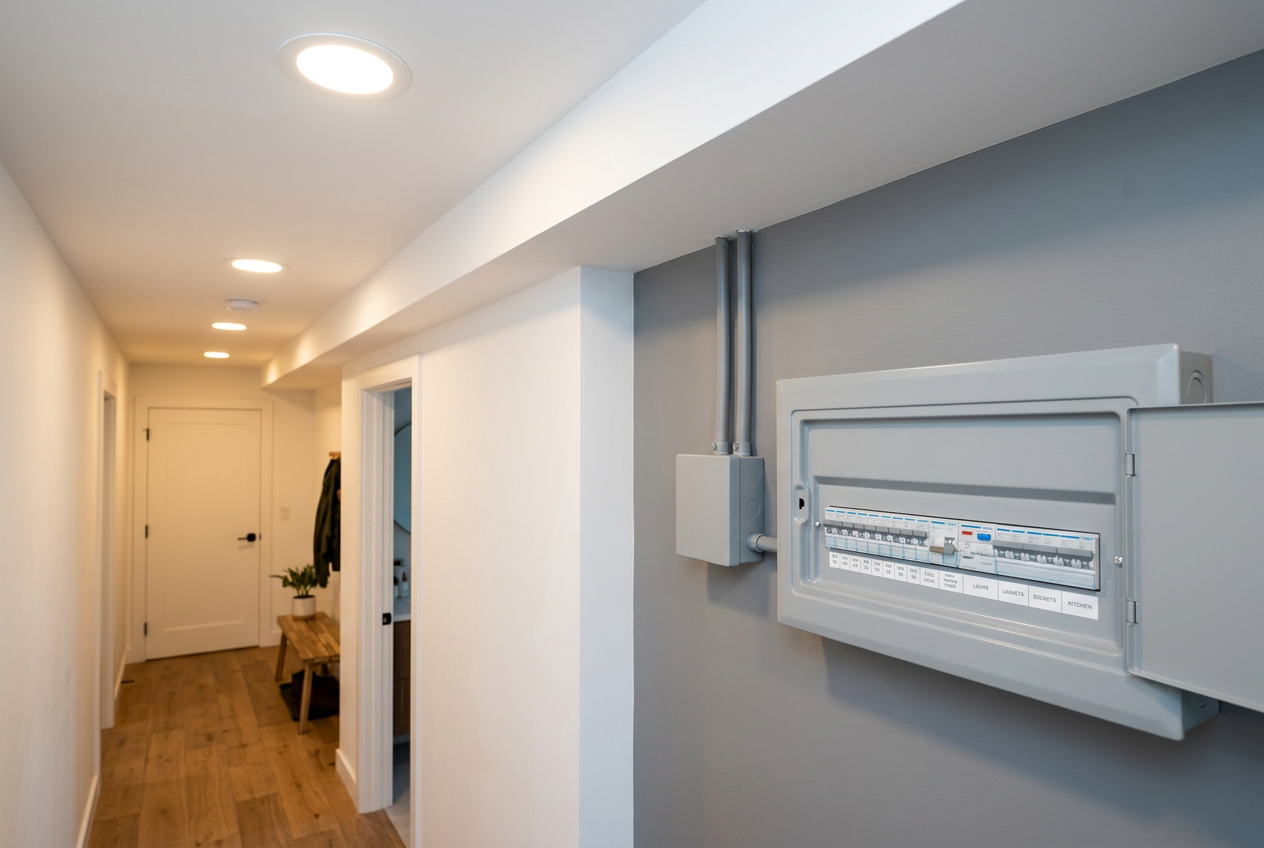
- Installing or modifying your switchboard or consumer unit
- Connecting fixed appliances such as electric ovens, hot water cylinders, heat pumps, EV chargers, or extractor fans
- Installing solar panels or battery storage systems
- Any electrical work in wet areas (bathrooms, laundries, and kitchens) — these have strict requirements under the NZ Building Code
- Installing smoke alarms that are hardwired
- Any work on the mains supply or meter
All prescribed electrical work must be inspected and a Certificate of Compliance (CoC) issued by the electrician. Keep this document — you'll need it for insurance claims and when selling your home.
Special Rules for Bathrooms and Wet Areas
Bathrooms deserve a special mention. The NZ Building Code (particularly Clause G9 relating to electricity and Clause E3 for internal moisture) sets strict safety zones around water sources. Even replacing a light fitting in a bathroom may be restricted work depending on its location relative to the shower or bath. When in doubt, call a licensed electrician.
A Quick Comparison: DIY vs. Restricted Work
| Task | Homeowner DIY? | Licensed Electrician Required? |
|---|---|---|
| Replace a light bulb | ✅ Yes | No |
| Replace a plug top | ✅ Yes | No |
| Swap a like-for-like light fitting (dry area) | ✅ Yes (with care) | Recommended |
| Add a new power point | ❌ No | Yes |
| Install a heat pump | ❌ No | Yes |
| Wire a new circuit | ❌ No | Yes |
| Install an EV charger | ❌ No | Yes |
| Replace hardwired smoke alarm | ❌ No | Yes |
| Install plug-in garden lighting | ✅ Yes | No |
| Work in a bathroom | ❌ Usually No | Yes |
Healthy Homes and Rental Properties
If you're a landlord, be aware that the Healthy Homes Standards include requirements around heating and ventilation that may involve electrical installations. All such work must be done by a licensed electrician and properly certified.
When to Call a Professional
If you're unsure whether a task is restricted, the safest and smartest move is to call a licensed electrician. Beyond the legal requirement, a qualified sparky will spot other issues — outdated wiring, overloaded circuits, or non-compliant installations — that could put your home and family at risk.
You can find qualified, vetted local electricians on tradedirectory.co.nz. Always check that your electrician is registered with the EWRB and ask for a Certificate of Compliance on completion of any prescribed work.