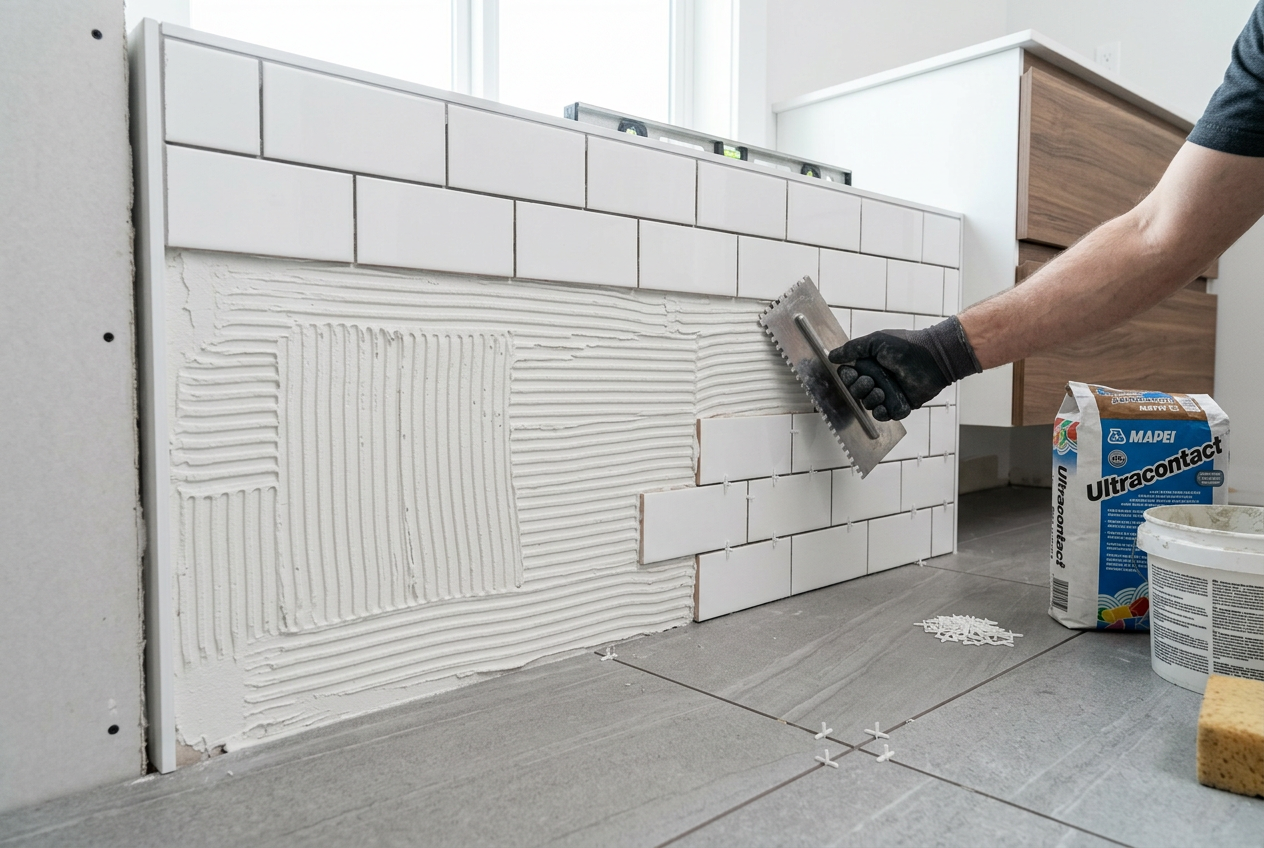
That hollow "thunk" when you tap a tile, or worse, a tile that has cracked and popped clean off the wall or floor — these are signs that something has gone wrong beneath the surface. Tile failure is more common than many homeowners realise, and it's almost always preventable. Understanding the root causes can save you significant repair costs down the track.
What Do "Lifting", "Drumming" and "Delaminating" Actually Mean?
These three terms describe related but slightly different problems:
- Lifting – a tile has physically separated from the substrate and may be loose or completely detached.
- Drumming (also called hollowing) – the tile sounds hollow when tapped, indicating a void or partial bond failure beneath it. The tile may still be in place but is no longer fully adhered.
- Delaminating – the adhesive layer (or the substrate itself) is separating in layers, often causing tiles to lift in groups.
All three indicate a loss of bond between the tile, the adhesive, and the substrate underneath.
The Most Common Causes
1. Inadequate Adhesive Coverage
One of the most frequent culprits is insufficient adhesive coverage on the back of the tile. BRANZ guidelines and good tiling practice generally call for a minimum of 80% adhesive contact on dry areas and higher coverage in wet areas and for large-format tiles. When adhesive is applied with a notched trowel but not back-buttered, or when the adhesive is allowed to skin over before the tile is placed, voids form beneath the tile — and those voids eventually lead to failure.
2. Movement in the Substrate
New Zealand homes — particularly timber-framed houses built to NZS 3604 — experience natural movement as timber dries, shrinks and flexes. If tiles are laid directly over a substrate that isn't rigid enough (such as single-layer particleboard or an undersized timber floor), that movement transfers stress to the tile bond and eventually breaks it. Concrete slabs can also crack due to settlement or thermal movement, taking tiles with them.
3. Wrong Adhesive for the Job
Not all tile adhesives are equal. Using a standard wall adhesive on a floor, or a basic adhesive for large-format porcelain tiles, is a recipe for failure. Heavy or large tiles require a high-performance, flexible adhesive — products from manufacturers like Ardex or Mapei offer a range suited to different tile types and substrates. In wet areas (bathrooms, laundries), a waterproof or water-resistant adhesive is essential.
4. Wet Area Waterproofing Failures
In NZ, the Building Code clause E3 (Internal Moisture) requires wet areas to be properly waterproofed before tiling. If the waterproofing membrane is missing, poorly applied, or punctured, water gets behind the tiles. Over time, moisture causes the substrate to swell, degrade, or grow mould — all of which destroy the tile bond. This is especially common in showers tiled over standard plasterboard rather than a suitable wet-area substrate like GIB Aqualine or a cement-based tile backer board.
5. No Expansion Joints
Tiles expand and contract with temperature changes. Without adequate movement/expansion joints — particularly at perimeters, changes of plane, and over structural joints — the built-up stress has nowhere to go and tiles will eventually lift or crack. This is a commonly skipped step in DIY tiling jobs.
6. Substrate Not Properly Prepared
Dust, paint, sealers, curing compounds, or a weak surface layer on a concrete slab can all prevent adhesive from bonding properly. The substrate must be clean, sound, and primed where required. Applying tiles over a contaminated or weak surface is one of the fastest ways to guarantee future failure.
7. DIY or Poor Workmanship
Tiling looks straightforward but requires skill and knowledge of materials. Common DIY mistakes include using the wrong trowel size, not allowing adequate cure time before grouting, tiling over green (uncured) concrete, or mixing adhesive incorrectly. These errors may not show up immediately — tile failures can take months or even years to appear.
Comparing Common Failure Scenarios
| Cause | Most Likely Location | Typical Sign |
|---|---|---|
| Poor adhesive coverage | Floors, large-format tiles | Drumming sound when tapped |
| Substrate movement | Timber floors, decks | Cracked grout lines, lifting tiles |
| Waterproofing failure | Showers, wet areas | Mould, tiles lifting in groups |
| No expansion joints | Large tiled areas, outdoors | Tiles popping up, cracked tiles |
| Wrong adhesive used | Walls, wet areas | Tiles sliding or falling off |
| Contaminated substrate | Concrete slabs | Widespread delamination |
How to Check for Drumming Tiles
Walk slowly across your tiled floor and listen carefully, or tap tiles gently with a knuckle or a small rubber mallet. A solid, dense sound is good. A hollow, resonant "thunk" indicates a void beneath. Mark any suspect tiles with a piece of tape and monitor them — if the number grows, it's time to act.
Can You Fix It Yourself?
Small repairs — such as re-adhering a single loose tile with the correct adhesive — are within reach of a capable DIYer, provided you can source a matching tile and adhesive. However, if the failure is widespread, or if it involves a wet area where waterproofing may be compromised, a full re-tile is usually necessary. Attempting to patch over a waterproofing failure without stripping back to the substrate is a false economy.
When to Call a Professional
If you have more than a handful of drumming or lifted tiles, or if the problem is in a shower or bathroom, call a qualified tiler. Wet area work in particular must comply with the NZ Building Code, and getting it wrong can lead to serious structural damage and health issues from mould. A professional tiler will assess the substrate, identify the root cause, and ensure the re-tile is done correctly — including proper waterproofing and movement joints.
For work involving waterproofing membranes in wet areas, some aspects may also intersect with restricted building work under the Licensed Building Practitioners scheme, so it pays to use a qualified tradesperson. You can find experienced local tilers on tradedirectory.co.nz.