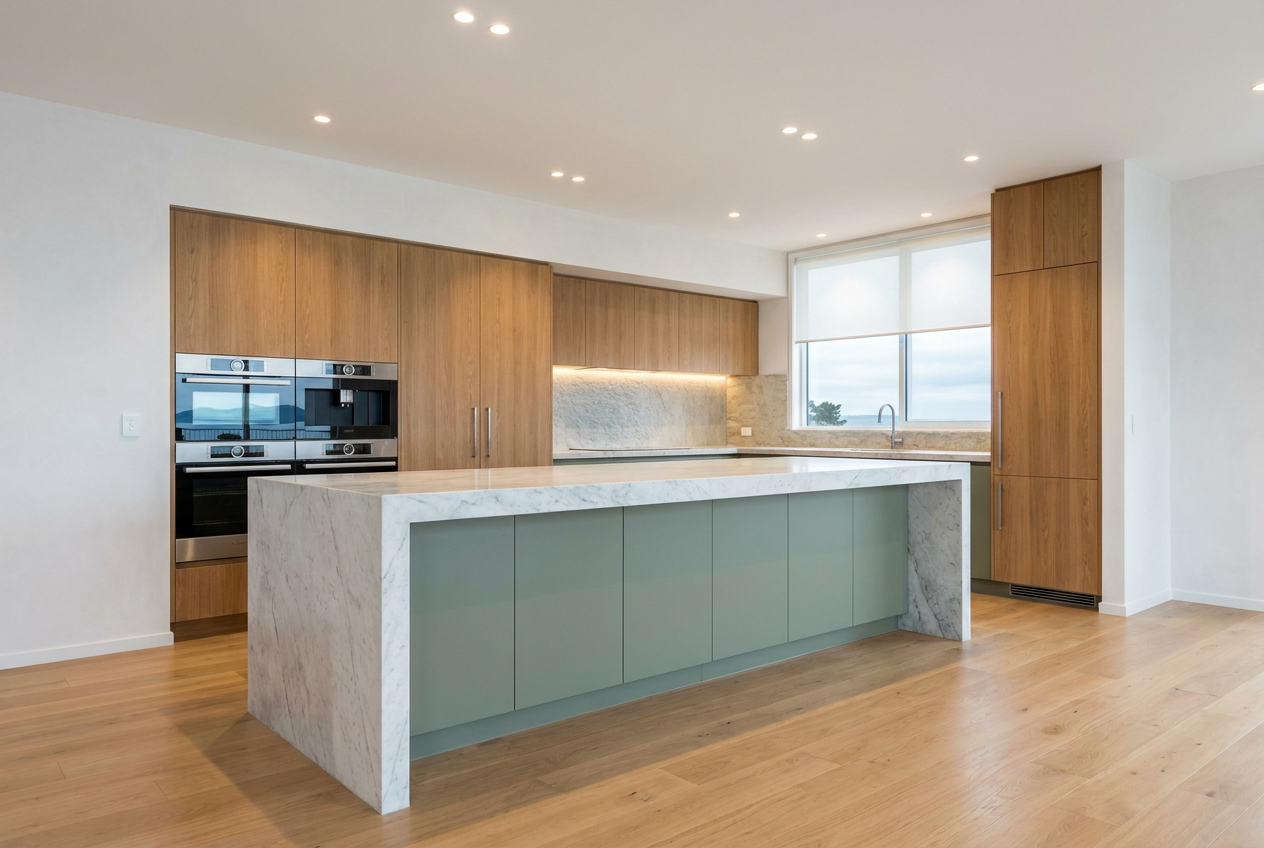
Choosing a new benchtop is one of the most impactful decisions in any kitchen or bathroom renovation. The material you pick affects not just how the space looks, but how it performs day-to-day, how much maintenance it needs, and how long it lasts. Here's a straightforward comparison of the three most popular options in New Zealand: laminate, engineered stone, and solid timber.
Laminate Benchtops
Laminate (sometimes called Formica, after one well-known brand) is a high-pressure decorative surface bonded to a particleboard or MDF substrate. It has come a long way in recent years and remains the most affordable option for most Kiwi homeowners.
Pros
- Cost-effective – generally the most budget-friendly choice, making it popular in rental properties and first-home renovations
- Huge range of colours and patterns – including realistic stone and timber looks
- Easy to clean – non-porous surface resists most stains with a simple wipe-down
- Lightweight – easier for cabinetmakers to handle and install
Cons
- Can chip or lift at edges if water gets in, especially around the sink
- Not heat-resistant – always use a trivet; direct heat can blister the surface
- Scratches are difficult to repair and can look obvious
- Generally considered less premium in appearance up close
Laminate is a solid choice for high-traffic family kitchens on a budget, or anywhere you want a practical, easy-care surface without a large outlay.
Engineered Stone Benchtops
Engineered stone (often called reconstituted stone or by brand names like Caesarstone or Silestone) is made from crushed quartz bound with resin. It's become extremely popular in NZ kitchens over the past decade.
Important safety note: As of July 2024, the manufacture, supply, and installation of engineered stone containing crystalline silica above a certain threshold is banned in Australia, and New Zealand is closely monitoring this issue. WorkSafe NZ has issued guidance on silica dust risks during fabrication and installation. Always ensure your fabricator follows safe work practices, and discuss current product compliance with your supplier before purchasing.
Pros
- Highly durable – resists scratches, stains and heat better than laminate
- Non-porous – does not require sealing and is hygienic for food prep
- Consistent appearance – unlike natural stone, the pattern is uniform throughout
- Adds perceived value to a home
Cons
- Significantly more expensive than laminate
- Heavy – requires adequate cabinet support
- Chips on edges can be difficult to repair invisibly
- Must be professionally fabricated and installed – not a DIY job
Engineered stone suits homeowners wanting a premium, low-maintenance surface and a modern aesthetic. Always ask your supplier about the silica content of any product you're considering.
Solid Timber Benchtops
Solid timber benchtops bring warmth and character that no manufactured product can fully replicate. Popular NZ species include rimu, matai, and imported hardwoods like American oak or bamboo composite.
Pros
- Beautiful, natural appearance – unique grain patterns
- Repairable – scratches and minor burns can be sanded back and re-oiled
- Warm underfoot and to touch – particularly nice in cooler NZ climates
- Can be a sustainable choice if sourced from certified suppliers
Cons
- Requires regular maintenance – oiling every few months to prevent drying and cracking
- Not ideal near sinks – prolonged water exposure can cause swelling, warping or mould
- Can be scratched or stained if not properly sealed
- Generally mid-to-high in cost depending on species and thickness
Timber works beautifully as an island benchtop or in a dry area, often paired with stone near the sink. BRANZ research highlights the importance of proper sealing and ventilation in NZ kitchens to prevent moisture damage in timber joinery and surfaces.
Side-by-Side Comparison
| Feature | Laminate | Engineered Stone | Solid Timber |
|---|---|---|---|
| Cost (guide only) | $ Budget | $$$ Premium | $$ Mid–High |
| Durability | Moderate | High | Moderate (with care) |
| Heat resistance | Low | Moderate | Low–Moderate |
| Scratch resistance | Low–Moderate | High | Low (repairable) |
| Water resistance | Moderate | High | Low (needs sealing) |
| Maintenance | Very low | Very low | Regular oiling |
| Repairability | Difficult | Difficult | Good |
| DIY-friendly install | Partly | No | Partly |
NZ Building Code Considerations
If your renovation involves changes to plumbing (e.g. relocating a sink), this is restricted work under the NZ Building Code and must be carried out by a licensed plumber registered with the Plumbers, Gasfitters and Drainlayers Board. Similarly, any electrical work near the benchtop — such as adding new power outlets — must be done by a registered electrician under the Electrical Workers Registration Board. Benchtop installation itself is not restricted work, but a qualified cabinetmaker will ensure a precise, watertight fit.
Healthy Homes and Rental Properties
If you're renovating a rental property, keep the Tenancy Services Healthy Homes standards in mind. While benchtop material isn't directly regulated, moisture control in kitchens is important — a well-sealed, easy-clean surface contributes to a healthier home environment.
When to Call a Professional
All three benchtop types benefit from professional installation by a qualified cabinetmaker, but engineered stone must be fabricated and installed by a professional due to the weight, precision cutting required, and silica dust hazards. Timber benchtops can sometimes be installed by a confident DIYer, but jointing, sink cut-outs and edge profiling are best left to a tradesperson. You can find experienced local cabinetmakers and kitchen specialists on tradedirectory.co.nz.