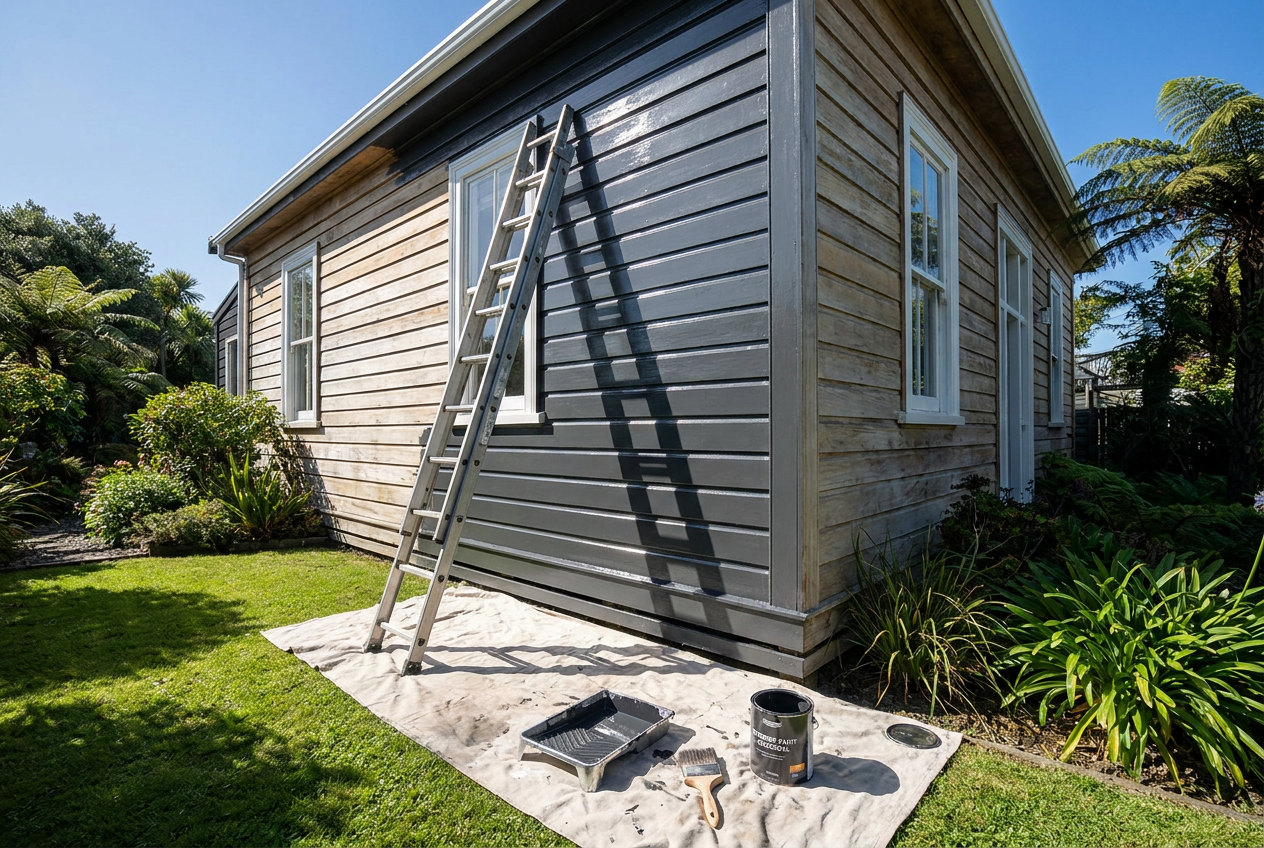
Repainting the outside of your home is one of the best ways to protect it from New Zealand's demanding climate — think intense UV radiation, coastal salt spray, and wet winters that can work together to break down even quality paint systems faster than you might expect. Getting the timing right means you protect your cladding, avoid costly repairs, and keep your home looking sharp.
How Long Does Exterior Paint Typically Last in NZ?
As a general guide, most exterior paint systems on a well-prepared surface last somewhere between 7 and 15 years, but this is a wide range for good reason. The actual lifespan depends heavily on your location, the type of cladding, the quality of the previous paint job, and the products used. Some homes in sheltered, low-humidity areas may go longer between repaints; others in harsh coastal or high-UV environments may need attention sooner.
BRANZ — New Zealand's building research authority — notes that UV exposure in NZ is among the highest in the world, which accelerates paint degradation compared with many other countries. This is worth keeping in mind if you're comparing notes with friends overseas.
Key Factors That Affect How Often You Need to Repaint
Your location and climate
- Coastal areas: Salt air is corrosive and can cause paint to blister, peel, and fail much earlier. Homes within a few kilometres of the coast often need repainting more frequently.
- High UV zones: Much of New Zealand — particularly the South Island's upper regions and the central North Island — receives intense UV. UV breaks down paint binders and causes fading and chalking.
- Wet, humid regions: Areas with high rainfall (like the West Coast or Northland) can promote mould and moisture-related paint failure if the paint system isn't up to scratch.
Cladding type
| Cladding Type | Typical Repaint Interval (guide only) |
|---|---|
| Timber weatherboard | Every 7–10 years |
| Fibre cement (e.g. James Hardie) | Every 10–15 years |
| Concrete / masonry | Every 8–12 years |
| Steel or aluminium | Every 10–15 years |
| EIFS / plaster systems | Every 8–12 years |
These are broad guides only — always assess the actual condition of your paint rather than going purely by age.
Paint quality and preparation
A premium paint system applied over properly prepared surfaces will always outlast a budget product slapped over peeling old paint. Products from reputable NZ suppliers like Resene, Dulux, and Wattyl offer exterior ranges specifically formulated for NZ conditions, including high-UV and coastal environments. Using the right primer and the correct number of topcoats makes a significant difference to longevity.
Aspect and shade
Walls that face north or west receive the most sun and weather in NZ and will typically show wear sooner than south-facing walls. Dark colours absorb more heat, which can cause paint to expand and contract more, potentially shortening its life.
Warning Signs Your Exterior Paint Needs Attention Now
Don't wait for a set number of years if you're seeing these signs:
- Peeling or flaking — paint is losing adhesion, often due to moisture
- Chalking — a powdery residue when you rub the surface, indicating UV breakdown
- Cracking or crazing — the paint film is failing
- Fading or discolouration — especially on sun-exposed walls
- Mould or mildew growth — common in shaded, damp areas
- Bare timber or substrate showing through — urgent attention needed to prevent structural damage
If bare timber is exposed, water can penetrate quickly and lead to rot — a far more expensive fix than a timely repaint.
DIY vs Hiring a Professional Painter
A competent DIYer can tackle exterior painting on a single-storey home, provided they're comfortable with surface preparation, working at height safely, and choosing the right products. Surface prep — cleaning, sanding, filling, and priming — is the most important step and should never be rushed.
For two-storey or higher homes, working from ladders or scaffolding significantly increases the risk of falls. WorkSafe NZ has clear guidelines around working at height, and scaffolding is strongly recommended for anything above one storey. If in doubt, this is a job for a professional.
When to Call a Professional
Consider hiring a qualified painter when:
- Your home is two storeys or higher
- There is significant paint failure, rot, or substrate damage requiring assessment
- You're dealing with a specialised cladding system (such as EIFS/plaster or fibre cement) where incorrect products can void warranties — check James Hardie's guidelines for their products
- You want a warranty-backed job with professional surface preparation
- You simply want the job done right and to last
A Licensed Building Practitioner (LBP) or experienced painting contractor will assess your home's specific needs, recommend the right paint system, and ensure the work meets the requirements of the NZ Building Code. You can find qualified local painters on tradedirectory.co.nz.
Simple Maintenance Tips to Extend Paint Life
- Wash your exterior annually — a gentle house wash removes salt, grime, and mould spores that degrade paint
- Touch up chips and cracks early — small repairs prevent big failures
- Keep gutters and downpipes clear — overflowing water accelerates paint breakdown on walls and fascias
- Trim vegetation away from walls — plants trap moisture and promote mould
A little maintenance each year can meaningfully extend the time between full repaints.