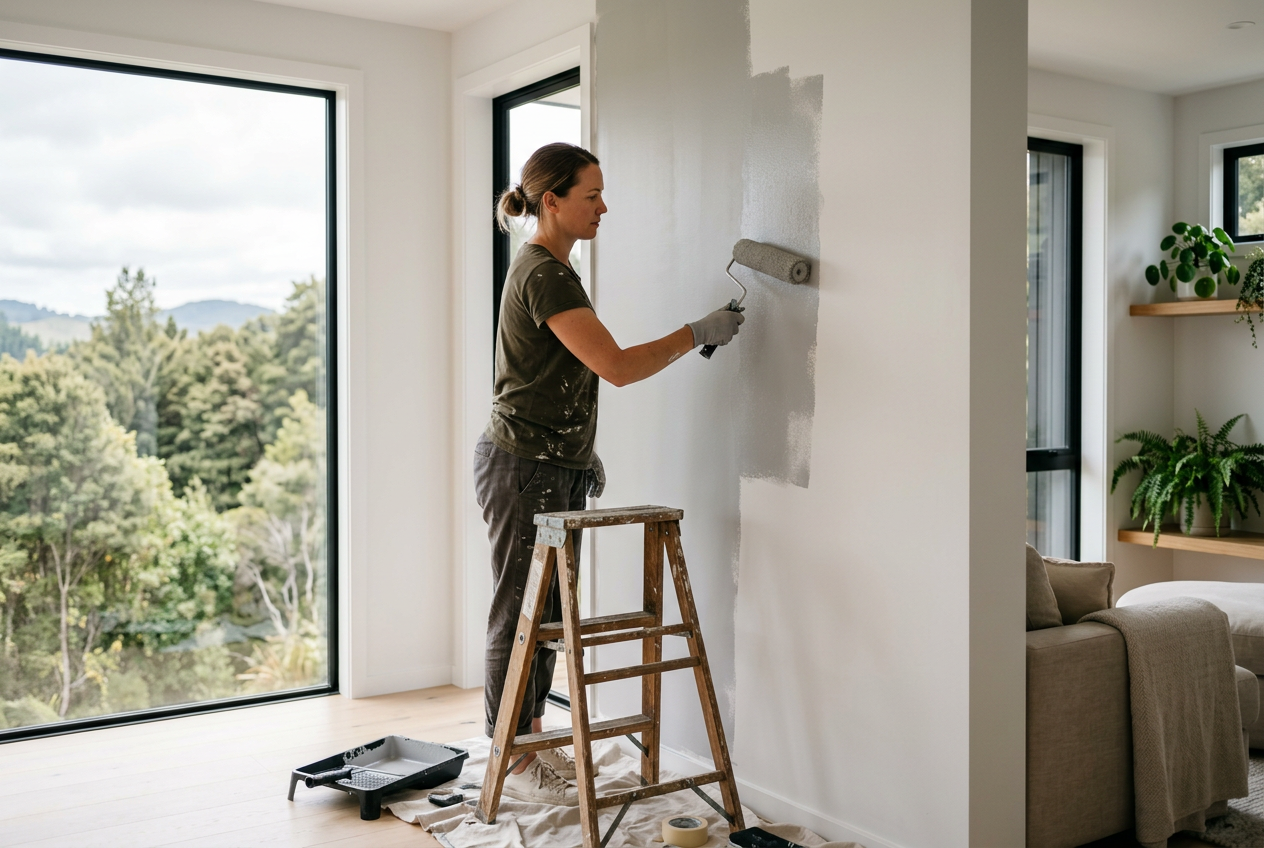
Working out how much paint you need before you start a room is one of the most practical things you can do. Buy too little and you're making a frustrating mid-job dash to the store; buy too much and you're storing half-used tins for years. This guide walks you through the maths in plain language, with NZ products and conditions in mind.
The Basic Formula
The golden rule is straightforward: calculate the paintable surface area, then divide by the paint's spreading rate.
Here's the step-by-step:
- Measure the perimeter of the room (add up all the wall lengths).
- Multiply by the ceiling height to get the total wall area in square metres (m²).
- Subtract doors and windows — as a rough guide, a standard door is around 1.8 m² and a typical window around 1.2 m², though sizes vary.
- Check the spreading rate on your chosen paint tin or product page. Most quality interior paints cover somewhere in the range of 10–16 m² per litre, but this varies by brand, product, and surface porosity.
- Divide your surface area by the spreading rate to get litres needed per coat.
- Multiply by the number of coats (usually two for walls).
Quick Example
Say you have a 4 m × 3.5 m room with 2.4 m stud walls:
- Perimeter = (4 + 3.5) × 2 = 15 m
- Wall area = 15 × 2.4 = 36 m²
- Subtract one door and one window: 36 − 1.8 − 1.2 = 33 m²
- At 12 m²/litre spreading rate, one coat = 33 ÷ 12 ≈ 2.75 litres
- Two coats = roughly 5.5 litres → buy a 6-litre tin or two 4-litre tins
Don't Forget the Ceiling
Ceilings are often overlooked in the initial calculation. Simply multiply the room's length × width to get the ceiling area. Ceiling paint tends to be thicker and may have a slightly different spreading rate to wall paint, so check the tin separately. Most NZ homes use a flat white ceiling paint, and a single room ceiling often needs two coats if you're going from a dark colour or bare plaster.
Spreading Rates Vary — Always Check the Tin
Spread rates printed on the label assume a smooth, previously painted surface. In reality, several things reduce coverage:
- Porous or bare surfaces (new GIB plasterboard, raw timber, or unpainted masonry) soak up significantly more paint — you may need an extra coat or a dedicated primer first. GIB recommends sealing new plasterboard before topcoating.
- Textured or rough surfaces (sand finish, roughcast, brick) have more surface area than they appear and will use more paint.
- Roller nap thickness — a thicker nap for textured surfaces uses more paint than a short nap on smooth walls.
- Dark-to-light colour changes almost always need an extra coat.
Resene and Dulux both have online paint calculators on their websites that factor in some of these variables — worth using as a cross-check.
How Many Coats Do I Need?
| Situation | Recommended Coats |
|---|---|
| Same colour repaint, good condition | 1–2 coats |
| New colour over existing paint | 2 coats |
| Dark to light colour change | 2–3 coats (or primer first) |
| New plasterboard or bare surface | 1 sealer/primer + 2 topcoats |
| Exterior repaint, weathered surface | 1 primer + 2 topcoats |
As a general rule, two coats is the standard for a quality interior finish. Skimping to one coat often means uneven coverage and a finish that won't last.
Add a Wastage Buffer
Professional painters typically add around 10% extra to their calculated quantity to account for:
- Cutting in around edges and corners
- Touch-ups after the job
- Variation in surface texture
- Tray and roller waste
It's also worth keeping a small amount of leftover paint for future touch-ups — store it in a sealed tin, label it with the room and colour name, and keep it somewhere cool and dry.
Choosing the Right Paint for NZ Conditions
NZ's climate ranges from the humid subtropics of Northland to the cold, damp winters of the South Island. BRANZ research highlights that moisture management is critical in NZ homes, so choosing the right sheen level and formulation matters:
- Bathrooms and kitchens: Use a semi-gloss or gloss finish with mould-resistant properties.
- Living areas and bedrooms: Low-sheen or satin finishes are popular — they're washable but not as reflective as gloss.
- Ceilings: Flat/matt finish to minimise glare and hide imperfections.
- Exterior: Always use a paint specifically formulated for exterior use and rated for your region's conditions. Wattyl and Resene both offer climate-specific exterior ranges.
Where to Buy Paint in NZ
You can pick up paint and supplies at Mitre 10, Bunnings, and PlaceMakers, or visit a dedicated Resene or Dulux trade store for colour matching and expert advice. Trade stores often stock a wider range of professional-grade products and can tint to thousands of colours.
When to Call a Professional
While painting is one of the more DIY-friendly home improvement tasks, there are times when it pays to bring in a qualified painter:
- Large or complex jobs — multi-storey homes, high stud ceilings, or extensive exterior work involving scaffolding.
- Preparation issues — significant cracking, mould, peeling, or weatherboard damage that needs proper remediation before painting.
- Lead paint — homes built before the 1980s may contain lead-based paint. Sanding or disturbing lead paint is a health hazard. Check WorkSafe NZ guidance before proceeding, and consider hiring a professional with the right protective equipment.
- Rental properties — landlords need to meet Healthy Homes standards, and a professional finish helps protect the property long-term.
You can find qualified, local painters on tradedirectory.co.nz — look for members of the Painting and Decorating Association NZ (PDANZ) for added assurance.