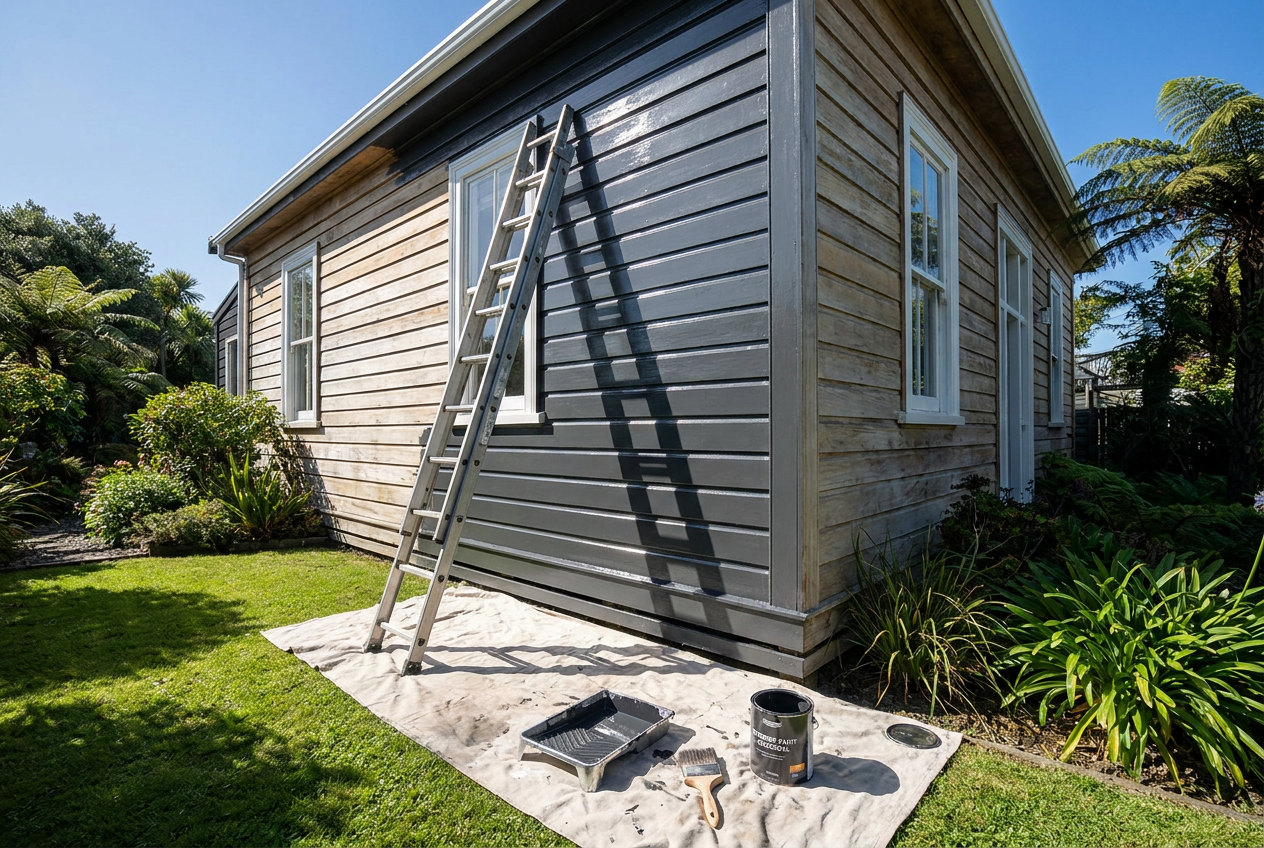
Exterior house paint in New Zealand faces some of the harshest conditions in the world — intense UV radiation, coastal salt air, high humidity, and rapid weather changes. As a general guide, a quality exterior paint job can last anywhere from 5 to 15 years, but that's a wide range for good reason. Understanding what drives that variation can save you thousands of dollars and help you plan maintenance before problems become serious.
What's the Typical Lifespan of Exterior Paint in NZ?
As a rough guide:
| Condition | Typical Lifespan |
|---|---|
| Premium paint, well-prepped surface, sheltered location | 10–15 years |
| Mid-range paint, average prep, moderate exposure | 7–10 years |
| Budget paint, minimal prep, or harsh exposure | 3–6 years |
These are general estimates only — your home's actual result will depend on several factors covered below.
NZ's Climate Is Harder on Paint Than You Might Think
New Zealand sits at latitudes where UV radiation is significantly stronger than in many Northern Hemisphere countries at equivalent latitudes. This UV intensity is a major reason paint fades and chalks faster here than overseas. On top of that:
- Coastal areas (much of NZ) expose paint to salt-laden air, which accelerates corrosion on metal substrates and degrades paint film.
- Auckland and Northland have high humidity and warmth, encouraging mould and mildew growth on paint surfaces.
- Wellington is notorious for wind-driven rain, which batters exposed surfaces relentlessly.
- Canterbury and Central Otago experience extreme temperature swings that cause substrates to expand and contract, stressing the paint film.
BRANZ (the Building Research Association of NZ) has done extensive research on how NZ's environment affects building materials, and their findings consistently highlight UV and moisture as the primary culprits in paint degradation.
Key Factors That Affect How Long Paint Lasts
1. Surface Preparation
Preparation is everything. Even the best paint will fail prematurely if applied over a dirty, flaky, or poorly primed surface. Proper prep includes washing down with a suitable cleaner, sanding back any loose or peeling paint, filling cracks, and applying a quality primer suited to the substrate.
2. Paint Quality
Not all paints are equal. Premium exterior paints from reputable NZ brands like Resene or Dulux are formulated specifically for NZ conditions and carry meaningful warranties. Wattyl is another well-established option. Budget paints may look similar in the tin but typically use lower concentrations of pigment and binder, meaning they break down faster.
3. Number of Coats
A single coat is rarely sufficient for a long-lasting result. Most manufacturers recommend a primer plus two topcoats as a minimum. Skimping on coats is a false economy.
4. Substrate Type
Different cladding materials behave differently:
- Timber weatherboards are prone to moisture movement and need flexible, breathable paint systems.
- James Hardie fibre cement products like Harditex and Linea require specific paint systems — check James Hardie's guidelines.
- Plaster/stucco systems need paints that allow moisture vapour to escape to prevent blistering.
- Steel and aluminium joinery needs appropriate metal primers before topcoating.
5. Aspect and Exposure
North-facing walls cop the most UV in NZ and will fade faster. Walls sheltered by eaves or neighbouring buildings will outlast fully exposed surfaces significantly.
6. Colour Choice
Dark colours absorb more heat, which can stress the paint film and the substrate beneath — particularly on timber. Many paint manufacturers publish guidance on which colours are suitable for direct sun exposure on specific substrates.
Warning Signs It's Time to Repaint
Don't wait until paint is peeling in sheets. Look out for:
- Chalking — a powdery residue when you run your hand across the surface
- Fading or colour change — especially on south-facing walls where mould may be discolouring the paint
- Cracking or flaking — paint film is losing adhesion
- Mould or mildew growth — common in shaded, damp areas
- Bare timber or substrate showing through — urgent attention needed to prevent moisture damage
Catching these signs early and doing a maintenance repaint is far cheaper than letting moisture get into the substrate and causing structural damage.
How to Get the Most Out of Your Paint Job
- Wash the exterior annually with a mild detergent or a product designed for house washing to remove mould spores, salt, and grime.
- Inspect caulking and sealants around windows and doors each year — failed sealant lets water in behind the paint.
- Touch up nicks and bare spots promptly before moisture gets a foothold.
- Keep gutters and downpipes clear so water doesn't overflow and saturate walls.
For guidance on maintaining your home's exterior, MBIE Building Performance provides useful resources on weathertightness and cladding maintenance.
When to Call a Professional
While a competent DIYer can handle a straightforward repaint on a single-storey home, there are good reasons to hire a qualified painter:
- Multi-storey homes require scaffolding and working at height — WorkSafe NZ has strict requirements around fall prevention.
- Failing or weathertight cladding — if you suspect moisture damage behind the paint, a professional can assess and advise before you paint over a problem.
- Specialty substrates — fibre cement, plaster systems, and previously painted surfaces with unknown paint history all benefit from expert assessment.
- Lead paint — homes built before the 1980s may have lead-based paint. Sanding or water-blasting this without proper precautions is a health hazard.
A qualified painter will know the right products, application methods, and preparation standards to maximise the life of your paint job. You can find experienced local painters on tradedirectory.co.nz.