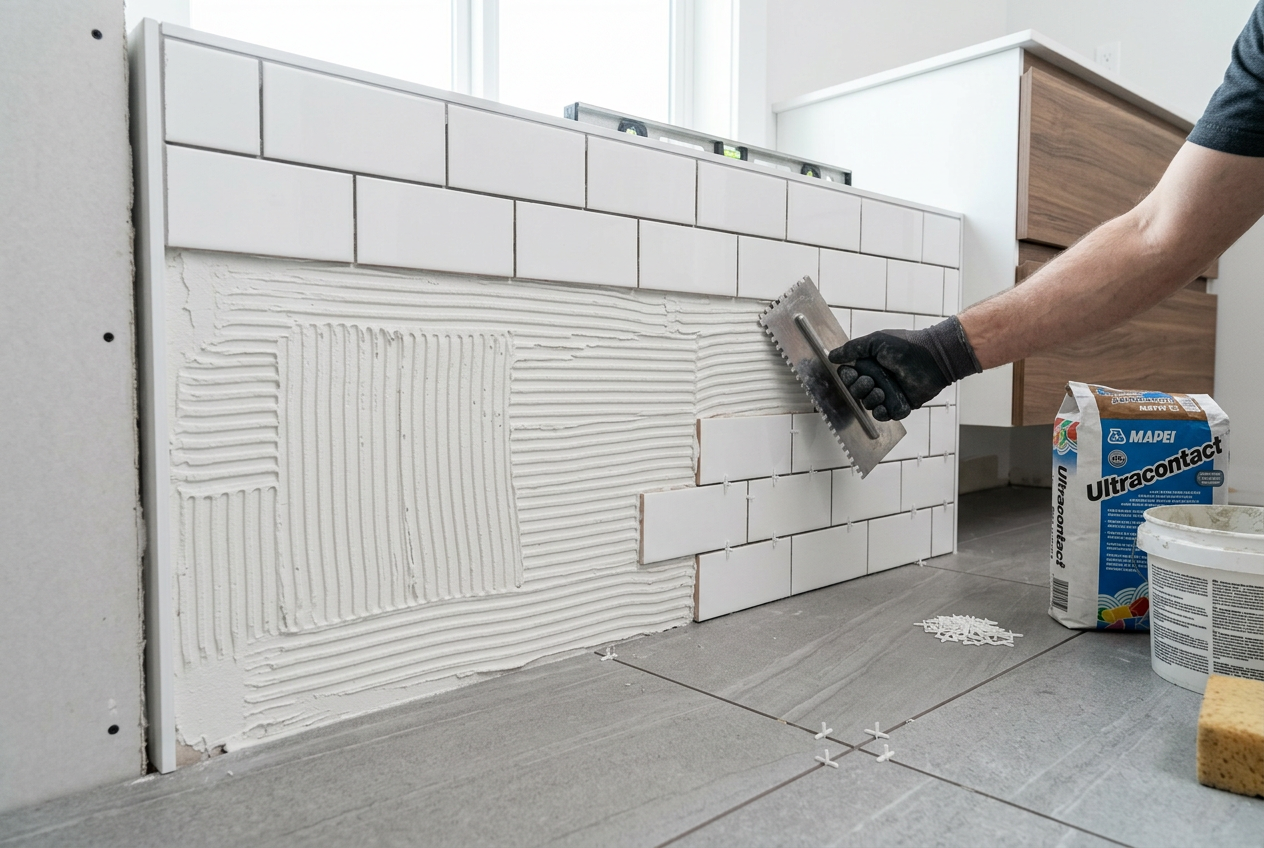
Rushing to grout is one of the most common tiling mistakes homeowners make — and it can lead to cracked grout, hollow tiles, and a job that needs to be redone from scratch. The short answer is that you should wait until your tile adhesive has fully cured, which typically means waiting at least 24 hours, but often longer depending on conditions. Here's what you need to know to get it right.
Why Waiting Matters
When you press a tile into adhesive (also called tile adhesive, tile cement, or bedding mortar), that adhesive needs time to cure and develop its bond strength. If you grout too early, you risk:
- Disturbing the tile bed — pressing on tiles while grouting can shift them before the adhesive has set
- Trapping moisture — sealing grout over uncured adhesive can prevent it from drying properly, leading to mould or bond failure
- Cracked or hollow tiles — the adhesive may shrink or move as it cures, cracking the grout or breaking the bond
General Waiting Times by Adhesive Type
The type of adhesive you've used is the biggest factor in how long you need to wait. Always read the manufacturer's datasheet — the times below are general guides only.
| Adhesive Type | Typical Wait Before Grouting |
|---|---|
| Standard cement-based tile adhesive | 24 hours minimum |
| Rapid-set / fast-set adhesive | As little as 3–6 hours (check datasheet) |
| Epoxy adhesive | Follow manufacturer's instructions carefully |
| Large-format tile adhesive (thick bed) | 48 hours or more |
| Flexible adhesive (e.g. for wet areas) | 24–48 hours |
Products from reputable suppliers like Ardex and Mapei include detailed technical datasheets — always refer to these rather than guessing.
How NZ Climate Affects Cure Times
New Zealand's variable climate plays a big role in how quickly adhesives cure. Curing is a chemical process that's sensitive to temperature and humidity.
- Cold temperatures (common in southern regions, winter months): Curing slows significantly. In temperatures below around 10°C, some adhesives may barely cure at all. Allow extra time — potentially double the standard wait.
- High humidity (common in Auckland and other northern regions): Can slow the drying of water-based adhesives.
- Hot, dry conditions: Can cause adhesive to skin over too quickly, reducing bond strength — but once set, curing may be faster.
- Unheated rooms or garages: Always allow extra time in winter.
As a rule of thumb: if in doubt, wait longer. An extra 12–24 hours costs you nothing; a failed tile job costs a great deal.
Checking If the Adhesive Is Ready
Before you start grouting, do a simple check:
- Press gently on a tile — it should feel completely solid with no movement or flex
- Check the adhesive at the tile edges — it should look and feel dry, not wet or tacky
- Tap tiles lightly — a hollow sound can indicate a poor bond (though this should be addressed before grouting regardless)
If you're unsure, wait. There's no downside to giving it more time.
Wet Areas and the NZ Building Code
For tiled wet areas — showers, bathrooms, and laundries — there are additional considerations. MBIE Building Performance sets out requirements under Clause E3 of the NZ Building Code for internal moisture management. In wet areas, the waterproofing membrane beneath the tiles must also be fully cured before tiling begins, and the tile adhesive must be fully cured before grouting.
Using a flexible adhesive rated for wet areas is important here, as standard rigid adhesives can crack with the movement and moisture cycling that wet areas experience. Sika and Ardex both offer wet-area-rated systems with specific cure time guidance.
Tips for a Better Grout Job
- Remove tile spacers before grouting — don't grout over them
- Clean tile faces before grouting to remove any adhesive smears
- Mix grout to the right consistency — too wet and it will shrink and crack; follow the manufacturer's ratio
- Work in manageable sections so grout doesn't dry on the tile face before you can clean it off
- Seal natural stone and unglazed tiles before grouting to prevent staining
- Cure the grout itself — most cement-based grouts need 24–72 hours before the area is used, and longer before getting wet
When to Call a Professional
While grouting is a task many confident DIYers can tackle, the tiling work itself — especially in wet areas — can be more complex than it looks. Poor waterproofing in showers is one of the leading causes of costly water damage in NZ homes. BRANZ research consistently highlights wet area failures as a significant building defect.
If your project involves:
- A shower, bath surround, or other wet area
- Large-format tiles (600mm or larger)
- Heated floors (electric underfloor heating is restricted electrical work requiring a licensed electrician — see EWRB)
- Structural substrate issues
…it's well worth getting a qualified tiler involved. You can find experienced local tilers on tradedirectory.co.nz who know NZ conditions and building code requirements.