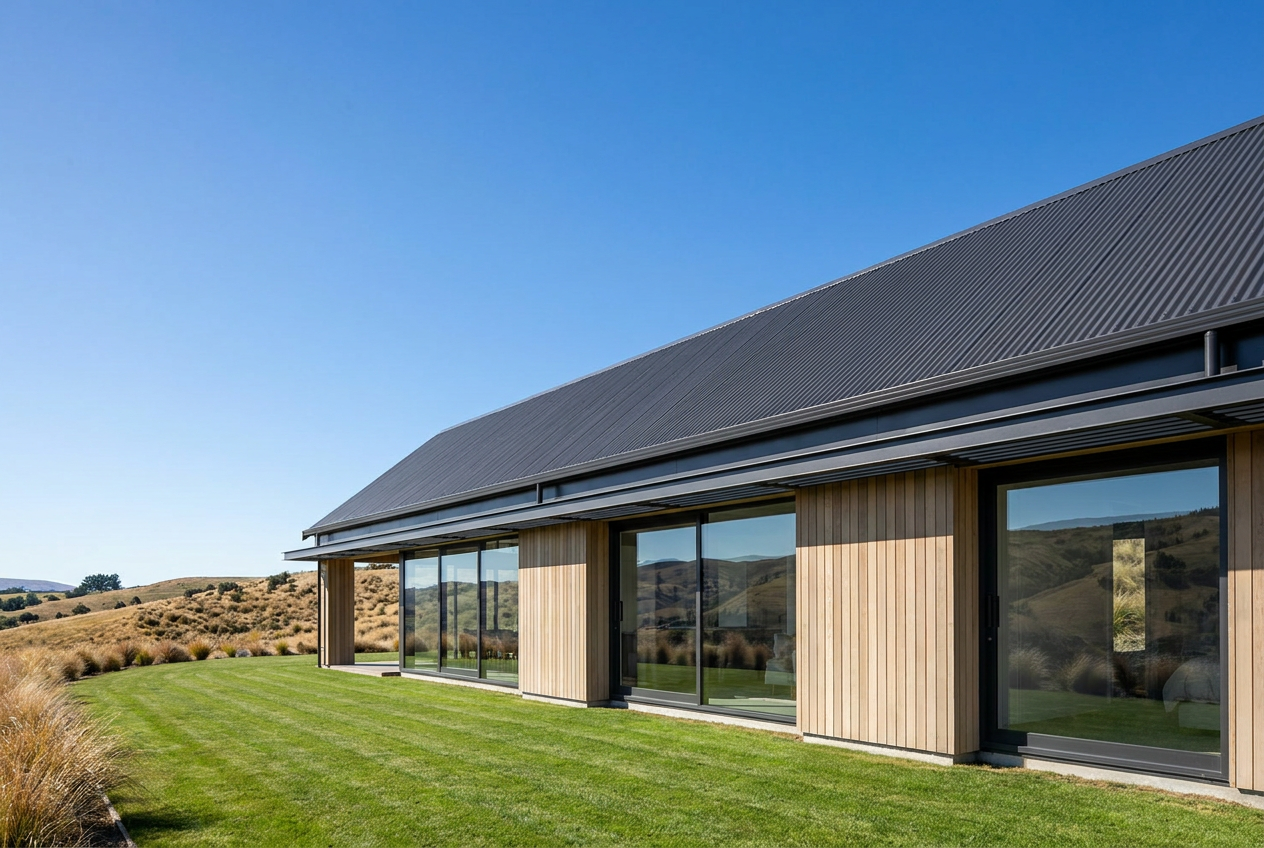
Wind lifting the edge of a metal roof is one of the most common roofing complaints in New Zealand, especially in exposed coastal and high-wind areas. In most cases the cause comes down to inadequate or failed fixings, missing or poorly fitted flashings, or a roof that was never designed to handle the wind loads in your specific location. The good news is that some issues are straightforward to address, but others require a licensed roofer to fix safely and correctly.
Why Wind Gets Under Metal Roof Edges
Metal roofing — whether it's corrugated iron, tray, or standing seam — is particularly vulnerable at its perimeter edges. Wind creates both positive pressure pushing up from below and negative pressure (suction) pulling upward from above. The edges, ridges, and corners of a roof experience the highest wind loads.
Common causes include:
- Insufficient or missing screws/fixings at the eave, barge, and ridge edges
- Corroded or backed-out screws that have lost their grip over time
- Poorly fitted or missing barge flashings along the gable ends
- Eave flashings that weren't lapped or fixed correctly
- Roof pitch too low for the profile used, allowing wind to get underneath
- Original installation not meeting NZ wind zone requirements under NZS 3604 or the specific manufacturer's fixing schedule
Understanding NZ Wind Zones
New Zealand's NZ Building Code and the structural standard NZS 3604 classify sites into wind zones ranging from Low through to Very High and Extra High (for exposed sites). Your roof's fixing schedule — how many screws, what type, and at what spacing — must match your wind zone. If your home is in a High or Very High wind zone (common in Wellington, coastal Otago, Marlborough, and many rural hilltop sites), standard fixing patterns may simply not be enough.
Check with your local council or a licensed roofer to confirm your site's wind zone classification before attempting any repair.
Inspecting the Problem Safely
Safety first: Working at height is one of the leading causes of serious injury in New Zealand. WorkSafe NZ requires that any work at height be done with appropriate fall protection. If your roof pitch is greater than 15° or you're not confident working at height, do not attempt to access the roof yourself — call a professional.
If you can safely access the roof edge from a ladder (keeping three points of contact at all times), look for:
- Screws that are missing, loose, or have pulled through the metal
- Flashings that have lifted, separated, or lost their sealant
- Barge cappings that are only partially fixed or flapping
- Rust or corrosion around existing fixings
DIY Fixes: What a Homeowner Can Reasonably Do
Some minor repairs are within reach of a capable DIYer, provided you can access the area safely:
Re-screwing Loose Fixings
If screws have backed out, you may be able to replace them with larger-diameter or longer tek screws (self-drilling roofing screws with neoprene washers) to get a fresh bite into the purlin beneath. Use screws rated for your roofing material — stainless steel for coastal areas, or at minimum Class 4 coated screws elsewhere. Products are available at Bunnings or Mitre 10.
Re-sealing Lifted Flashings
If a barge or eave flashing has lifted slightly and the fixing is otherwise intact, a compatible polyurethane or neutral-cure silicone sealant (such as products from Sika) can be used to re-bed the flashing edge. Clean the surface thoroughly before applying sealant and press the flashing firmly back into place.
What You Should NOT Attempt Yourself
- Replacing or re-fixing large sections of roofing or flashings
- Any work that requires walking across the roof surface
- Structural repairs to purlins or rafters beneath the roofing
- Anything involving penetrations, skylights, or roof-mounted services
Longer-Term Solutions
If the problem is recurring or widespread, a more thorough fix is needed:
| Problem | Solution |
|---|---|
| Inadequate fixing schedule | Re-fix entire perimeter to manufacturer's wind zone spec |
| Missing barge flashing | Install correctly lapped and fixed barge capping |
| Corroded fixings throughout | Full re-screw with appropriate stainless or Class 4 screws |
| Roof profile unsuitable for pitch | Re-roof with a profile rated for your pitch and wind zone |
| Eave detail allowing wind entry | Install or upgrade eave closure strips |
Manufacturers such as James Hardie and major NZ steel roofing suppliers publish fixing guides specific to their profiles and wind zones — always follow these as a minimum.
Building Consent Considerations
Minor like-for-like repairs (replacing a few screws or re-bedding a flashing) generally fall under Schedule 1 exemptions and don't require a building consent. However, if you're replacing a significant area of roofing or changing the roofing system, a consent may be required. Always confirm with your local council before starting work — requirements vary by territorial authority.
When to Call a Professional
Call a licensed roofer if:
- The lifting is widespread across the roof edge or multiple edges
- Flashings are badly corroded, cracked, or missing entirely
- You suspect the original fixing schedule was inadequate for your wind zone
- There is any sign of water ingress inside the building
- The roof pitch, height, or condition makes safe access impossible
- You're unsure of the cause or the right fix
A qualified roofer will assess your wind zone, check the fixing schedule against the manufacturer's requirements, and carry out repairs that comply with the NZ Building Code. You can find experienced local roofers on tradedirectory.co.nz.