Extension leads and multi-boxes (also called power boards or piggyback boards) are a staple in most Kiwi homes — but they're also one of the leading causes of electrical fires and injuries. Used correctly, they're perfectly safe. Used carelessly, they can be genuinely dangerous. Here's what every NZ homeowner needs to know.
Understanding the Risks
The biggest danger with extension leads and multi-boxes is overloading — drawing more current through a lead or board than it's rated to handle. This causes the cable or internal wiring to overheat, which can melt insulation and start a fire, sometimes inside a wall cavity or under furniture where you won't notice until it's too late.
Other common risks include:
- Using damaged or frayed leads
- Daisy-chaining (plugging one multi-box into another)
- Running leads under rugs or carpets where heat can't escape
- Using indoor leads outdoors
- Overloading a single socket with a multi-plug adaptor
WorkSafe NZ identifies electrical faults — including misused extension leads — as a significant cause of residential fires in New Zealand.
Choosing the Right Extension Lead or Multi-Box
Not all leads and boards are created equal. When buying, look for:
- AS/NZS approval marking — all electrical accessories sold in NZ must comply with relevant Australian/New Zealand Standards. Look for the compliance mark on the packaging.
- Current rating — most household leads are rated at 10 amps. Heavy-duty leads may be rated at 15 amps. Check the label.
- Surge protection — multi-boxes with built-in surge protection help guard sensitive electronics like TVs and computers.
- Individual switches — boards with a switch per socket let you cut power to devices without unplugging them.
- Cable length — longer leads have more resistance and can heat up more. Use the shortest lead that suits your needs.
You'll find a good range of compliant leads and boards at Bunnings and Mitre 10.
How to Calculate Safe Load
Every lead and multi-box has a maximum wattage rating printed on it — commonly around 2,400 watts for a 10-amp board (calculated as volts × amps = watts; 240V × 10A = 2,400W). Never exceed this rating.
Add up the wattage of everything you plan to plug in:
| Appliance | Typical Wattage |
|---|---|
| Laptop charger | 45–100 W |
| Phone charger | 5–20 W |
| LED desk lamp | 5–15 W |
| Fan heater | 1,000–2,400 W |
| Microwave | 800–1,500 W |
| Vacuum cleaner | 1,000–2,000 W |
As a rule of thumb: never plug high-draw appliances like heaters, kettles, microwaves, or washing machines into an extension lead or multi-box. These should always be plugged directly into a fixed wall socket.
Safe Use — The Golden Rules
- Never daisy-chain multi-boxes. Plugging one board into another multiplies the risk of overloading and is considered unsafe practice.
- Keep leads visible and unobstructed — never run them under rugs, carpets, or through doorways where they can be pinched or worn.
- Unplug when not in use — especially overnight or when leaving the house.
- Use outdoor-rated leads outside — standard indoor leads are not weatherproof and can be a serious hazard in damp conditions.
- Inspect regularly — check for cracked plugs, frayed cables, scorch marks, or loose connections. If in doubt, throw it out.
- Don't overload a single socket — avoid multi-plug adaptors that let you plug several devices into one socket without a fused board.
Extension Leads in Wet Areas
In bathrooms, laundries, and outdoor areas, extra care is essential. The NZ Building Code (clause G9 — Electricity) and NZS 3000 wiring rules set strict requirements around electrical installations near water. As a homeowner:
- Never use a standard extension lead in a bathroom — even temporarily.
- Laundries and garages should use leads rated for those environments.
- Outdoors, use only leads and boards specifically marked for outdoor use, and keep connections off the ground.
When to Call a Professional
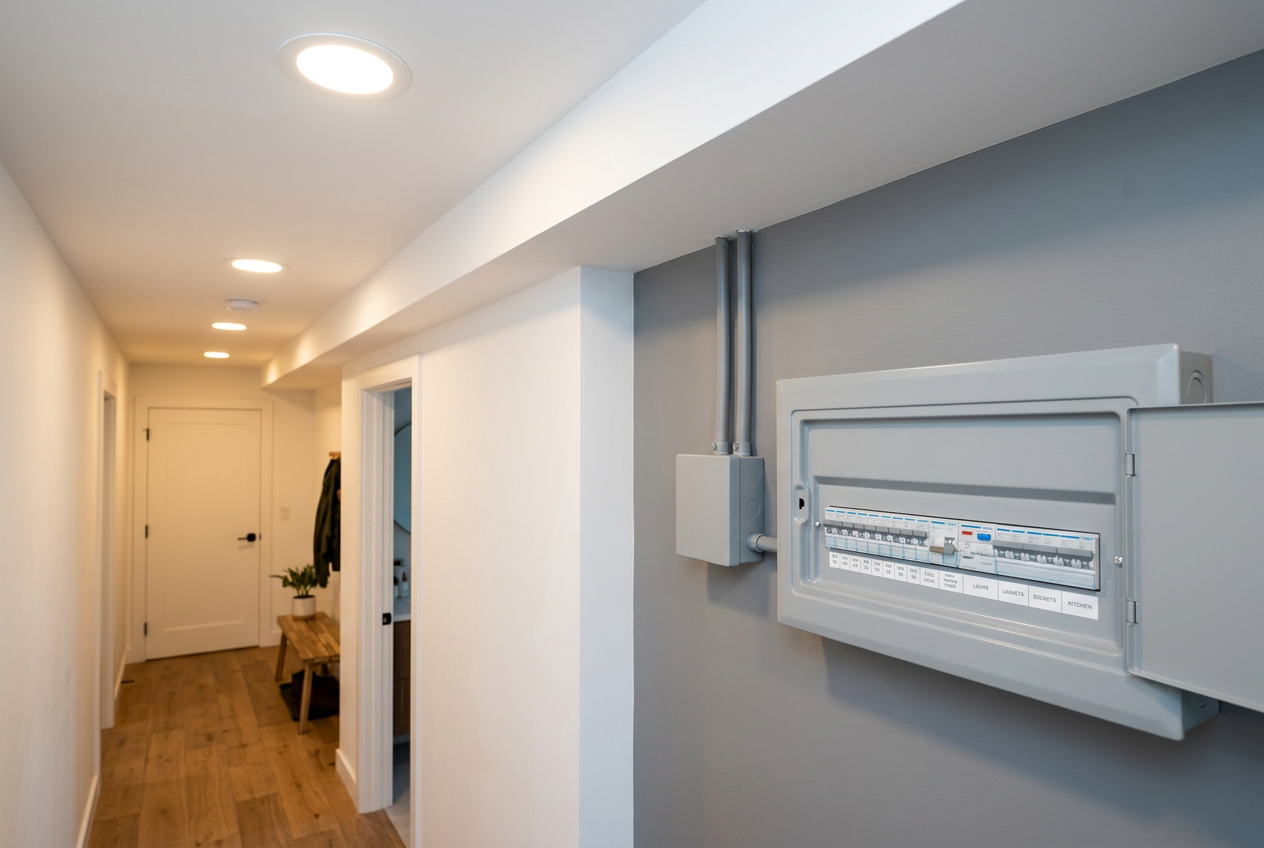
If you find yourself regularly relying on extension leads and multi-boxes, it's a strong sign your home doesn't have enough power points — and the right fix is to have additional fixed wall sockets installed by a registered electrician.
In New Zealand, installing, altering, or repairing fixed electrical wiring is restricted electrical work that must only be carried out by a registered electrician under the Electrical Workers Registration Board (EWRB). This includes:
- Installing new wall sockets or circuits
- Moving or adding to your switchboard
- Any wiring inside walls or ceilings
Attempting this work yourself is illegal, dangerous, and can void your home insurance. A registered electrician will also issue you a Certificate of Compliance (CoC) for the work — important for insurance and future property sales.
If you need a qualified local electrician, you can search for one on tradedirectory.co.nz.
A Note on Healthy Homes and Rental Properties
If you're a landlord, be aware that the Healthy Homes Standards require rental properties to be safe and in good repair — and that includes electrical safety. Relying on extension leads as a permanent solution in a rental could be considered a maintenance issue.