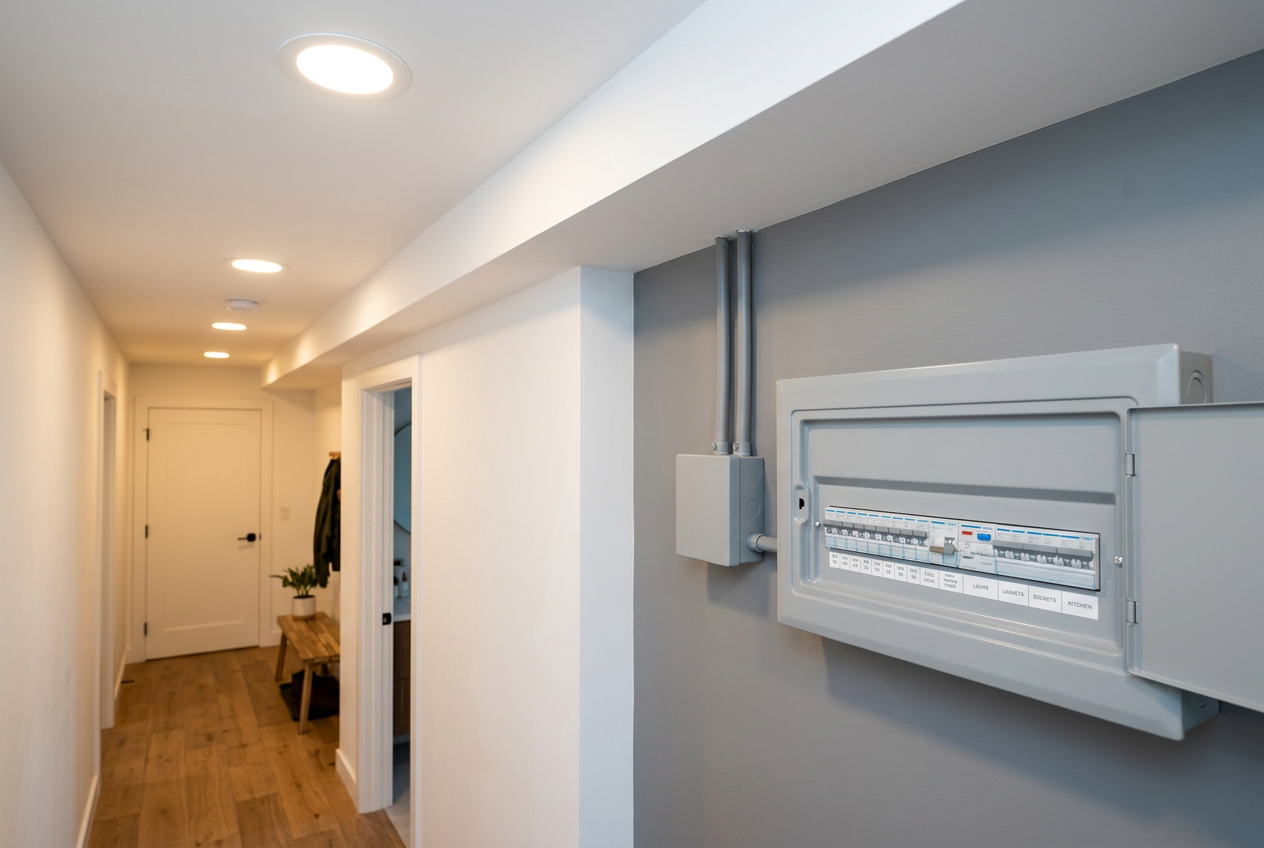
Working on electrical wiring without first confirming a circuit is truly de-energised is one of the most common causes of serious electrical injury in New Zealand homes. Even if you've switched off a breaker, voltage can still be present — and that can be fatal. This guide walks you through the safe process for verifying a circuit is dead, and explains clearly what you're legally allowed to do yourself versus what must be handled by a licensed electrician.
Understand What You Can and Cannot Do Legally
Before picking up any tools, it's critical to understand NZ law. Under the Electricity Act 1992 and associated regulations, most electrical work in New Zealand is restricted work — meaning it must be carried out, supervised, or certified by a registered electrician. This includes connecting or disconnecting wiring, replacing switches or sockets, and any work inside your switchboard.
The Electrical Workers Registration Board (EWRB) maintains the register of licensed electricians and outlines exactly what constitutes restricted work. As a homeowner, you are generally permitted to:
- Replace a like-for-like light fitting (in some circumstances)
- Replace a fuse in a fuse-type switchboard
- Reset a tripped circuit breaker
If you're unsure whether your task crosses into restricted work, check with the EWRB or consult a qualified electrician. You can find licensed local electricians on tradedirectory.co.nz.
Why "Switching Off" Isn't Enough
Flicking a breaker or light switch to the off position does not guarantee a circuit is safe to touch. Here's why:
- The breaker itself could be faulty or mislabelled
- Circuits may be fed from more than one source (a common issue in older NZ homes)
- Neutral conductors can still carry voltage under certain fault conditions
- Someone else could inadvertently switch the circuit back on while you're working
Always treat every wire as live until you have proven otherwise with a proper testing device.
Tools You'll Need
Using the right equipment is non-negotiable. Here's what's recommended:
| Tool | Purpose | Notes |
|---|---|---|
| Non-contact voltage tester (NCV) | Detects AC voltage without touching wires | Good first-pass check; batteries must be fresh |
| Digital multimeter | Measures actual voltage between conductors | More definitive; requires some skill to use safely |
| Plug-in socket tester | Checks polarity and earth on GPOs | Useful for power outlets only |
A non-contact voltage tester is the most practical tool for most homeowners. Brands like Fluke, Klein Tools, and Uni-T are widely available at Bunnings and Mitre 10. Always buy a tester with a CAT III or CAT IV safety rating — this indicates it's rated for household and distribution-level voltages.
Never rely on a cheap, unrated tester. Poorly made testers can give false negatives, indicating no voltage when voltage is actually present.
Step-by-Step: How to Verify a Circuit Is Dead
Step 1 — Identify and isolate the circuit
Locate your switchboard and identify the correct breaker for the circuit you're working on. Switch it to the off position. If your switchboard has a main isolator, consider switching that off too for added safety.
Step 2 — Lock out / tag out
If other people are in the house, place a piece of tape over the breaker and leave a clear note warning others not to switch it back on. This simple step prevents accidental re-energisation.
Step 3 — Test your tester
Before using your voltage tester, verify it's working correctly by testing it on a known live outlet (such as a nearby GPO you haven't switched off). If the tester doesn't indicate voltage on a live circuit, it's faulty — do not proceed.
Step 4 — Test the circuit you've isolated
Now test the circuit you've switched off:
- For a power outlet (GPO): insert the NCV tester into the active (smaller) slot, or use a plug-in socket tester.
- For a light fitting or switch: hold the NCV tester near each wire before touching anything.
- With a multimeter: set it to AC voltage (600V range), and carefully probe between active and neutral, then active and earth. A reading of 0V on all combinations confirms the circuit is de-energised.
Step 5 — Test again after any disturbance
If you move wires, open a junction box, or re-enter the work area after a break, test again. Never assume the situation hasn't changed.
Safety Rules to Always Follow
- Never work alone on electrical tasks — have someone nearby who can call for help
- Wear insulated gloves rated for electrical work if you must handle wiring
- Keep one hand in your pocket or behind your back when probing with a multimeter — this reduces the risk of current passing across your chest
- If you see burn marks, melted insulation, or smell burning, stop immediately and call a licensed electrician
- WorkSafe NZ has guidance on electrical safety that applies to both tradespeople and homeowners
When to Call a Professional
Call a licensed electrician if:
- You're not confident identifying which breaker controls which circuit
- The switchboard is old, unlabelled, or contains rewirable fuses
- You need to do any wiring, connection, or disconnection work
- Your tester indicates voltage even after switching off the breaker
- You're dealing with a three-phase supply or any commercial-style installation
Electrical mistakes can cause fires, serious injury, or death — and unlicensed restricted work can also void your home insurance. A registered electrician will also issue a Certificate of Compliance (CoC) for any restricted work completed, which is important for your records and any future property sale. Find a qualified local electrician through tradedirectory.co.nz.