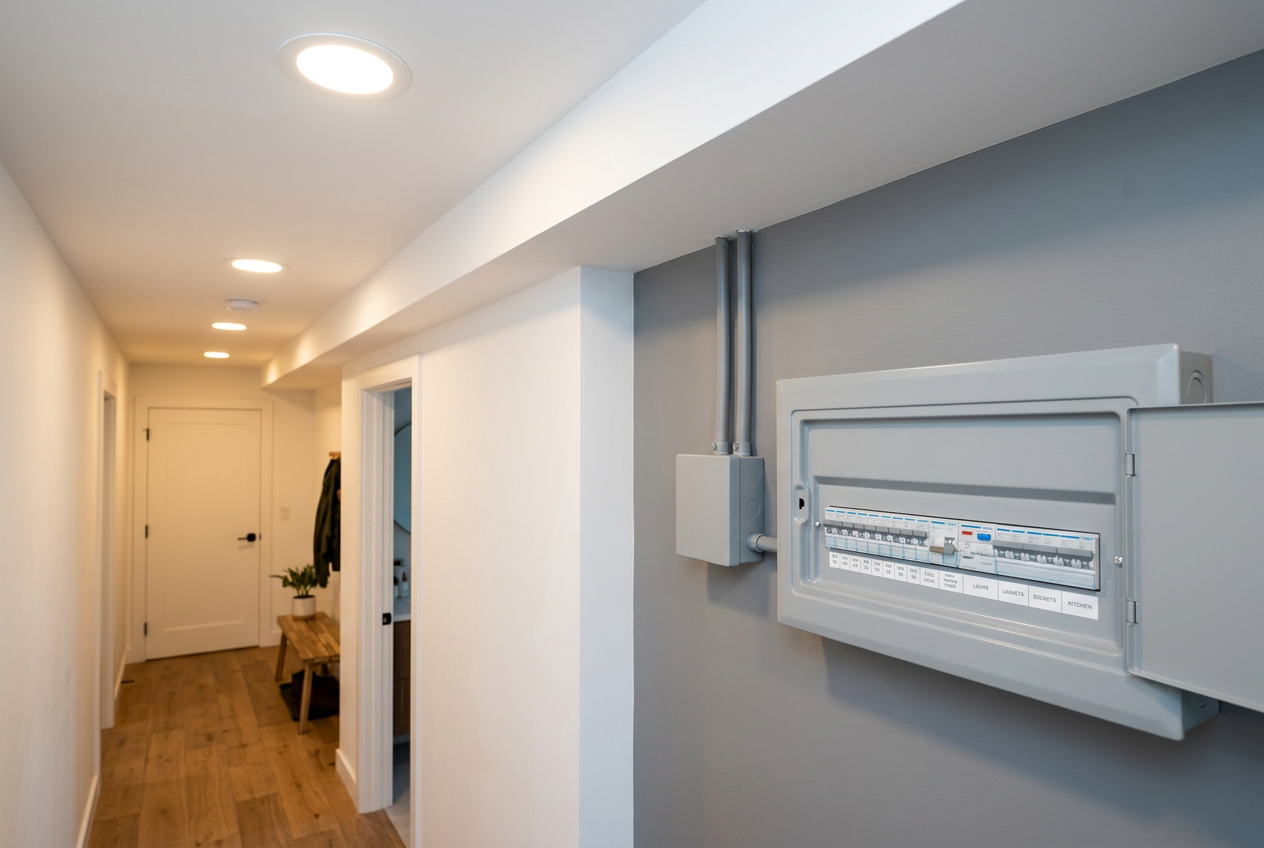
Replacing a blown fuse in your switchboard is one of the few electrical tasks a NZ homeowner can legally carry out themselves — but only for certain fuse types, and only when done safely. Before you touch anything, it's important to understand what kind of switchboard you have, what's actually allowed under NZ law, and how to protect yourself from serious harm.
First: Understand Your Switchboard Type
NZ homes have one of two main types of switchboards:
- Rewireable (ceramic) fuse boards — older style, with ceramic fuse holders that contain a thin wire. These are the type where homeowners can replace the fuse wire themselves.
- Circuit breaker (RCD/MCB) boards — modern switchboards with plastic switches (miniature circuit breakers or residual current devices). These don't have fuses to replace; you simply reset the tripped switch.
If your home has a modern circuit breaker board, there's no fuse to replace. Simply locate the tripped breaker (it will be in the middle or 'off' position), switch it fully off, then back on. If it trips again immediately, there's a fault on that circuit — stop and call a licensed electrician.
Safety First — Non-Negotiable Steps
Before doing anything near your switchboard, follow these steps every time:
- Switch off the main switch at the top of the switchboard to cut power to the board.
- Never work on a live board. Even with the main switch off, the incoming supply cables from the street remain live — do not touch them.
- Use a torch or headlamp rather than relying on your phone — keep both hands free.
- Make sure your hands and the area around you are completely dry.
- If you're unsure at any point, stop and call a professional.
WorkSafe NZ has clear guidance on electrical safety in the home — it's worth a read before you start.
How to Replace a Rewireable Fuse (Ceramic Type)
This is the only fuse replacement task homeowners are permitted to do themselves under NZ electrical regulations.
What you'll need
- Correct fuse wire (available from Bunnings or Mitre 10) — fuse wire comes in different amp ratings, typically 5A, 15A, and 30A
- Small flathead screwdriver
- Torch
Step-by-step process
- Turn off the main switch on your switchboard.
- Carefully pull out each ceramic fuse holder one at a time to identify the blown fuse. A blown fuse will have a broken, melted, or blackened wire across the two terminals.
- Note the amp rating marked on the fuse holder (e.g. 15A for lighting circuits, 30A for power circuits). Use only the correct amp-rated fuse wire — never use a higher rating than marked, and never substitute with wire, nails, or foil. This is a serious fire hazard.
- Loosen the screws on both terminals of the fuse holder and remove the old wire.
- Cut a length of new fuse wire slightly longer than needed. Thread it through the ceramic channel (if present), wrap it clockwise around one terminal screw, tighten, run it across, wrap clockwise around the second terminal, and tighten. The wire should be firm but not stretched tight.
- Reinsert the fuse holder into the board.
- Turn the main switch back on.
If the fuse blows again straight away, do not replace it a second time. A repeated blown fuse means there is a fault on that circuit — an overload, short circuit, or faulty appliance. Unplug appliances on that circuit and call a licensed electrician.
What Is Restricted Electrical Work in NZ?
Under the Electricity Act 1992 and associated regulations, most electrical work in NZ is restricted work that must be carried out by — or supervised by — a registered electrician. This includes any wiring, replacing fuse holders, installing new circuits, or working inside the switchboard beyond replacing fuse wire as described above.
You can check licensing requirements through the Electrical Workers Registration Board (EWRB). Doing restricted work yourself (or hiring an unlicensed person) is illegal, can void your home insurance, and puts lives at risk.
Should You Upgrade Your Old Fuse Board?
If you still have a rewireable fuse board, it's worth talking to a licensed electrician about upgrading to a modern RCD-protected circuit breaker board. Modern boards offer significantly better protection against electric shock and electrical fires. MBIE Building Performance and BRANZ both recommend ensuring your home's electrical system meets current safety standards.
For rental properties, the Healthy Homes Standards may also apply — check Tenancy Services for the latest requirements.
When to Call a Professional
Call a licensed electrician if:
- The fuse blows again after replacement
- You smell burning near the switchboard
- The fuse holder or board looks scorched or damaged
- You have a modern circuit breaker board and the breaker won't stay reset
- You want to upgrade from an old fuse board to a modern RCD board
- You're unsure about anything at all
A qualified local electrician can diagnose the underlying fault safely and legally. You can find licensed electricians in your area on tradedirectory.co.nz.