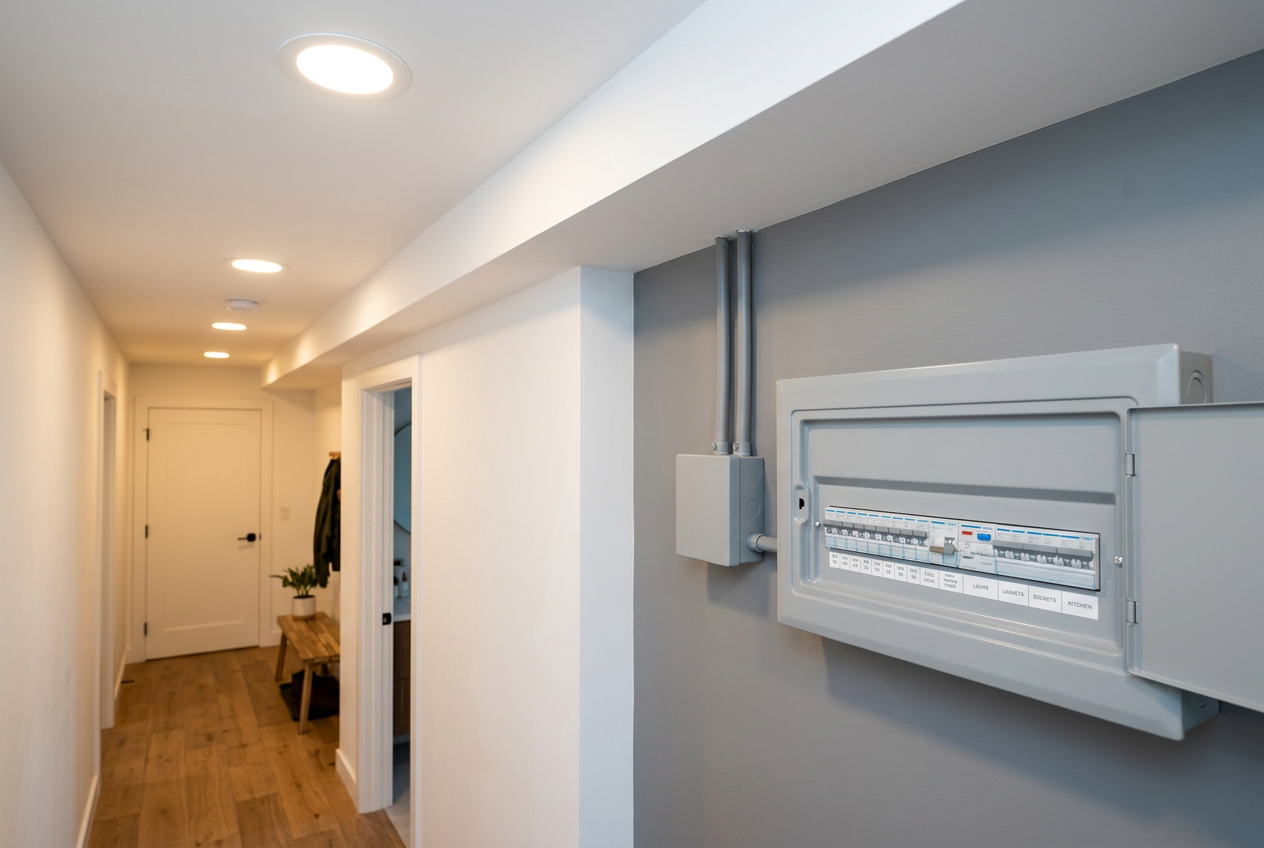
Safely isolating power before any home work is one of the most important steps a homeowner can take to protect themselves and their family. In New Zealand, the process is straightforward — but it's equally important to understand the legal boundaries around electrical work, because getting it wrong can be dangerous and may void your home insurance.
Understanding Your Switchboard
Your switchboard (also called the consumer unit or fusebox) is the central hub that controls all the electrical circuits in your home. It is usually located in a hallway, garage, laundry, or on an exterior wall. Inside you'll find:
- A main switch — isolates all power to the house
- Circuit breakers (or older fuses) — each one controls a specific circuit (e.g., lights, power points, oven)
- A residual current device (RCD) — a safety switch that trips if it detects a fault
Familiarise yourself with your switchboard before you need it in a hurry. Many switchboards have labels indicating which breaker controls which area — if yours doesn't, consider asking a licensed electrician to label them for you.
Step-by-Step: How to Isolate Power Safely
1. Identify the correct circuit
Work out which circuit breaker controls the area where you'll be working. If you're unsure, switch off the main switch to cut power to the entire house.
2. Switch off the breaker or main switch
Flip the relevant circuit breaker to the OFF position, or turn the main switch off. For older homes with rewirable fuses, remove the fuse carrier for that circuit — handle it carefully and set it aside.
3. Test before you touch
Never assume the power is off. Use a non-contact voltage tester (available from Bunnings or Mitre 10) to confirm there is no live voltage at the outlet, switch, or fixture you're working near. Hold the tester close to the wiring or socket — if it beeps or lights up, power is still present.
4. Lock out or tag out
If other people are in the house, place a piece of tape over the switched-off breaker and leave a clear note on the switchboard so nobody accidentally restores power while you're working. This simple lockout/tagout practice is standard safety procedure.
5. Verify again at the work location
Double-check with your voltage tester at the actual point of work — not just at the switchboard. This confirms the right circuit has been isolated.
What Homeowners Can Legally Do
In New Zealand, electrical work is tightly regulated under the Electricity Act 1992. Most electrical work must be carried out by a registered electrician and certified by a licensed inspector. However, homeowners are permitted to do a limited range of tasks on their own home (not a rental property), including:
- Replacing a light bulb or fluorescent tube
- Replacing a fuse wire in an older-style fuse (like-for-like, correct rating)
- Resetting a tripped circuit breaker or RCD
- Replacing an electric stove element (plug-in type only)
Everything else — including replacing switches, power points, light fittings, adding new circuits, or working inside the switchboard — is restricted electrical work and must be done by a registered electrician. Check the Electrical Workers Registration Board (EWRB) for a full list of what's permitted and how to verify a tradesperson's registration.
Safety Equipment to Have on Hand
| Item | Purpose |
|---|---|
| Non-contact voltage tester | Confirms power is off without touching wires |
| Rubber-soled footwear | Reduces risk of electric shock |
| Insulated screwdrivers | Safer for working near electrical components |
| Torch or head lamp | Illuminates dark switchboard areas |
| Lockout tape or tags | Prevents accidental re-energising |
Special Considerations for Older NZ Homes
Many New Zealand homes built before the 1990s may have older wiring systems, including aluminium wiring, rubber-insulated cables, or rewirable fuse boards. These systems can be more hazardous and may not meet current standards. If your home has an older switchboard or you notice discoloured outlets, burning smells, or frequently tripping breakers, have a registered electrician inspect the system before doing any work. BRANZ has useful guidance on older NZ building systems.
Healthy Homes and Rental Properties
If you are a landlord, be aware that electrical work in rental properties must always be carried out by a registered electrician — homeowner exemptions do not apply. The Tenancy Services Healthy Homes standards also set requirements around heating and ventilation that may involve electrical installations.
When to Call a Professional
Always engage a registered electrician for anything beyond the basic tasks listed above. This includes:
- Installing or moving power points, switches, or light fittings
- Any work inside the switchboard
- Installing heat pumps, EV chargers, or hot water cylinders
- Fault-finding or rewiring
- Any work in a rental property
You can find qualified, local electricians on tradedirectory.co.nz. Always ask to see their EWRB registration and request a Certificate of Compliance once work is complete — this is a legal requirement for all restricted electrical work in NZ.
Safety note: Electricity can kill. If you are ever in doubt about whether power is truly isolated, or unsure of what you're looking at inside a switchboard, stop and call a professional. No DIY task is worth risking your life.