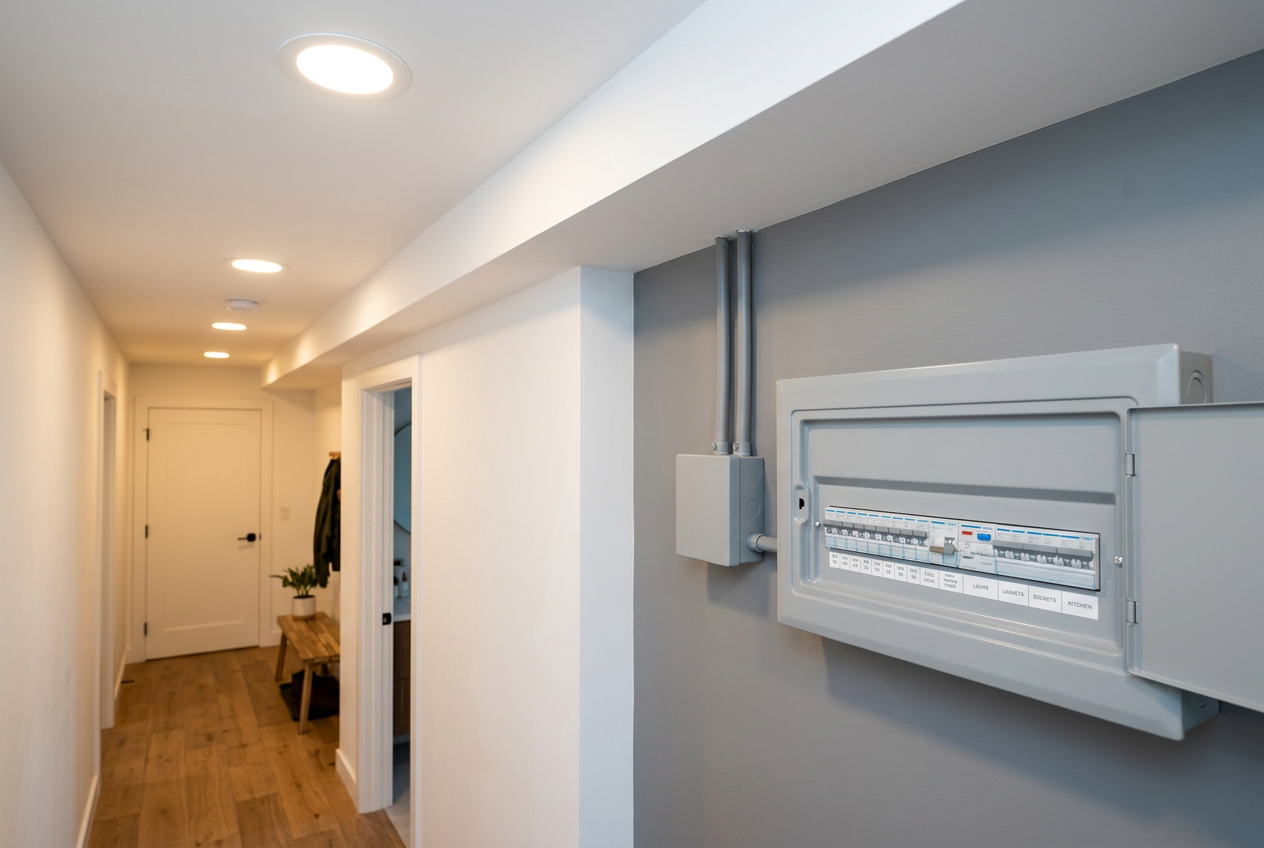
A tripped RCD or circuit breaker can leave part of your home without power — and it usually happens at the most inconvenient time. The good news is that resetting one is something most homeowners can safely do themselves, as long as you follow the right steps and understand what caused the trip in the first place.
What Is an RCD and What Is a Circuit Breaker?
RCDs (Residual Current Devices) and circuit breakers are both safety devices located in your home's switchboard (also called the fuse box or consumer unit), usually found in a hallway, garage, or utility area.
- A circuit breaker protects against overloads and short circuits. It cuts power to a circuit when too much current flows through it — for example, if you've plugged too many appliances into one circuit.
- An RCD monitors the flow of electricity and trips almost instantly if it detects a fault to earth — such as a person receiving a shock or a faulty appliance leaking current. RCDs are a critical life-safety device.
Under the NZ Building Code and modern wiring standards, RCDs are required in new and renovated homes, particularly for circuits serving wet areas, outdoor outlets, and general power. MBIE Building Performance provides guidance on electrical requirements under the Building Code.
How to Identify Which Device Has Tripped
Open your switchboard cover (this is safe to do — you are not touching any live parts). Look for:
- A circuit breaker that has flicked to the middle or OFF position, or looks out of line with the others.
- An RCD (often a wider switch with a small TEST button) that has moved to the OFF position.
Some switchboards have a combined RCBO (Residual Current Breaker with Overcurrent protection) for each circuit — these look like a circuit breaker but also have a TEST button.
Step-by-Step: How to Reset a Tripped Circuit Breaker
- Turn off or unplug appliances on the affected circuit before resetting. This reduces the load and helps identify if an appliance caused the trip.
- Locate the tripped breaker — it will be in the OFF or middle position.
- Push it firmly to OFF first (some breakers need this before they'll reset).
- Push it back to ON. You should feel or hear a click.
- If it trips again immediately, leave it off and investigate further — there may be a fault on the circuit or a faulty appliance.
Step-by-Step: How to Reset a Tripped RCD
- Unplug all appliances on the circuits protected by that RCD.
- Push the RCD switch firmly to ON. If it won't stay on, there is still a fault present.
- Plug appliances back in one at a time. When the RCD trips again after plugging in a specific appliance, that appliance is likely faulty — take it out of service and have it checked or replaced.
- If the RCD trips with nothing plugged in, or trips repeatedly, there may be a wiring fault. Stop and call a licensed electrician.
Always press the TEST button on your RCD monthly to confirm it's working correctly. The RCD should trip when you press TEST. Then reset it. This is a simple habit that could save a life.
Common Reasons an RCD or Breaker Trips
| Cause | More Likely Device | What to Do |
|---|---|---|
| Too many appliances on one circuit | Circuit breaker | Reduce load, spread appliances across circuits |
| Faulty or wet appliance | RCD | Unplug appliances, identify the faulty one |
| Short circuit (e.g. damaged cord) | Circuit breaker or RCBO | Inspect cords, replace damaged appliances |
| Wiring fault in the wall | RCD or circuit breaker | Call a licensed electrician |
| Water ingress into an outlet or fitting | RCD | Dry out, then call an electrician to inspect |
What You Can and Cannot Do Yourself
In New Zealand, electrical work is tightly regulated. Resetting a tripped RCD or circuit breaker is perfectly legal for a homeowner — you are simply operating a switch.
However, any work inside the switchboard, replacing wiring, adding circuits, or replacing electrical fittings is restricted electrical work and must only be carried out by a registered electrician. This is governed by the Electricity Act 1992 and overseen by the Electrical Workers Registration Board (EWRB).
Doing restricted electrical work yourself is illegal, dangerous, and can void your home insurance.
When to Call a Professional
Call a licensed electrician if:
- The RCD or breaker won't stay reset or trips immediately.
- You have no obvious cause for the trip and it keeps happening.
- You notice burning smells, scorch marks, or buzzing from the switchboard or outlets.
- Your switchboard is old and uses ceramic fuses rather than modern breakers — it may need upgrading.
- You've had water damage near any electrical fittings.
- You want to add new circuits or outlets — this is restricted work.
WorkSafe NZ has clear guidance on electrical safety in the home. Don't take risks with electricity — it can kill.
You can find a qualified, local electrician on tradedirectory.co.nz to help diagnose and fix persistent electrical faults safely.