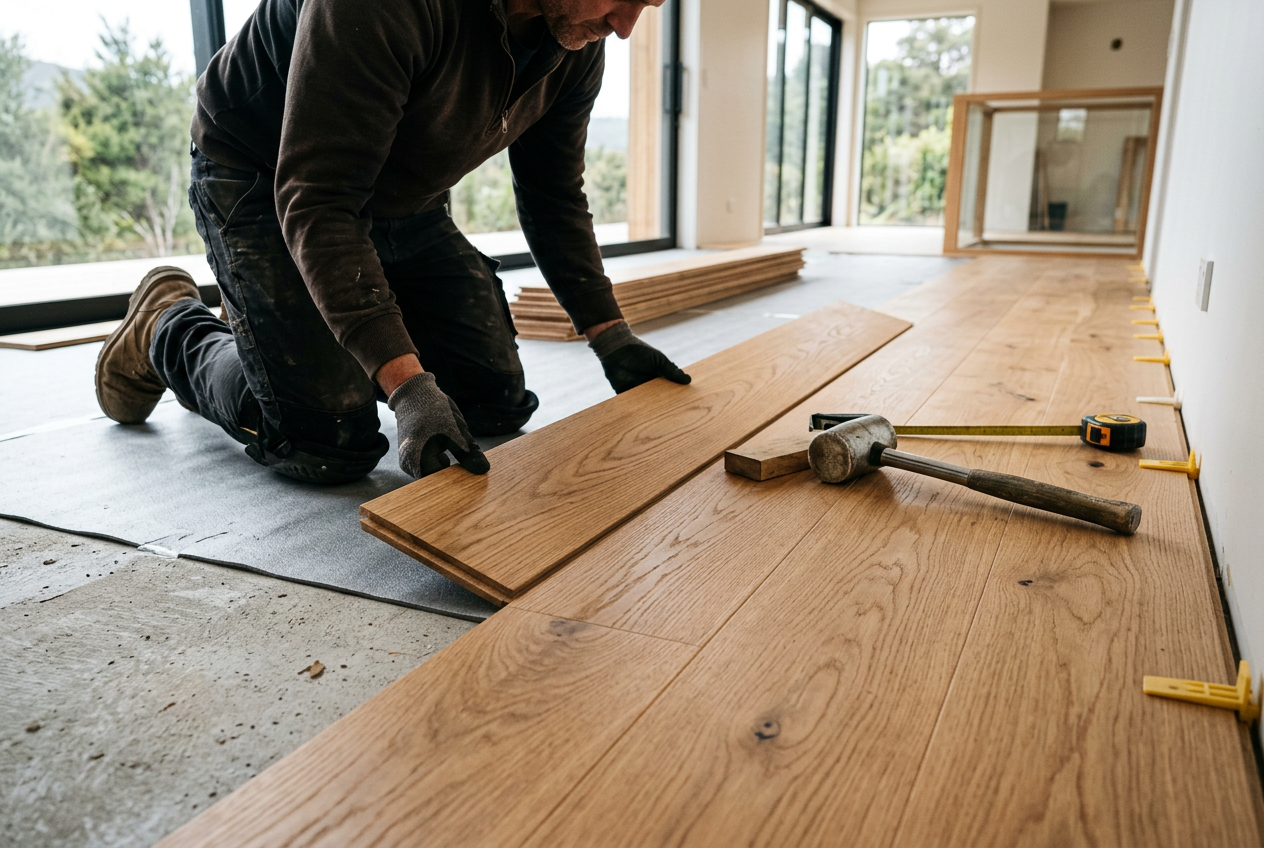
Ripping out old carpet is one of those DIY jobs that looks daunting but is actually very manageable for most homeowners. Whether you're upgrading to timber, vinyl plank, or new carpet, getting the old stuff out yourself can save a decent chunk of money. Here's how to do it safely and efficiently, the Kiwi way.
What You'll Need
Gather your tools and safety gear before you start — it makes the job much smoother.
Tools:
- Utility knife or carpet knife (with plenty of spare blades)
- Pliers (for gripping and pulling carpet edges)
- Pry bar or flat bar
- Hammer
- Knee pads
- Heavy-duty rubbish bags or a hired skip bin
- Duct tape (for bundling carpet rolls)
Safety gear:
- Thick work gloves — gripper tack strips are razor sharp
- Safety glasses
- Dust mask (P2 rated if the carpet is old or visibly mouldy)
- Sturdy closed-toe footwear
Safety note: Older homes (pre-1990s) may have floor adhesives or vinyl tiles containing asbestos underneath the carpet. If you find any crumbly or fibrous-looking sheet vinyl or black mastic adhesive under your carpet, stop work immediately. Contact a licensed asbestos assessor before proceeding. WorkSafe NZ has guidance on identifying and managing asbestos in the home.
Step 1 — Clear the Room
Remove all furniture from the room. Take off any door thresholds or transition strips at doorways using a flat bar — these are usually just nailed or screwed down. This gives you clean access to the carpet edges.
Step 2 — Cut the Carpet Into Manageable Strips
Don't try to pull up the whole carpet in one piece — it's heavy, awkward, and hard to dispose of. Instead:
- Find a corner or doorway and use your pliers to grab the carpet and pull it free from the gripper tack strip along the wall.
- Once you have a flap lifted, use your utility knife to cut the carpet into strips roughly 600–900 mm wide. Cut from the back (underside) to save your blades.
- Roll each strip tightly and secure with duct tape. This makes disposal much easier.
Step 3 — Remove the Underlay
Underlay is usually either a foam or felt product and is attached differently depending on its type:
- Foam underlay is often stapled to a timber subfloor or glued to concrete. It tends to break apart as you pull it up — work in sections and bag it as you go.
- Felt/rubber underlay on concrete is sometimes fully glued and can be more stubborn. A floor scraper or wide putty knife helps here.
Bag all underlay as you go. It compresses well and can be heavy once wet, so don't let it sit if rain is forecast.
Step 4 — Deal With the Gripper Tack Strips
Gripper tack strips are thin timber strips with sharp angled nails, fixed around the perimeter of the room. You have two choices:
| Option | When to choose it |
|---|---|
| Leave them in place | If you're relaying new carpet — the installer can reuse them if they're in good condition |
| Remove them | If you're installing hard flooring (timber, vinyl, tile) — they must come out |
To remove, slide a flat bar under the strip and lever it up. Work slowly — the nails can flick up unexpectedly. Collect all strips carefully and dispose of them wrapped in cardboard or in a rigid container so they don't puncture rubbish bags.
Step 5 — Prepare the Subfloor
Once the carpet and underlay are out, inspect the subfloor carefully:
- Timber subfloor: Pull out any remaining staples with pliers. Check for squeaky or soft spots — these may need screwing down or repairing before new flooring goes in. BRANZ has useful guidance on subfloor condition requirements.
- Concrete subfloor: Scrape off any remaining adhesive or foam residue. Check for cracks, high spots, or moisture. A damp concrete slab can ruin new flooring — consider a moisture test before proceeding.
- Sand or grind down any high spots, and fill low spots or cracks with a suitable floor-levelling compound from Ardex or Mapei before laying new flooring.
Disposing of Old Carpet in NZ
Carpet and underlay are bulky and not accepted in standard kerbside recycling. Your options:
- Hire a skip bin — practical for whole-house jobs
- Council transfer station — most NZ councils accept carpet for a fee; check your local council website
- Carpet recycling — some regions have carpet recycling schemes; worth a search before sending it to landfill
Roll and tie carpet tightly to make transport easier and to comply with most council drop-off requirements.
When to Call a Professional
While carpet removal is generally DIY-friendly, there are situations where you should bring in a qualified tradesperson:
- Asbestos is suspected — as noted above, this is non-negotiable. Licensed removalists only.
- Subfloor damage is significant — rotted joists, serious moisture issues, or structural concerns need a qualified builder or Licensed Building Practitioner (LBP).
- You're in a rental property — check your obligations under the Tenancy Services Healthy Homes standards before making changes.
- The job is simply too big — a professional flooring installer will remove old carpet as part of a full installation quote, often at a reasonable additional cost.
You can find qualified local flooring installers and builders on tradedirectory.co.nz.