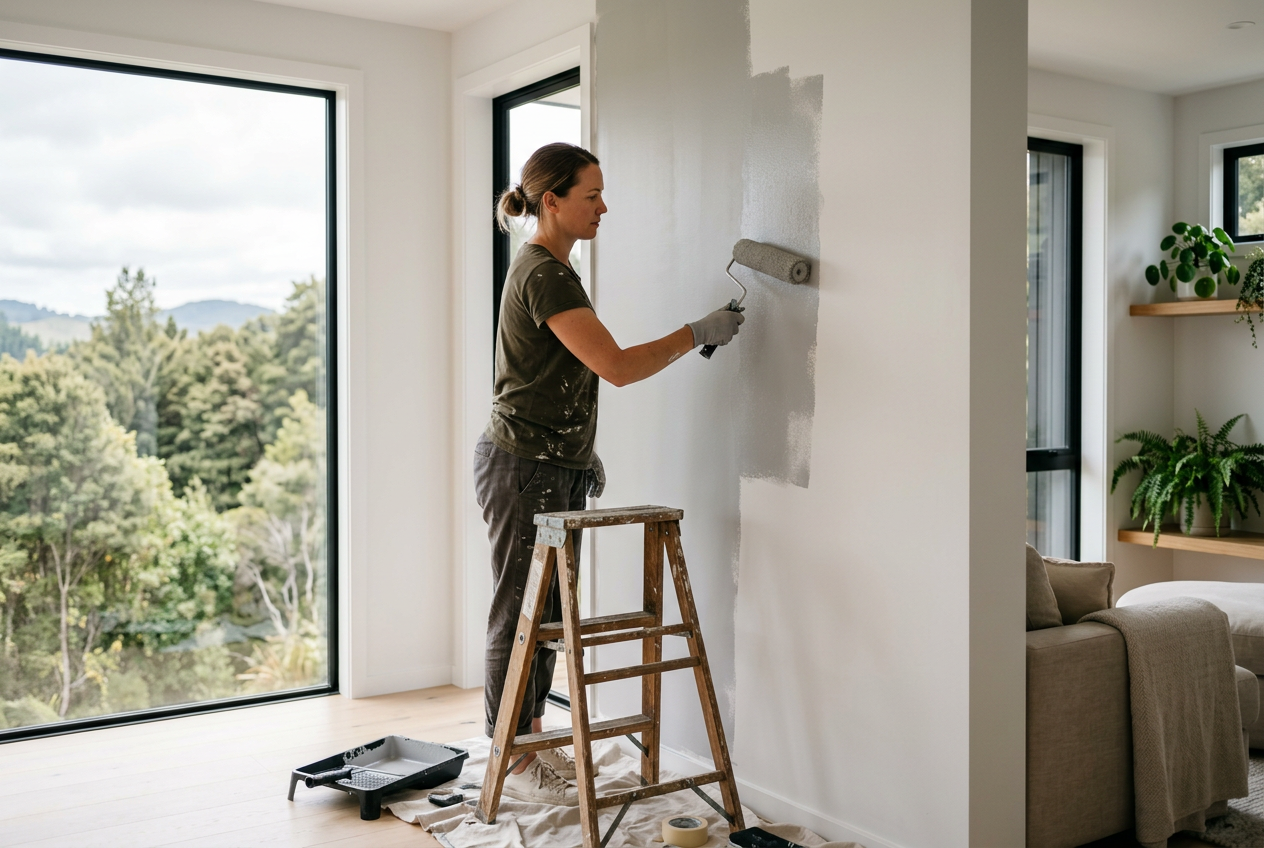
Painting a stairwell or high ceiling can transform a space, but working at height is one of the leading causes of serious DIY injuries in New Zealand. With the right equipment, a solid plan, and a healthy respect for the risks, many homeowners can tackle this job themselves — but it pays to know your limits before you climb that first rung.
Understanding the Risks of Working at Height
Falls from ladders and makeshift platforms are a significant cause of ACC claims and serious injuries in NZ homes every year. WorkSafe NZ recommends always having a stable, secure working platform before starting any task at height. In a stairwell especially, the uneven floor levels and awkward angles make this more challenging than a standard room.
Key risks to be aware of:
- Overreaching — the most common cause of ladder falls
- Unstable ladder feet on sloped or tiled stair treads
- Fatigue from working with arms raised for extended periods
- Paint fumes in enclosed stairwells with limited ventilation
Choosing the Right Equipment
The right gear makes all the difference. Here's what to consider:
Ladders and Platforms
| Situation | Recommended Equipment |
|---|---|
| High flat ceiling (up to ~3.5 m) | Sturdy A-frame ladder or platform ladder |
| Stairwell with landing | Combination ladder or stairwell platform system |
| Multi-storey stairwell | Scaffold tower or hired stairwell scaffold |
| Very high or complex stairwell | Professional scaffolding — call a pro |
- Use a combination ladder (also called a multi-purpose or articulating ladder) that can be adjusted to different leg heights to sit level on stair treads.
- A ladder standoff or ladder stay keeps the ladder away from the wall and gives you a better working angle.
- For larger jobs, consider hiring a mobile scaffold tower from Bunnings or Mitre 10 — it's far safer than balancing on a ladder for hours.
- Never use a chair, box, or makeshift platform. Ever.
Extension Poles
A quality paint roller extension pole lets you reach further without overreaching from the ladder. Most poles extend to 1.5–3 m and fit standard roller frames. This is your best friend for ceiling work.
Preparing the Space
Good preparation saves time and prevents accidents:
- Clear the stairwell of furniture, rugs, and clutter — you need a clear path if you need to move quickly.
- Lay drop sheets on every stair tread and the landing. Secure them with painter's tape so they don't slip underfoot.
- Mask up skirting boards, handrails, and wall edges with quality painter's tape.
- Ventilate the space — open windows and doors at both ends of the stairwell. If using solvent-based paints, ventilation is especially important. Check the paint's safety data sheet for guidance.
- Wear safety glasses when painting overhead — drips in the eyes are no fun.
Selecting the Right Paint
For ceilings, a flat or low-sheen ceiling paint is standard — it hides imperfections and reduces glare. For stairwell walls, a washable low-sheen or satin finish is more practical as it handles scuffs and cleaning better.
Resene and Dulux both offer excellent ceiling whites and wall paints suited to NZ conditions, including options with low VOC (volatile organic compounds) — a smart choice in enclosed spaces like stairwells. Wattyl is another widely available NZ option worth considering.
If your stairwell ceiling or walls have any moisture issues, choose a mould-resistant paint — particularly relevant in NZ's wetter regions or older homes with limited insulation.
The Painting Process
Step-by-step approach
- Cut in first — use a brush to paint a 50–75 mm band along all edges, corners, and around light fittings before rolling.
- Roll the ceiling using an extension pole, working in sections. Keep a wet edge to avoid lap marks.
- Work top to bottom — ceiling first, then walls, then trim. This way any drips get covered.
- Apply two coats — one coat rarely gives a professional finish. Allow the first coat to dry fully (check the tin for recoat times) before applying the second.
- Move your platform methodically — don't rush repositioning. Take your time and make sure the ladder or scaffold is stable before you climb.
Dealing with Old Paint and Surfaces
If your home was built before the 1980s, there's a chance the existing paint contains lead. Sanding or scraping lead paint creates hazardous dust. BRANZ has guidance on identifying and managing lead paint safely. If in doubt, get a professional assessment before disturbing old paint surfaces.
When to Call a Professional
Some stairwell jobs are genuinely best left to a qualified painter:
- Multi-storey or very high stairwells where proper scaffolding is required
- Suspected lead paint that needs safe removal or encapsulation
- Damaged or cracked plasterboard (GIB) that needs stopping and sanding before painting
- Complex decorative finishes or colour-matching heritage interiors
- Any situation where you feel unsafe or unsure
A professional painter will have the right scaffolding, insurance, and experience to get the job done efficiently and safely. You can find qualified local painters on tradedirectory.co.nz — look for members who are Licensed Building Practitioners or have relevant trade qualifications.
Note on electrical work: If you need to remove light fittings to paint around them, this is restricted electrical work under NZ law and must be carried out by a registered electrician. Check the Electrical Workers Registration Board to find a licensed sparky. Don't attempt to remove or reconnect light fittings yourself.