Aluminium wiring was widely used in New Zealand homes built roughly between the mid-1960s and late 1970s, and while it isn't automatically dangerous, it does require specific attention to remain safe. If your home was built during that era, it's worth knowing the warning signs and getting a professional assessment — because faulty aluminium wiring is a recognised fire hazard.
Why Aluminium Wiring Can Be Problematic
Aluminium expands and contracts more than copper when it heats up and cools down. Over time, this thermal cycling can cause connections at switches, outlets, and junction boxes to loosen. Loose connections create resistance, which generates heat — and that heat can eventually cause a fire, sometimes inside a wall where you can't see it.
Aluminium also oxidises when exposed to air, forming a layer that increases electrical resistance at connection points. Older fittings and switches were often designed for copper wire, making them poorly suited to aluminium.
How to Tell If Your Home Might Have Aluminium Wiring
Check the Age of Your Home
If your house was built between approximately 1965 and 1978, there's a reasonable chance it has aluminium wiring, particularly for branch circuit wiring (the wiring that runs to your power points and light switches). Homes built before or after this window are less likely to have it, though it's not impossible.
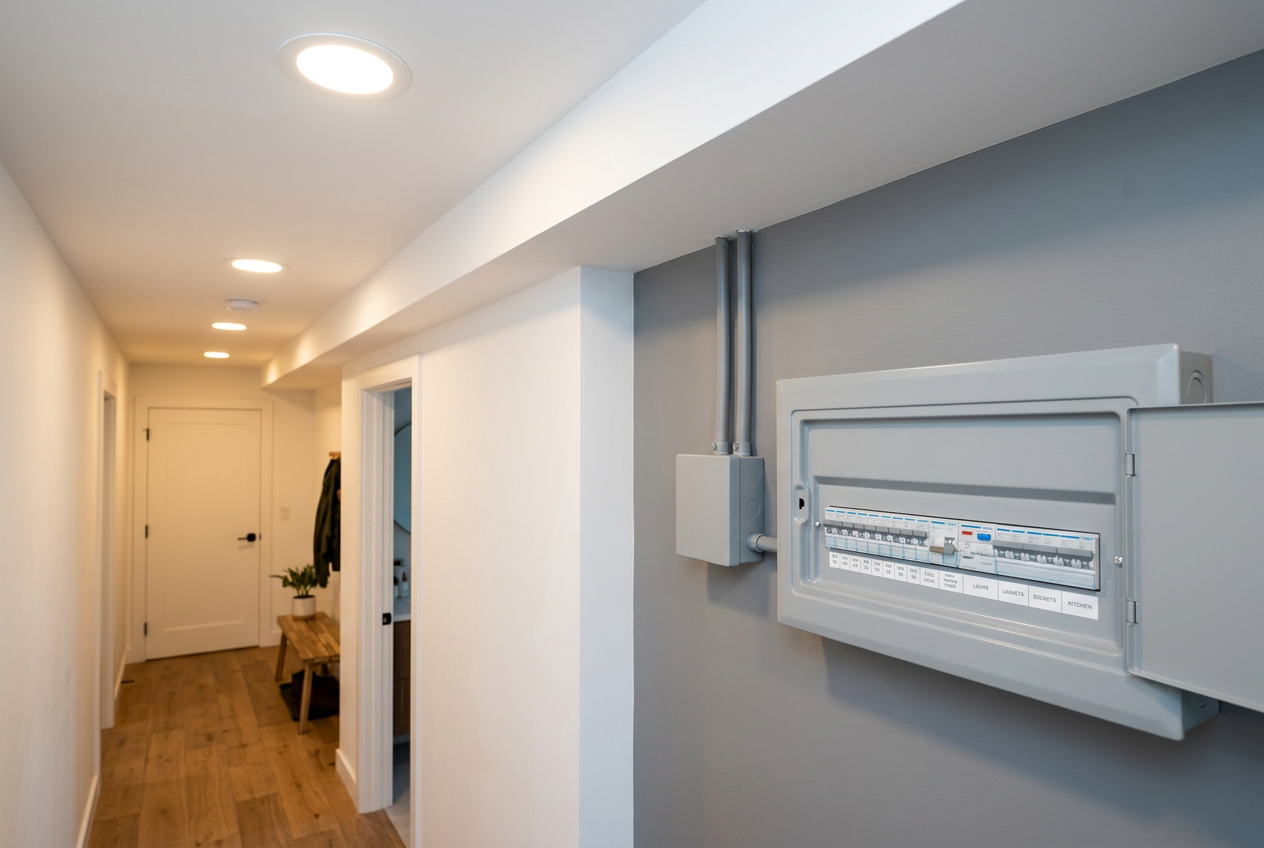
Look at Your Switchboard
A licensed electrician can inspect your switchboard (consumer unit) and trace the wiring. Aluminium wiring is silver-grey in colour rather than the orange-red of copper. If you can safely see exposed wiring at the switchboard without touching anything, look for that silver colour — but do not touch or probe any wiring yourself.
Check for Warning Labels
Some homes with aluminium wiring have had a sticker or label added to the switchboard by a previous electrician noting its presence. Have a look, but don't rely on this alone.
Warning Signs Inside the Home
The following symptoms can indicate overheating at connections — which is more common with aluminium wiring — and should be treated seriously:
- Flickering or dimming lights that aren't caused by a faulty bulb
- Warm or discoloured switch plates and power point covers
- A burning or hot plastic smell near outlets or switches
- Sparking when plugging in appliances
- Circuit breakers tripping or fuses blowing repeatedly without an obvious cause
- Power points or switches that feel unusually warm to the touch
If you notice any of these signs, stop using the affected outlet or switch and contact a licensed electrician promptly.
What a Licensed Electrician Will Do
This is restricted electrical work under New Zealand law. Only a registered electrician (registered with the Electrical Workers Registration Board) is legally permitted to inspect, test, and carry out remedial work on your home's fixed wiring. Do not attempt to open switchboards, junction boxes, or wall outlets yourself to investigate.
A qualified electrician will:
- Confirm whether aluminium wiring is present and how extensive it is
- Inspect all connection points for signs of overheating, oxidation, or looseness
- Test circuits for resistance and continuity
- Recommend and carry out remediation, which may include:
- Pigtailing — joining a short length of copper wire to the aluminium at each connection point using approved connectors
- Replacing outlets and switches with CO/ALR-rated fittings designed for aluminium wiring
- In more serious cases, rewiring affected circuits entirely
| Remediation Option | Suitable For | Notes |
|---|---|---|
| Pigtailing with approved connectors | Most connection points | Must use correct connector type |
| CO/ALR-rated fittings | Switches and outlets | Designed to work safely with aluminium |
| Full circuit rewiring | Severely degraded wiring | Most comprehensive solution |
What Homeowners Can Legally Do
As a homeowner, you can replace like-for-like fittings such as light bulbs and some surface-mounted accessories, but any work involving fixed wiring — including opening wall outlets or the switchboard — is restricted work and must be done by a licensed electrician. For more detail on what is and isn't restricted work, refer to MBIE Building Performance.
What you can do safely:
- Monitor for the warning signs listed above
- Check the age of your home and look for any existing labels on the switchboard (without opening it)
- Arrange a professional inspection
Healthy Homes and Rental Properties
If you're a landlord, electrical safety is part of your obligations under New Zealand's Tenancy Services Healthy Homes standards. Unresolved aluminium wiring issues could expose you to liability. Get a written inspection report from a licensed electrician and keep records of any remediation work.
Safety Note
Electricity can kill. Never open your switchboard, probe wiring, or attempt to inspect connections yourself. If you smell burning near any outlet or switch, turn off the circuit at the switchboard (if it is safe to do so) and call an electrician immediately. If you suspect an active electrical fire, call 111.
When to Call a Professional
You should contact a licensed electrician if:
- Your home was built between the mid-1960s and late 1970s and has never been inspected for aluminium wiring
- You notice any of the warning signs described above
- You're buying or selling a home of that era and want certainty
- You're a landlord wanting to confirm your property is safe and compliant
You can find qualified, local electricians on tradedirectory.co.nz. Look for someone with experience in older residential wiring and ask for a written report.