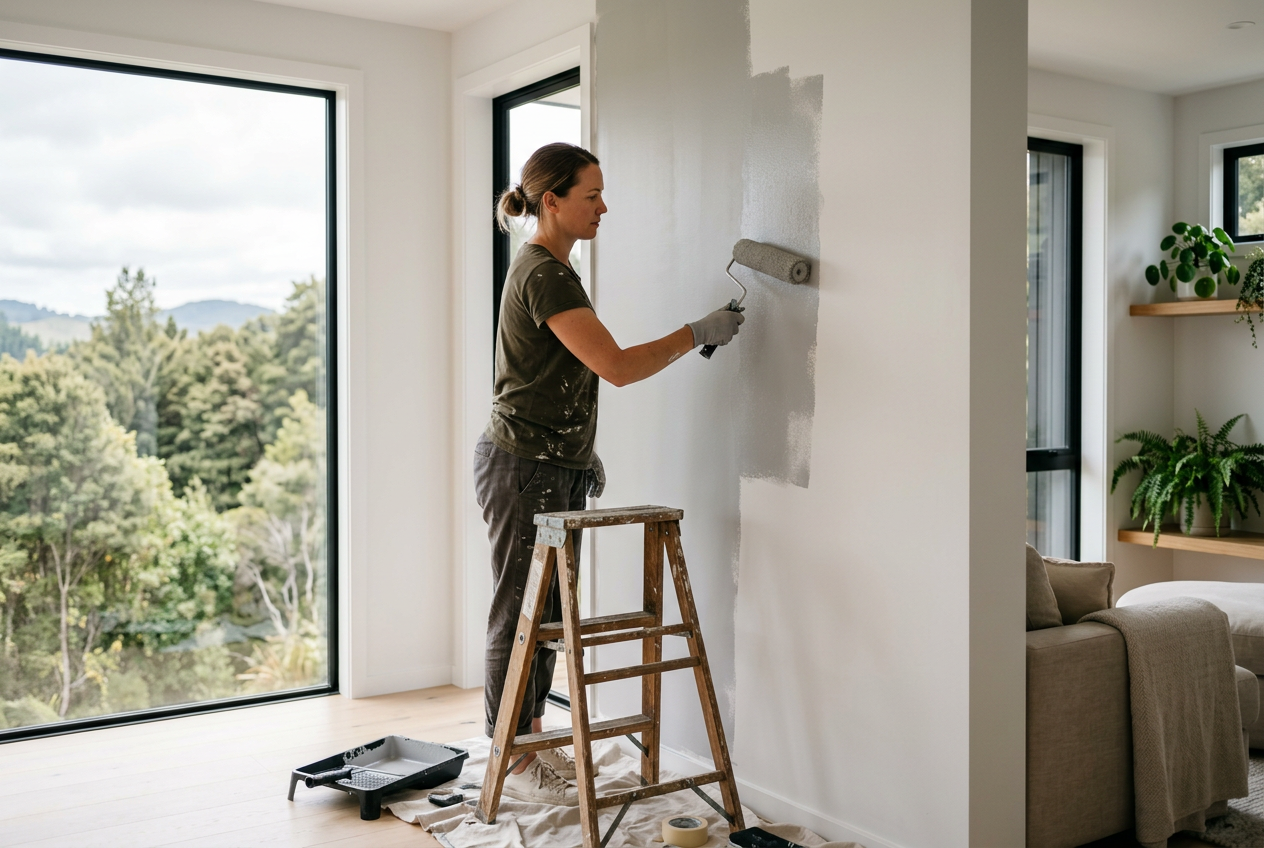
Fresh paint can transform a room, but the smell that comes with it? Not so welcome. Whether you've just rolled on a feature wall or repainted the whole house, paint fumes can linger for hours or even days depending on the product you've used. The good news is there are several proven ways to clear the air quickly and safely.
Why Does Paint Smell in the First Place?
Paint odour comes from volatile organic compounds (VOCs) — chemicals that evaporate from wet paint as it dries. Solvent-based (oil-based) paints release significantly more VOCs than water-based (acrylic) paints, which is why they smell much stronger and take longer to off-gas. Even after paint feels dry to the touch, VOCs can continue to be released during the curing process, which can take days to weeks.
High VOC exposure in an enclosed space can cause headaches, dizziness, and irritation to eyes and airways, so it's worth taking this seriously — especially if children, elderly people, or anyone with respiratory conditions are in the home.
Ventilate, Ventilate, Ventilate
The single most effective thing you can do is get fresh air moving through the space as quickly as possible.
- Open windows and doors on opposite sides of the room to create cross-ventilation.
- Place a box fan facing outward in one window to push fume-laden air outside, and open another window to draw fresh air in.
- Run your bathroom or kitchen exhaust fans if they vent to outside (not just into the ceiling cavity).
- If the weather allows, keep windows open overnight — temperatures drop and air circulation can really help clear residual odour.
Avoid simply recirculating indoor air with a ceiling fan alone, as this won't remove VOCs from the room.
Use Natural Odour Absorbers
Once you've got ventilation sorted, a few household items can help absorb lingering smells:
- Baking soda (baking soda / sodium bicarbonate): Place open bowls around the room. It's a well-known odour absorber and completely non-toxic.
- Activated charcoal: Available from hardware stores and pharmacies, activated charcoal is highly effective at trapping VOCs.
- White vinegar: Leave shallow bowls of white vinegar in the room overnight. The vinegar smell dissipates quickly and takes paint odour with it.
- Onion halves: An old painter's trick — cut onions in half and leave them cut-side up in the room. They absorb fumes surprisingly well.
- Coffee grounds: Fresh grounds in a bowl can help mask and absorb odours.
Avoid using scented candles or air fresheners to cover the smell — they don't remove VOCs and can react with them to create additional irritants.
Choose Low-VOC or Zero-VOC Paint Next Time
If you're planning your next painting project, choosing a low-VOC or zero-VOC paint makes a huge difference. Resene offers a range of low-VOC waterborne paints that are much kinder on indoor air quality, and Dulux and Wattyl also stock low-odour interior ranges. These are widely available at paint stores and hardware retailers like Mitre 10 and Bunnings.
| Paint Type | VOC Level | Odour | Dry Time |
|---|---|---|---|
| Water-based acrylic | Low–Medium | Mild | 1–4 hours |
| Low-VOC acrylic | Very Low | Minimal | 1–4 hours |
| Zero-VOC acrylic | Negligible | Almost none | 1–4 hours |
| Oil-based/solvent | High | Strong | 6–24+ hours |
Timing Your Paint Job Wisely
- Paint during warmer, drier months when you can keep windows open for longer.
- Start early in the day so the room has maximum ventilation time before you need to close up for the night.
- Avoid painting in winter when homes are sealed up tight — fumes concentrate quickly in poorly ventilated spaces.
- If you're painting a bedroom, try to give it at least 24–48 hours of ventilation before sleeping in it, even with low-VOC paint.
Protecting Yourself While Painting
While you're working to clear the smell, don't forget to protect yourself during the job itself:
- Wear a respirator rated for organic vapours (not just a dust mask) when using oil-based paints or primers.
- Take regular breaks in fresh air.
- Keep children and pets out of freshly painted rooms until the smell has cleared.
- Check WorkSafe NZ guidance on working safely with paints and solvents if you're doing a large project.
When to Call a Professional
Most interior painting is perfectly legal DIY work for homeowners. However, if you're dealing with older paint that may contain lead (common in homes built before the 1980s), disturbing it can be a serious health hazard. A professional painter will know how to test for lead paint and handle it safely. Similarly, if you're painting in a very large or poorly ventilated commercial space, a professional will have the right equipment and safety protocols.
For any painting project — big or small — you can find qualified, experienced local painters on tradedirectory.co.nz who can get the job done efficiently with minimal disruption to your household.