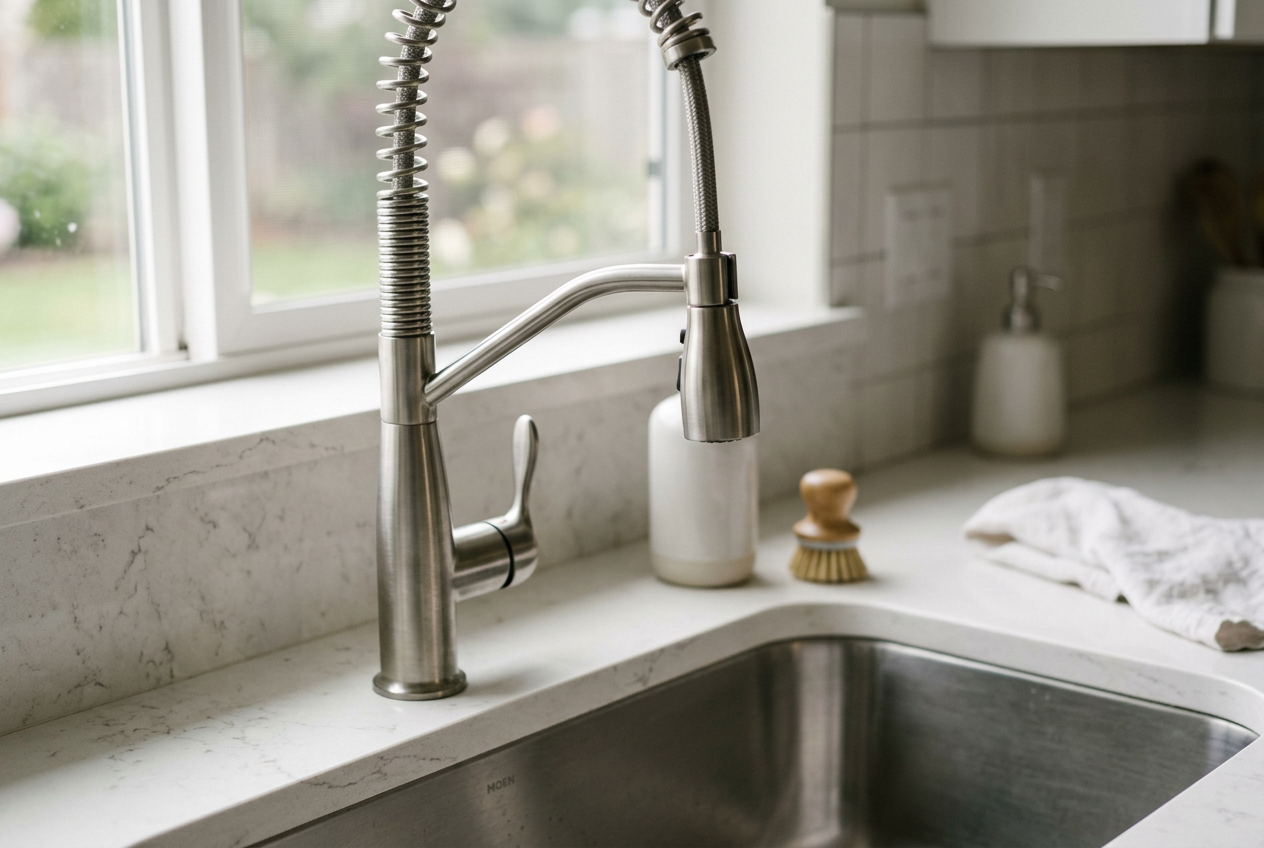
If only one tap in your home has low pressure while the rest are fine, the problem is almost certainly local to that tap — not your mains supply or whole-house plumbing. The good news is that the most common causes are simple blockages or restrictions that many homeowners can sort out themselves in under an hour.
Check the Aerator First
The aerator is the small mesh screen screwed onto the end of most modern tap spouts. Over time, mineral deposits (especially in areas with hard water) and sediment build up in the mesh and restrict flow. This is by far the most common cause of low pressure from a single tap.
To clean it:
- Unscrew the aerator by hand or with a cloth-wrapped pair of pliers (to avoid scratching the chrome).
- Disassemble the small parts — there's usually a mesh screen, a flow restrictor, and a rubber washer.
- Soak the parts in white vinegar for 30–60 minutes to dissolve mineral scale.
- Rinse thoroughly and reassemble.
- Turn the tap on and check the flow.
If the aerator is damaged or corroded beyond cleaning, replacements are inexpensive and widely available at Bunnings or Mitre 10. Make sure you match the thread size (most are standard, but check before you buy).
Inspect the Isolation Valve
Every tap should have an isolation valve (also called a service valve or stop tap) on the supply pipe underneath the basin or behind the wall. If this valve was partially closed during a previous repair and not fully reopened, it will restrict flow to that tap only.
Locate the valve under the sink or vanity — it's usually a small inline valve with a flat-head screw slot or a lever handle. Turn it fully anti-clockwise (or align the lever parallel to the pipe) to open it completely. Test the tap again.
Look for a Kinked or Corroded Flexi Hose
Flexible braided hoses connect the isolation valve to the tap body. These can kink, especially if they've been disturbed during cabinet work or a previous repair. A kinked flexi hose will noticeably reduce flow.
Inspect the hose visually. If it's kinked, gently straighten it. If it's corroded, bulging, or more than 10–15 years old, replace it — failed flexi hoses are a leading cause of serious water damage in NZ homes. Replacement hoses are available at most hardware stores; make sure you match the thread connections and length.
Safety note: Always turn off the isolation valve before disconnecting any hose or tap fitting. If you can't find or operate the isolation valve, turn off the water at the toby (main stopcock) outside.
Check for a Faulty Cartridge or Washer
In mixer taps and ceramic disc taps, a worn or damaged cartridge can restrict flow. In older pillar taps, a swollen or deteriorated washer can partially block the seat. If cleaning the aerator and checking the valve don't help, the cartridge or washer may need replacing.
- For washer-type taps: turn off the water, remove the tap head and packing nut, and replace the washer. This is a classic DIY job.
- For ceramic cartridge mixers: cartridges vary by brand and model. Take the old cartridge to the hardware store to match it, or contact the tap manufacturer for the correct part.
Hot Water Side Only? Check the Hot Water System
If the low pressure is only on the hot water side of a mixer tap, the issue may be with your hot water cylinder or its associated valves rather than the tap itself. A partially closed gate valve on the hot water outlet, a failing pressure-reducing valve, or a blocked filter on the cylinder inlet can all cause this. This is worth investigating but may require a licensed plumber.
Older Homes and Galvanised Pipes
In older NZ homes (pre-1970s), internal pipes are sometimes galvanised steel, which corrodes and narrows internally over decades. If you've ruled out the aerator, valves, and hoses, and the tap is on an older part of the house, internal pipe corrosion could be restricting flow to that outlet. This is a job for a plumber.
When to Call a Professional
Call a licensed plumber if:
- You can't locate or operate the isolation valve or toby.
- The flexi hose or supply pipe shows signs of corrosion, leaking, or damage.
- The problem is on the hot water side and you suspect an issue with the cylinder or its valves.
- You suspect corroded or scaled internal pipework.
- Any work involves cutting into walls or floors to access pipes.
Plumbing work in NZ is regulated. While homeowners can do minor maintenance like cleaning aerators and replacing washers, any work on pipes, fittings, or connections that goes beyond simple tap maintenance is restricted work under the Plumbers, Gasfitters, and Drainlayers Act and must be carried out by a licensed tradesperson. Check the Plumbers Gasfitters & Drainlayers Board to verify a plumber's licence before hiring.
You can find qualified local plumbers on tradedirectory.co.nz.