A power point that has stopped working is one of the most common household electrical issues in New Zealand, and the good news is that the cause is often something simple you can check yourself. However, because electrical work in NZ is tightly regulated for safety, there are clear limits on what a homeowner is legally allowed to do — and it's important to know where that line sits.
Start With the Obvious: Check the RCD and Circuit Breaker
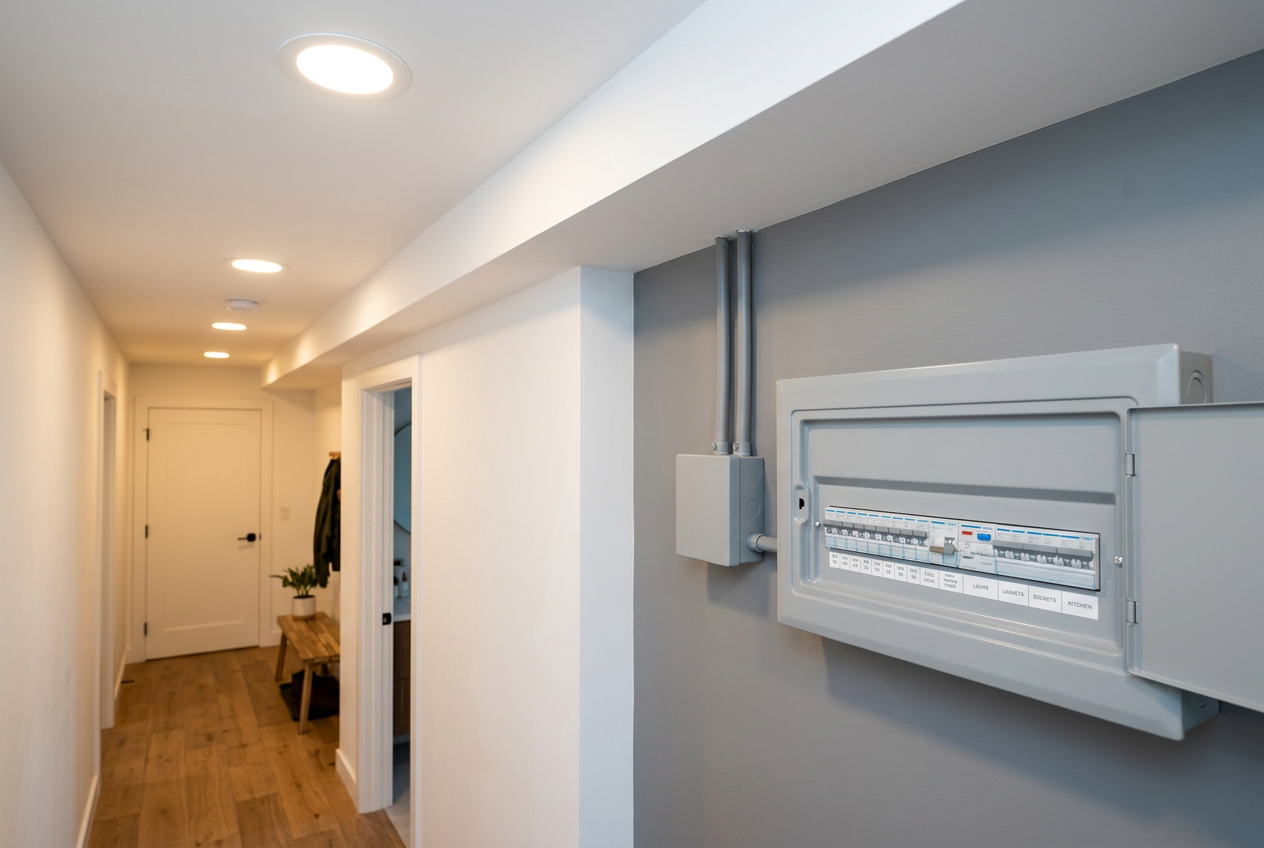
Before assuming the worst, head to your switchboard (also called the fuse board or consumer unit). Most NZ homes built or rewired in recent decades have a Residual Current Device (RCD) — sometimes labelled "Safety Switch" — alongside circuit breakers.
- Look for any tripped breaker (it will be in the middle or "off" position rather than fully up or down).
- Look for an RCD button that has popped out or shifted to the off position.
- Reset the RCD by pressing the test button, then switching it back on. Reset any tripped breaker by switching it fully off, then back on.
If the breaker or RCD trips again immediately, stop and call a licensed electrician — there is likely a fault on the circuit that needs professional diagnosis.
Check Other Power Points on the Same Circuit
Power points in a room or area of your home are usually wired on the same circuit. Plug a lamp or phone charger into nearby outlets to see if they work. If several points are dead, it confirms a circuit-level issue (likely the tripped breaker you just checked). If only one point is dead, the fault is more localised.
Test With a Known Working Appliance
It sounds simple, but always rule out the appliance itself. Plug something you know works — like a phone charger or a lamp — into the dead outlet. If it still doesn't work, the problem is with the outlet or its wiring, not the device.
Look for a Switched Power Point
Some NZ power points have a small rocker switch on the face of the outlet. Check that it's switched on. This catches out a surprising number of people!
Check for a Loose Plug or Damaged Socket Face
Inspect the socket face visually. If you can see scorch marks, cracking, or a burning smell, do not use the outlet and call an electrician straight away. These are signs of arcing or overheating, which is a fire risk.
What You Are NOT Allowed to Do
This is critical. In New Zealand, electrical wiring work is restricted work under the Electricity Act 1992. It must be carried out by — or under the direct supervision of — a registered electrician. You can check a tradesperson's registration at the Electrical Workers Registration Board (EWRB).
As a homeowner, you cannot legally:
- Replace or repair the internal wiring of a power point.
- Remove the socket from the wall and reconnect wires.
- Install a new power point or move an existing one.
- Work inside the switchboard.
Attempting restricted electrical work yourself is illegal, can void your home insurance, and is genuinely dangerous. New Zealand's WorkSafe NZ takes electrical safety seriously, and for good reason — faulty DIY wiring is a leading cause of house fires.
What You CAN Do as a Homeowner
| Task | Homeowner OK? |
|---|---|
| Reset a tripped RCD or circuit breaker | ✅ Yes |
| Test outlets with a known appliance | ✅ Yes |
| Check the switch on a switched outlet | ✅ Yes |
| Replace a light bulb | ✅ Yes |
| Replace or rewire a power point | ❌ No — restricted work |
| Work inside the switchboard | ❌ No — restricted work |
Common Causes of a Dead Power Point
- Tripped RCD or circuit breaker — most common cause.
- Overloaded circuit — too many high-draw appliances on one circuit.
- Loose or broken internal wiring — connections can work loose over time, especially in older homes.
- Faulty outlet — the socket mechanism itself can fail.
- Damaged wiring — from pests, moisture, or physical damage (e.g., a nail through a wall).
Older NZ homes (pre-1980s) may still have aluminium wiring or older wiring systems that are more prone to faults. If your home is older, it's worth having a licensed electrician carry out a general inspection. BRANZ has useful guidance on older NZ housing and electrical systems.
When to Call a Professional
Call a licensed electrician if:
- The breaker or RCD keeps tripping after you reset it.
- You notice scorch marks, a burning smell, or discolouration around the outlet.
- Multiple outlets have stopped working and resetting the breaker doesn't help.
- The outlet feels warm to the touch.
- Your home is older and you suspect the wiring may be deteriorating.
- You simply want peace of mind — a professional can test the circuit properly with the right equipment.
A registered electrician will issue you a Certificate of Compliance (CoC) for any wiring work they carry out, which is an important document for insurance and future property sales. You can find qualified local electricians on tradedirectory.co.nz.
Safety note: If you ever smell burning, see sparks, or suspect a serious electrical fault, switch off the relevant circuit at the switchboard and call an electrician before using the outlet again. In an emergency, call 111.