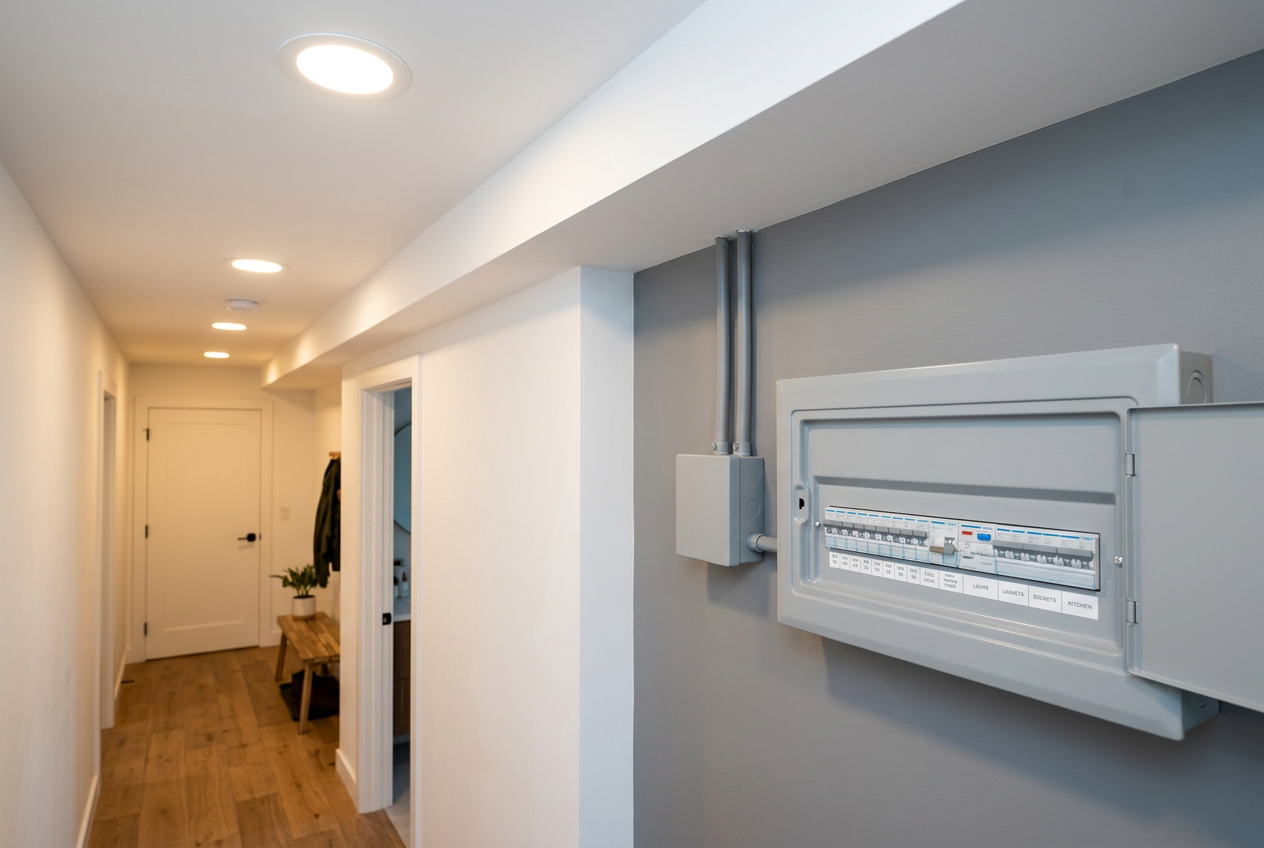
Locating a hidden electrical cable before you drill, nail, or cut into a wall is one of the most important safety steps any homeowner can take. In New Zealand, accidentally striking a live cable can cause electrocution, fire, or a very expensive repair — and under the Electrical Workers Registration Board (EWRB) rules, any damage to fixed wiring must be repaired by a registered electrician. The good news is that finding cables before you start is straightforward with the right tools and a bit of know-how.
Why It Matters: Safety First
New Zealand homes carry 230V AC mains electricity — enough to cause serious injury or death on contact. Hidden cables inside walls are typically not armoured, meaning a drill bit or saw can pierce them instantly. Before doing any work that involves penetrating a wall — hanging a TV bracket, installing shelving, or cutting an opening — you must check for hidden cables.
WorkSafe NZ is clear that electrical safety is everyone's responsibility. Even if you're not doing electrical work yourself, you are responsible for not creating a hazard.
Tools You Can Use to Detect Cables
1. Cable and Pipe Detector (Stud Finder with AC Detection)
The most practical tool for homeowners is a multi-function detector that can sense:
- Live AC electrical cables
- Metal pipes and conduit
- Timber or steel studs
These are widely available at Bunnings and Mitre 10 for a broad guide price of roughly $40–$150 depending on quality. Look for models that specifically advertise live wire detection — not all stud finders include this feature.
How to use one:
- Ensure the wall surface is clear and dry.
- Calibrate the detector flat against the wall as per the manufacturer's instructions.
- Slowly sweep it horizontally and vertically across the area you plan to work in.
- Mark any detected cables, pipes, or studs with a pencil.
- Cross-check by sweeping in the opposite direction.
2. Understand Common Cable Routes
Electricians follow predictable routes when running cables, so knowing these helps narrow your search:
| Location | Likely Cable Route |
|---|---|
| Near a light switch | Vertical run up or down from switch box |
| Near a power outlet | Vertical run from outlet, then horizontal at floor or ceiling level |
| Ceiling/floor junctions | Cables often run horizontally along top or bottom plates |
| Either side of a door or window | Vertical runs are common here |
In NZ homes built to NZS 3604 timber framing, cables typically run through drilled holes in studs at a consistent height, or are stapled along the face of framing behind the lining.
3. Check Your Home's Age and Construction
The type of wall lining and era of your home gives useful clues:
- GIB plasterboard walls (most common in NZ): Cables run through stud cavities. GIB linings give no visual indication of cable location, so a detector is essential.
- Older homes (pre-1970s): May have older wiring types, including TRS (tough rubber sheathed) cable, which can be brittle. Extra caution is warranted — consider having a registered electrician inspect before any work.
- Concrete or brick walls: Cables are usually in conduit chased into the surface. Look for filler lines or slight ridges indicating a chase.
4. Use a Torch and Visual Inspection
Before reaching for a detector, do a visual sweep:
- Look for outlet and switch positions — cables will run to and from these.
- Check for any visible conduit on the surface.
- In unlined areas (garages, basements), cables may be visible running along framing.
5. Turn Off the Circuit — But Don't Rely on This Alone
Switching off the relevant circuit at your switchboard reduces risk, but do not assume this makes the wall safe. Multiple circuits may run through the same wall cavity, and you may not know which breaker controls which cable. Always use a detector even with the power off.
What You Can and Cannot Do Yourself
In New Zealand, electrical work is restricted work under the Electricity Act 1992. Homeowners may do very limited work — such as replacing a like-for-like light fitting or a socket cover — but any work on fixed wiring, including repairing a damaged cable, must be carried out by a registered electrician licensed with the EWRB.
Using a cable detector to locate cables before drilling is perfectly legal and sensible DIY. However, if you discover a cable in an unexpected location, or if your detector gives inconsistent readings, stop and seek professional advice.
When to Call a Professional
Call a registered electrician if:
- You're unsure about your detector readings.
- You've accidentally damaged or nicked a cable.
- You're planning significant renovation work that may affect wiring.
- Your home has older wiring and you want a safety check.
- You need a cable re-routed to allow for building work.
A licensed electrician can also use professional-grade equipment and their knowledge of your home's wiring layout to locate cables accurately. You can find qualified local electricians on tradedirectory.co.nz.
For renovation projects that may require building consent, check with your local council and refer to MBIE Building Performance for guidance on what work requires consent under Schedule 1 exemptions.