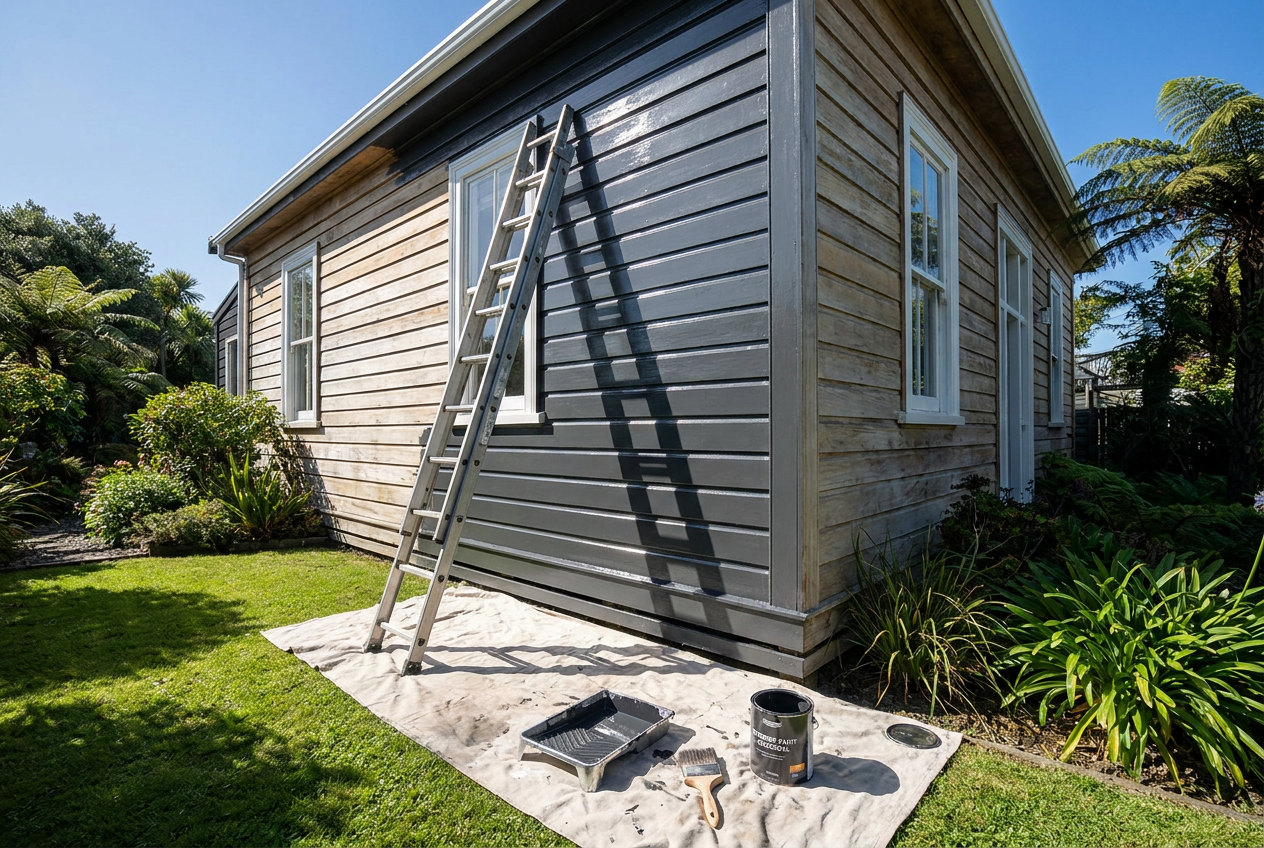
Older New Zealand villas — particularly those built before 1980 — were almost certainly painted with lead-based paint at some point in their lives. When that paint starts to flake, crack, or chalk, it becomes a genuine health hazard, especially for young children and pregnant women. Before you reach for a scraper, it pays to understand what you're dealing with and how to handle it safely and legally.
Why Lead Paint Is Dangerous
Lead is a toxic heavy metal. When lead-based paint deteriorates, it produces lead dust and paint chips that can be ingested or inhaled. Children under six are most at risk because their developing nervous systems are particularly vulnerable to lead poisoning, which can cause learning difficulties, behavioural problems, and other serious health effects. Adults are also at risk from prolonged exposure. WorkSafe NZ provides detailed guidance on lead exposure risks in residential settings.
How to Tell If Your Paint Contains Lead
If your villa was built or last repainted before 1980, assume lead is present until proven otherwise. You can confirm this in a couple of ways:
- DIY test kits — Available from hardware stores like Bunnings or Mitre 10. These swab-style kits give a quick colour-change result, though they can miss lead in lower concentrations or under multiple paint layers.
- Professional XRF testing or lab analysis — A qualified lead assessor uses an X-ray fluorescence (XRF) gun to test surfaces non-destructively, or paint chip samples can be sent to a laboratory. This is the most reliable method and is recommended before any significant work.
If in doubt, treat the paint as lead-containing and take full precautions.
Understanding the Risk Level
Not all lead paint situations are equally urgent. Use this table as a rough guide:
| Condition | Risk Level | Recommended Action |
|---|---|---|
| Intact, stable, not flaking | Low | Monitor regularly, repaint carefully when needed |
| Minor flaking on small area | Moderate | DIY with strict precautions, or hire a professional |
| Widespread flaking, chalking | High | Strongly consider hiring a licensed professional |
| Sanding, grinding, or heat stripping planned | Very High | Licensed professional required |
| Children or pregnant women in home | High | Professional remediation recommended |
What a Homeowner Can Safely Do
For small, localised areas of flaking paint, a careful homeowner can undertake limited work — but only with the right precautions:
Personal Protective Equipment (PPE)
- Wear a P2-rated respirator (not just a dust mask).
- Use disposable coveralls, gloves, and eye protection.
- Never eat, drink, or smoke in the work area.
Containment and Dust Control
- Seal off the work area with plastic sheeting.
- Dampen the surface lightly with water before scraping to suppress dust — this is called wet scraping.
- Use a HEPA-filter vacuum to clean up; a standard vacuum will spread lead dust.
- Double-bag all waste in heavy-duty plastic bags and dispose of it as hazardous waste at your local council facility.
What NOT to Do
- Never dry-sand or dry-scrape lead paint — this generates dangerous airborne dust.
- Never use a heat gun or open flame to strip lead paint — this vaporises lead, creating highly toxic fumes.
- Never use a high-pressure washer on lead-painted surfaces outdoors without full containment.
BRANZ has published research and guidance on lead paint in New Zealand homes that is well worth reading before you start.
Encapsulation vs. Full Removal
Full removal (abatement) is not always necessary or even advisable. Encapsulation — applying a specially formulated encapsulant paint or a high-build coating over stable lead paint — can be a safe, cost-effective solution when the existing paint is still reasonably well adhered. Products from Resene or Dulux can be suitable topcoats once loose material is carefully removed and the surface is properly prepared.
Encapsulation works best when:
- The paint is only lightly flaking and the substrate is sound.
- You're not planning to sand or disturb the surface significantly.
- The area is not subject to heavy wear or impact.
Full abatement (stripping back to bare timber) is more appropriate for severely deteriorated surfaces, but this work should almost always be left to a professional.
Disposing of Lead Paint Waste
Lead paint waste — chips, dust, contaminated drop sheets, PPE — must be treated as hazardous waste. Contact your local council to find the nearest hazardous waste drop-off facility. Do not put lead paint waste in your kerbside recycling or general rubbish.
When to Call a Professional
There are situations where hiring a qualified professional is not just sensible — it may be legally required or simply the safest choice:
- Large-scale paint removal across multiple surfaces or rooms.
- Any work involving sanding, grinding, or heat stripping of lead paint (WorkSafe regulations apply to tradespeople, and the risks to homeowners are equally real).
- If children under six or pregnant women live in or regularly visit the home.
- If you're undertaking renovation work that will disturb significant painted surfaces — this may also trigger requirements under the NZ Building Code.
- If you're unsure of the extent of lead paint in the home.
A professional painter experienced in lead paint remediation will have the right equipment, training, and waste disposal procedures. You can find qualified local painters on tradedirectory.co.nz — look for someone who specifically mentions lead paint experience.