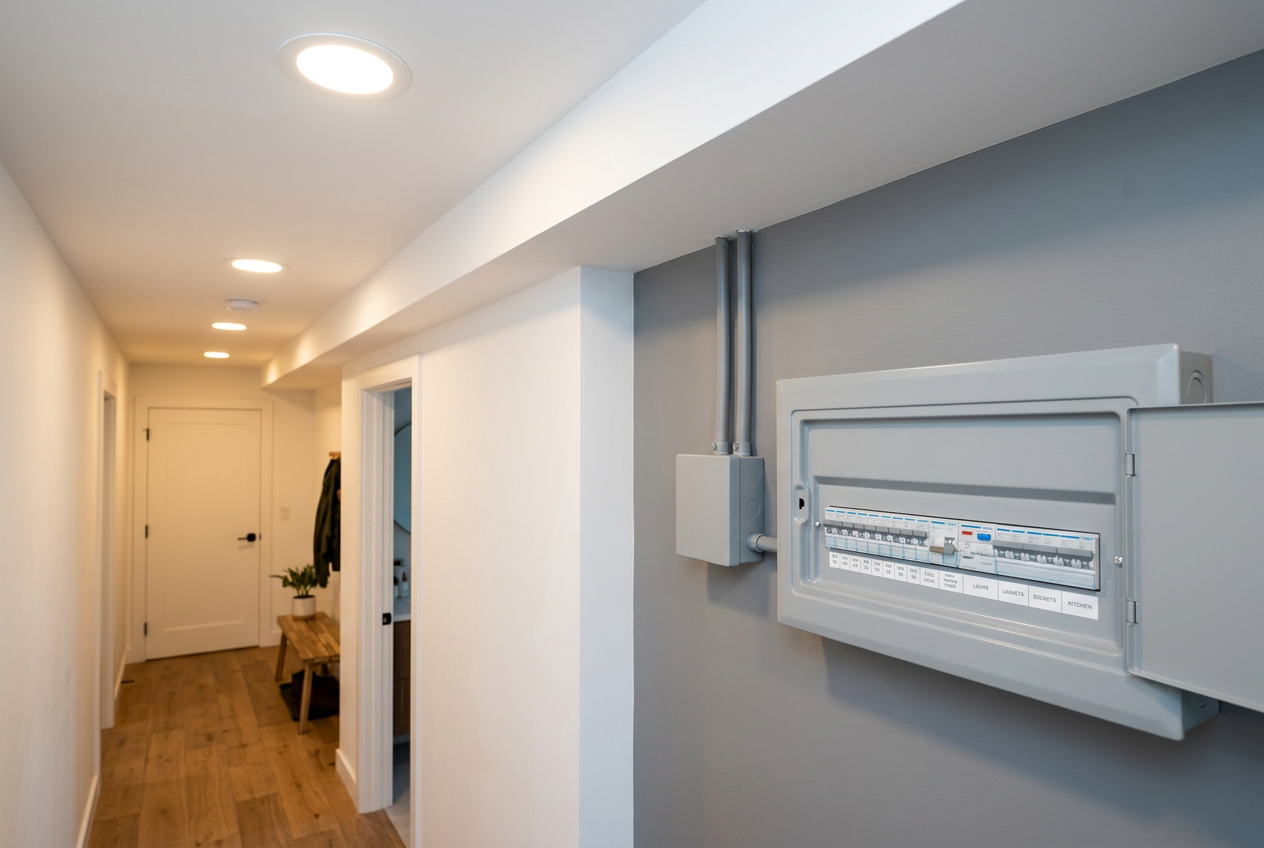
LED downlights are one of the most popular lighting upgrades in New Zealand homes — they're energy-efficient, long-lasting, and give a clean, modern look. But with so many options on the market, it can be tricky to know what to look for. This guide walks you through the key decisions so you end up with downlights that look great, perform well, and comply with the NZ Building Code.
Understanding Lumens vs Watts
Forget watts as a measure of brightness — that's an old incandescent habit. With LEDs, lumens tell you how much light a fitting actually produces. As a general guide:
- A standard living area or bedroom typically needs around 400–800 lumens per downlight, depending on spacing and ceiling height.
- Kitchens and workspaces benefit from higher output fittings.
- Hallways and accent lighting can get away with lower lumen outputs.
Watts still matter for running costs — a quality LED downlight typically uses a fraction of the power of an old halogen, which is why switching to LEDs is one of the easiest wins for your power bill. Energywise has useful guidance on energy-efficient lighting choices.
Colour Temperature: Warm, Neutral, or Cool?
Colour temperature is measured in Kelvin (K) and has a big impact on the feel of a room:
| Colour Temperature | Description | Best For |
|---|---|---|
| 2700K–3000K | Warm white | Bedrooms, living rooms, dining areas |
| 3500K–4000K | Neutral/natural white | Kitchens, home offices, bathrooms |
| 5000K–6500K | Cool/daylight white | Garages, workshops, task lighting |
A common mistake is mixing colour temperatures in the same room — try to keep it consistent throughout an open-plan space.
IP Ratings for Wet Areas
If you're installing downlights in a bathroom, laundry, or outdoor soffit, you must pay attention to the IP (Ingress Protection) rating. This is not optional — it's a requirement under the NZ Building Code (specifically Clause E3 covering internal moisture and G9 for electricity safety).
- IP44 — splash-resistant; suitable for bathroom zones away from the shower or bath.
- IP65 — dust-tight and jet-water resistant; required directly above showers and in outdoor soffits.
- IP67/IP68 — fully waterproof; used in very wet or submerged applications.
Always check the manufacturer's datasheet and confirm the fitting is appropriate for its specific zone within the room.
Insulation Clearance: IC vs Non-IC Rated
This is one of the most important — and most overlooked — considerations in New Zealand homes. Many NZ houses have ceiling insulation, and standard downlights can be a fire hazard if insulation is packed around them.
- Non-IC rated downlights require a minimum clearance from insulation (check the manufacturer's spec). Insulation must be kept away from the fitting.
- IC-rated (Insulation Contact) downlights are designed to have insulation placed directly over them, maintaining your home's thermal envelope.
Given New Zealand's focus on improving home insulation standards — including Healthy Homes requirements for rental properties — IC-rated fittings are strongly recommended for most ceiling installations. BRANZ has published research on the risks of inadequate downlight insulation clearance.
Dimmer Compatibility
Not all LED downlights are dimmable, and not all dimmers work with LEDs. If you want dimming capability:
- Choose downlights explicitly labelled as dimmable.
- Replace old trailing-edge (incandescent) dimmers with LED-compatible dimmers.
- Check the minimum load rating — some LED dimmers need a certain number of fittings to operate correctly.
Mismatched dimmers can cause flickering, buzzing, or reduced LED lifespan, so it's worth getting this right from the start.
Choosing the Right Cut-Out Size and Trim
Downlights come in various cut-out diameters — commonly around 70mm to 90mm for residential use, though this varies by brand and model. If you're replacing existing fittings, measure the current cut-out before purchasing. Going larger means patching the ceiling; going smaller means you'll need a trim plate.
Finish options include white, brushed nickel, matt black, and chrome — choose something that complements your interior. Retailers like Bunnings and Mitre 10 stock a wide range of residential LED downlights.
What You Can and Cannot Do Yourself
This is where it's critical to understand New Zealand law. Electrical work is restricted work under the Electricity Act 1992.
What homeowners CAN do:
- Replace a like-for-like fitting on an existing circuit (same type, same location) — though even this has nuances, so check current regulations.
- Change a lightbulb or lamp in an existing fitting.
What MUST be done by a registered electrician:
- Installing new downlights where no fitting previously existed.
- Adding new circuits or modifying existing wiring.
- Any work in bathrooms, kitchens, or outdoors involving new wiring.
- Connecting fittings to the mains.
Always use a registered electrician and ask for a Certificate of Compliance (CoC) on completion. You can verify a tradesperson's registration with the Electrical Workers Registration Board (EWRB).
Safety note: Unlicensed electrical work is illegal, can void your home insurance, and is genuinely dangerous. Don't risk it.
When to Call a Professional
If you're planning a new downlight installation, upgrading from halogens, or adding lights to a bathroom or outdoor area, you need a registered electrician. A good sparky will also advise on the best fittings for your specific ceiling type, insulation situation, and circuit capacity. You can find qualified local electricians on tradedirectory.co.nz.