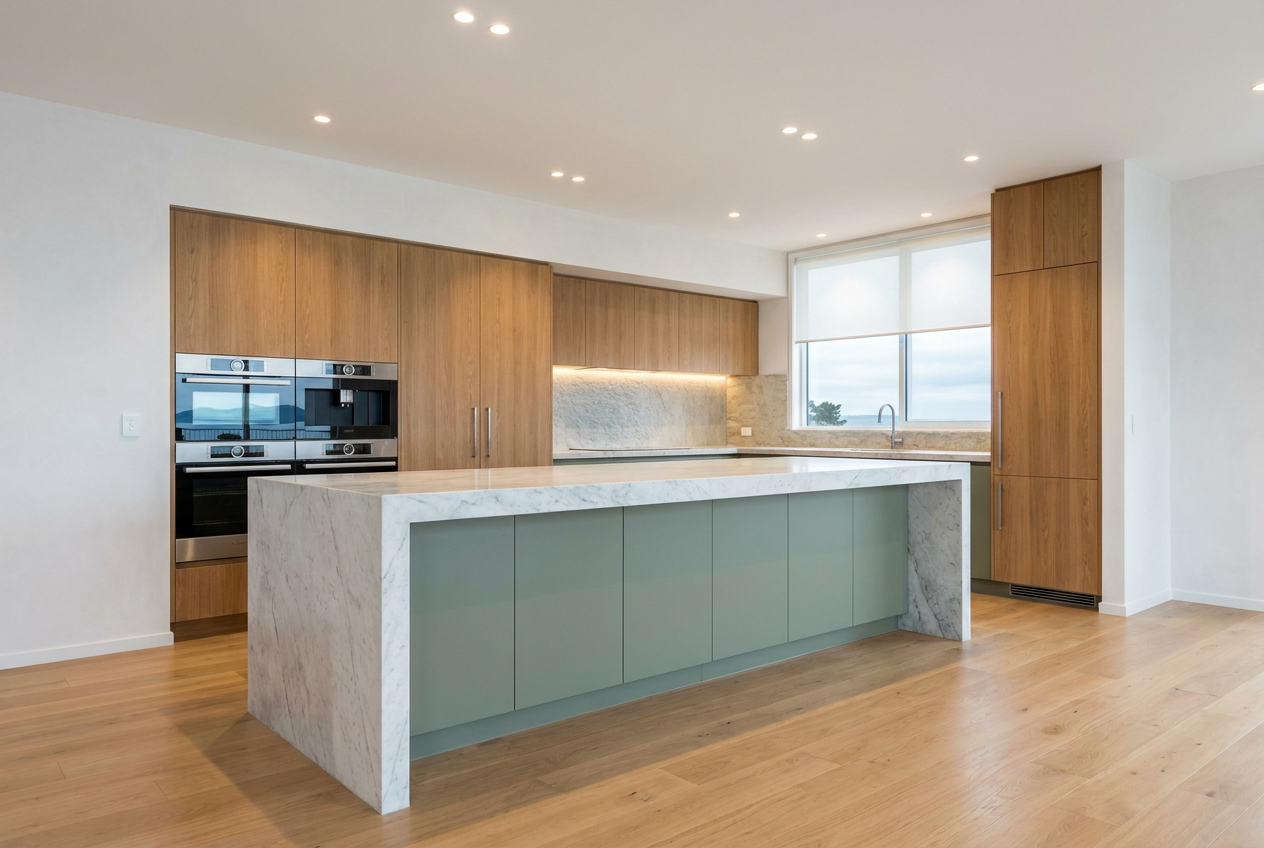
Cabinet hardware might seem like a small detail, but it has a big impact on how your kitchen looks, feels, and functions every single day. From the smooth action of a soft-close hinge to the satisfying grip of a well-placed handle, the right choices make a real difference. This guide walks you through everything a NZ homeowner needs to know before heading to the hardware store.
Understanding the Two Main Categories
Kitchen cabinet hardware broadly falls into two camps:
- Functional hardware – hinges, drawer slides, and soft-close mechanisms that affect how your cabinetry operates.
- Decorative hardware – handles, knobs, and pulls that define the style of your kitchen.
Both matter, and ideally you choose them together so the finish and style are consistent throughout.
Choosing the Right Hinges
Concealed (European) hinges are the most common type used in modern NZ kitchens. They're hidden when the door is closed, adjustable in three directions, and available with soft-close dampers — a feature well worth paying for if you have kids or simply want a quieter kitchen.
Key things to check when selecting concealed hinges:
- Overlay type – Full overlay, half overlay, or inset? This depends on how your cabinet doors sit relative to the cabinet frame. Most flat-pack and custom cabinets in NZ use full overlay.
- Opening angle – Standard hinges open to around 110°, but corner cabinets or pantries may need 165° or even 270° hinges for full access.
- Soft-close vs standard – Soft-close hinges cost a little more but significantly reduce wear and noise over time.
- Hinge cup size – The most common cup diameter is 35 mm, which fits the majority of cabinet doors. Always confirm before drilling.
Face-frame hinges suit older-style or American-influenced cabinetry where a timber frame is visible around the cabinet opening. These are less common in NZ but are available at stores like Mitre 10 and Bunnings.
Drawer Slides and Runners
If you're upgrading drawers at the same time, undermount slides give a clean look and often include soft-close functionality. Side-mount slides are more affordable and easier to install as a DIY project. For heavy pots-and-pans drawers, check the load rating — slides are typically rated from around 25 kg up to 70 kg or more for heavy-duty options.
Picking Handles and Knobs
This is where personal style really comes in. Consider:
Style and Finish
| Style | Common Finishes | Best Suited To |
|---|---|---|
| Bar/D-pull handles | Brushed nickel, matte black, brass | Modern, Scandi, industrial kitchens |
| Cup/bin pulls | Brushed brass, chrome, bronze | Shaker, traditional, farmhouse kitchens |
| Knobs | Ceramic, stainless, brass | Classic, country, eclectic kitchens |
| Integrated/no handle | N/A (push-to-open or J-pull) | Minimalist, handleless kitchens |
Sizing Handles Correctly
- For wall cabinet doors, a handle length of around 96–128 mm is a common starting point.
- For drawer fronts, match the handle length roughly to one-third of the drawer width, or go longer for a bold look on wide drawers.
- Knobs are typically 25–40 mm in diameter and suit smaller doors or as a paired accent.
Always mock up the position with masking tape before drilling — it's much easier to adjust tape than to fill unwanted holes in your cabinet doors.
Material and Durability in the NZ Context
NZ kitchens face humidity from cooking and, in coastal areas, salt air. Choose hardware with a durable surface finish to resist corrosion:
- Stainless steel and solid brass are excellent for longevity.
- Zinc alloy (zamak) is budget-friendly but can corrode faster in humid or coastal environments.
- Matte black powder-coat finishes look great but check the base metal — powder-coat over stainless or solid brass will outlast powder-coat over zamak.
For guidance on moisture management in kitchens, BRANZ provides useful research on internal moisture and ventilation that's worth reading alongside any kitchen renovation planning.
Keeping a Consistent Look
Mixing metals is a popular design trend, but it works best when done intentionally. A common approach is to choose one dominant finish (e.g. brushed brass) and allow one accent (e.g. matte black tapware). Avoid having three or more competing finishes, as it can look unplanned rather than curated.
Also consider matching your hardware finish to other elements in the kitchen — tapware, rangehood trim, and appliance handles all contribute to the overall feel.
DIY vs Professional Installation
Fitting handles and knobs is a straightforward DIY task — you'll need a drill, a template (many hardware suppliers include one, or you can make your own from cardboard), and a steady hand. Replacing like-for-like hinges is also manageable for a confident DIYer.
However, if you're installing new cabinetry, adjusting cabinet carcasses, or fitting complex corner solutions like magic corners or pull-out pantries, it's worth engaging a qualified cabinet maker. Poor installation can lead to misaligned doors, sagging drawers, and premature wear on your hardware investment. You can find experienced local cabinet makers on tradedirectory.co.nz.
When to Call a Professional
Call a qualified cabinet maker if you're:
- Installing new kitchen cabinetry from scratch
- Modifying existing cabinet carcasses to fit new hardware
- Dealing with out-of-square walls or floors (common in older NZ homes)
- Fitting specialised storage solutions (pull-outs, lazy Susans, drawer organisers)
- Unsure about the structural integrity of existing cabinets
Note: Cabinet work itself is not restricted building work under the NZ Building Code, but if your kitchen renovation involves moving plumbing or electrical work, those elements must be carried out by a licensed plumber (PGDB) or electrician (EWRB) respectively. Never attempt to move power points or water connections yourself.