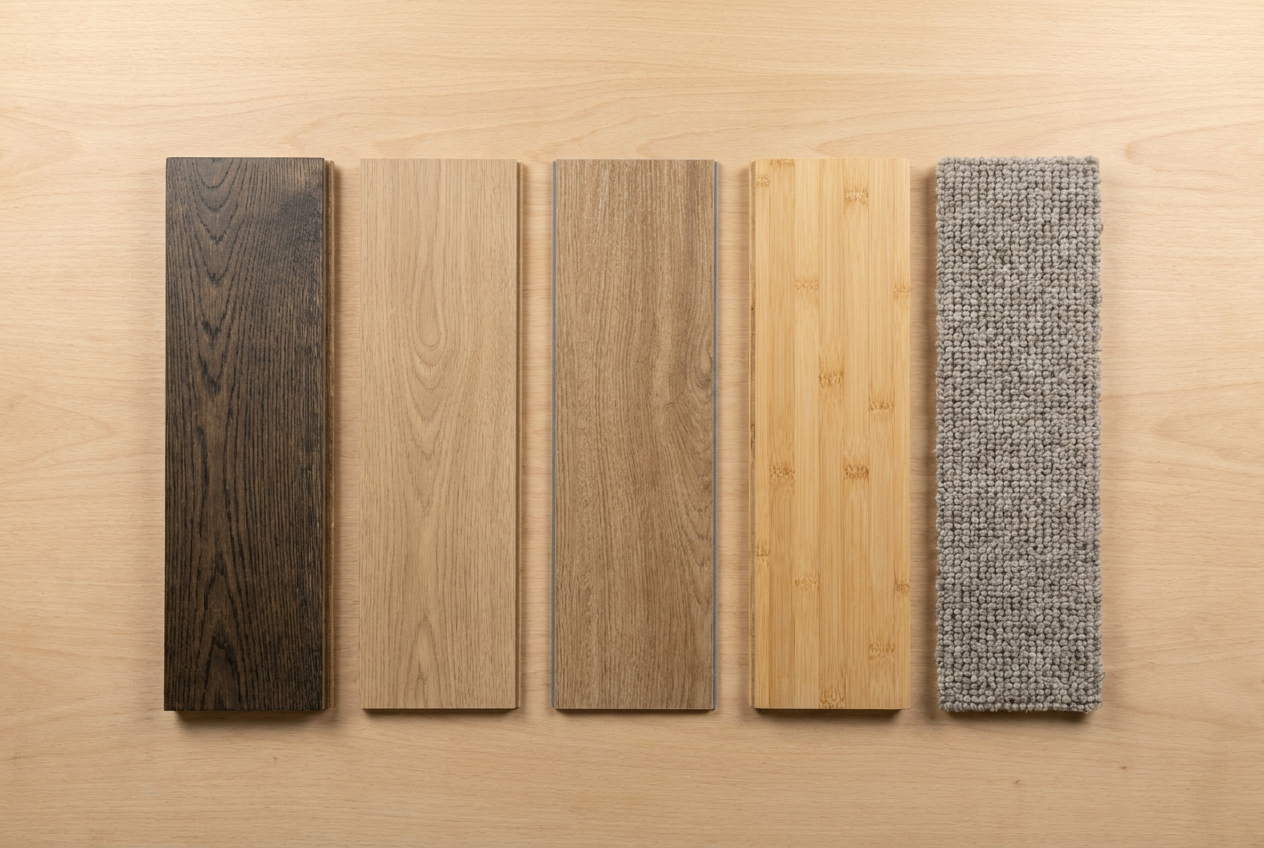
Choosing flooring that flows through your whole house is one of the most impactful design decisions you can make. Get it right and your home feels larger, more connected, and easier to live in. Get it wrong and you end up with a patchwork of clashing materials that chops the space into awkward zones. Here's how to approach it like a pro.
Why Continuity Matters
Open-plan living is now the norm in most New Zealand homes, and sightlines travel further than ever. When your eye moves from the kitchen to the lounge to the hallway without interruption, the home feels cohesive and spacious. Broken flooring — different colours, textures, or heights in adjoining spaces — creates visual noise and can actually make rooms feel smaller.
Continuity doesn't mean every room must be identical. It means the choices you make relate to each other in a deliberate way.
Start With a Whole-Home Palette
Before you pick a single plank or tile, walk through your home and note:
- Fixed elements you can't easily change: kitchen cabinetry, benchtops, bathroom tiles, stair treads, skirting boards, and wall colours.
- Natural light levels in each room — north-facing rooms can handle darker floors; south-facing rooms often benefit from lighter tones.
- Traffic patterns — hallways, kitchens, and entries take the most punishment.
Once you have a clear picture, choose a hero floor — typically the material used in your largest open-plan area — and then select complementary options for wet areas and bedrooms that share tones or undertones with it.
Choosing a Hero Floor Material
For most NZ homes, the main living area floor sets the tone. Common options include:
| Material | Durability | Warmth | Wet Areas | Typical Cost Guide |
|---|---|---|---|---|
| Engineered timber | High | High | No | Mid–high |
| Luxury vinyl plank (LVP) | Very high | Medium | Yes | Low–mid |
| Laminate | Medium | Medium | Some ranges | Low–mid |
| Solid timber | High | Very high | No | High |
| Polished concrete | Very high | Low | Yes | Mid–high |
| Ceramic/porcelain tile | Very high | Low | Yes | Low–high |
Cost ranges are a guide only and vary significantly by brand, grade, and installer.
Luxury vinyl plank has become hugely popular in NZ because it handles our variable humidity, is fully waterproof, and comes in timber-look finishes that can run through kitchens, living areas, and even bathrooms — making whole-home continuity genuinely easy to achieve.
Engineered timber offers authentic warmth and is more stable than solid timber in NZ's humidity swings, but keep it away from wet areas.
Handling Wet Areas
Bathrooms, laundries, and sometimes kitchens require flooring that meets NZ Building Code clause E3 (internal moisture). Tiles are the traditional choice, but LVP rated for wet areas is increasingly accepted. If you want visual continuity into a tiled bathroom, choose a tile that shares the undertone of your main floor — warm grey tiles alongside a warm oak LVP, for example.
BRANZ provides excellent guidance on moisture management in wet areas, which is worth reading before you commit to a product.
Managing Transitions Between Rooms
Even with the same flooring throughout, you'll encounter transitions at:
- Doorways — a flush T-bar or reducer strip keeps things tidy where two materials meet.
- Level changes — if one room is slightly higher, a ramp or threshold strip is needed.
- Material changes — where timber meets tile, a slim metal or timber threshold looks clean.
The goal is to make transitions as slim and low-profile as possible. Wide, chunky transition strips draw the eye and interrupt flow. Where you can, run the same flooring continuously through open doorways without any strip at all.
Colour and Tone: The Key to Visual Flow
Colour is the single biggest factor in whether flooring feels connected. A few rules of thumb:
- Stick to one undertone family — all warm (yellow/red/brown) or all cool (grey/blue/green). Mixing undertones is the most common mistake.
- Vary texture, not tone — a matte tile in the bathroom and a satin LVP in the lounge can share the same grey-beige tone and feel cohesive.
- Use the 60-30-10 rule — your hero floor covers the majority of the home, a secondary material (e.g. bathroom tile) covers less, and an accent (e.g. a feature rug or stair runner) covers the least.
If you're also repainting, coordinate with your flooring choice. Resene and Dulux both offer colour consultants who can help you match wall tones to your floor selection — a worthwhile step for a whole-home refresh.
Direction of Lay
For planked floors (timber, LVP, laminate), the direction of lay affects perceived room size:
- Running planks lengthways down a hallway or toward a window makes the space feel longer and draws the eye outward.
- Consistent direction throughout the open-plan area reinforces continuity — avoid changing direction mid-room without a design reason.
- Diagonal lay can add interest but is harder to extend into adjoining rooms seamlessly.
Bedrooms: Matching or Complementary?
Bedrooms are often carpeted for warmth and acoustic comfort — a practical choice in NZ winters. If you go this route, choose a carpet colour that shares the undertone of your main floor. A warm-toned LVP in the living area pairs well with a warm oatmeal or sandy carpet in the bedrooms. Alternatively, running the same hard floor into bedrooms creates a sleek, modern feel and is easier to keep allergen-free.
When to Call a Professional
Flooring installation looks straightforward but has real skill requirements — particularly around subfloor preparation, moisture testing, and achieving tight joins. Poor installation voids most manufacturer warranties. A qualified flooring installer will:
- Assess and prepare your subfloor correctly (critical for LVP and timber).
- Conduct moisture readings before laying timber or engineered products.
- Handle complex transitions, stairs, and feature inlays.
- Advise on the right underlay for your subfloor type and heating system (including underfloor heating compatibility).
You can find experienced, local flooring installers on tradedirectory.co.nz — it's always worth getting two or three quotes and asking to see examples of whole-home installs they've completed.