Older New Zealand homes can harbour wiring that was installed decades ago — and while it may still function, it might not meet modern safety standards or the current NZ Electrical Code of Practice. Knowing the warning signs can help you act before a fault becomes a fire or a shock hazard. Here's what to look for and what to do about it.
How Old Is Your Wiring?
The age of your home is a good starting point. Homes built before the 1980s may have wiring systems that are now considered outdated or potentially unsafe:
- Pre-1980s homes may contain older insulation types such as rubber or cloth-sheathed wiring, which can become brittle and crack over time.
- Homes built before the 1970s may still have aluminium wiring in some circuits, which requires special connectors and can be a fire risk if not properly maintained.
- Very old homes (pre-1950s) may have knob-and-tube wiring, which has no earth conductor and is no longer acceptable under modern standards.
If you're unsure of your home's age, check your council's property records or LIM report.
Visual Warning Signs You Can Check Yourself
As a homeowner, you can safely carry out a visual inspection — without touching or opening any wiring. Look for:
- Discoloured or scorched power points and switches — brown or black marks around outlets suggest overheating.
- Flickering or dimming lights, especially when appliances switch on, which can indicate loose connections or an overloaded circuit.
- Frequently tripping circuit breakers or blown fuses — a sign the circuit is struggling with demand.
- Buzzing, crackling or sizzling sounds from switches, outlets or the switchboard.
- Burning smell with no obvious source — treat this as urgent and call a licensed electrician immediately.
- Old-style ceramic fuses in the switchboard instead of modern circuit breakers or RCDs (residual current devices).
- Two-pin (unearthed) power points — these lack an earth wire and don't meet current requirements.
- Visible wiring that looks cracked, frayed or has deteriorating insulation in the roof space or subfloor (view only — do not touch).
Checking Your Switchboard
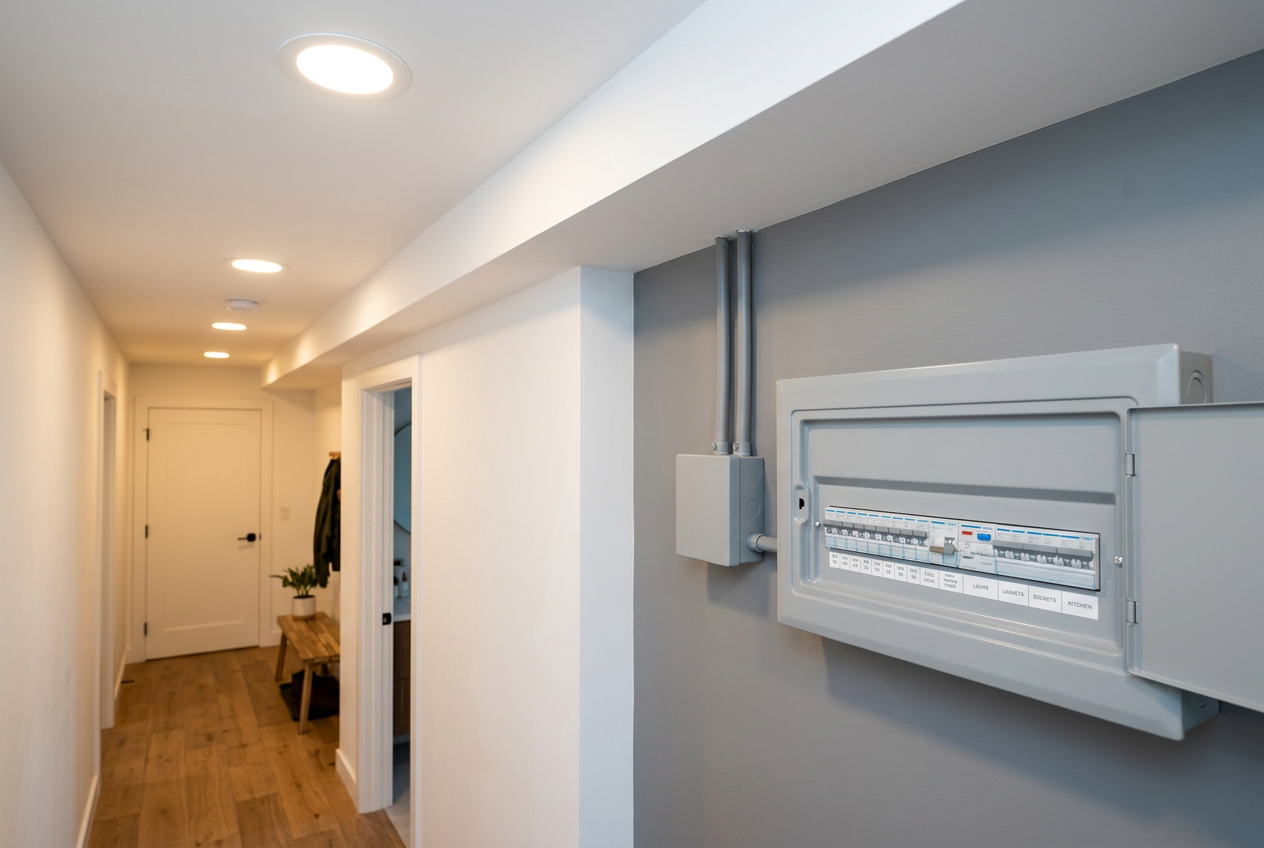
Your switchboard (or fuse box) is one of the clearest indicators of wiring age and safety. A modern, compliant switchboard should have:
| Feature | Old/Unsafe | Modern/Safe |
|---|---|---|
| Protection type | Ceramic rewirable fuses | Circuit breakers |
| Fault protection | None or limited | RCDs (safety switches) |
| Labelling | Unclear or missing | Clearly labelled circuits |
| Condition | Rust, scorch marks | Clean and tidy |
RCDs (safety switches) are required on all new installations and are strongly recommended for all homes. They cut power within milliseconds if a fault is detected, dramatically reducing the risk of electrocution. If your switchboard doesn't have them, talk to a licensed electrician about an upgrade.
For more on electrical safety requirements, WorkSafe NZ has useful guidance for homeowners.
What Is Restricted Electrical Work?
It's important to understand that in New Zealand, most electrical work is restricted work under the Electricity Act 1992. This means it must be carried out by, or supervised by, a registered electrician — and a Certificate of Compliance (CoC) must be issued on completion.
You cannot legally do the following yourself:
- Replace or repair wiring, switches, or power points
- Upgrade or modify your switchboard
- Install new circuits or additional outlets
- Connect any fixed appliance to your wiring
The Electrical Workers Registration Board (EWRB) maintains a register of licensed electricians. Always check your electrician is registered before hiring them.
What you can do yourself:
- Replace a light bulb or fluorescent tube
- Reset a tripped circuit breaker (once only — if it trips again, call a professional)
- Plug in and unplug appliances
- Carry out the visual checks described above
Healthy Homes and Rental Properties
If you're a landlord, be aware that electrical safety is part of your obligations under the Tenancy Services Healthy Homes Standards. Ensuring your rental property has safe, functional wiring and working RCDs is not just good practice — it may be a legal requirement.
Getting a Wiring Inspection
If you have any concerns after your visual check, the best step is to arrange an electrical inspection by a registered electrician. They can:
- Test circuits for insulation resistance and earthing
- Identify deteriorating wiring hidden in walls and ceilings
- Advise on whether a full or partial rewire is needed
- Upgrade your switchboard to include RCDs and modern circuit breakers
BRANZ is New Zealand's building research authority and offers useful technical guidance on home safety and maintenance standards.
As a rough guide, a basic electrical inspection may cost a few hundred dollars, but this varies by region and the size of your home. A full rewire of an older home is a significant investment — get at least two or three quotes.
When to Call a Professional
Call a licensed electrician immediately if you notice:
- A burning smell or scorch marks around any outlet or fitting
- Sparking from a switch or power point
- Any shock or tingle when touching an appliance or fitting
- Repeated tripping of the same circuit breaker
- Visible damage to wiring in your roof space or subfloor
Don't delay — electrical faults are a leading cause of house fires in New Zealand. You can find qualified, local electricians on tradedirectory.co.nz.