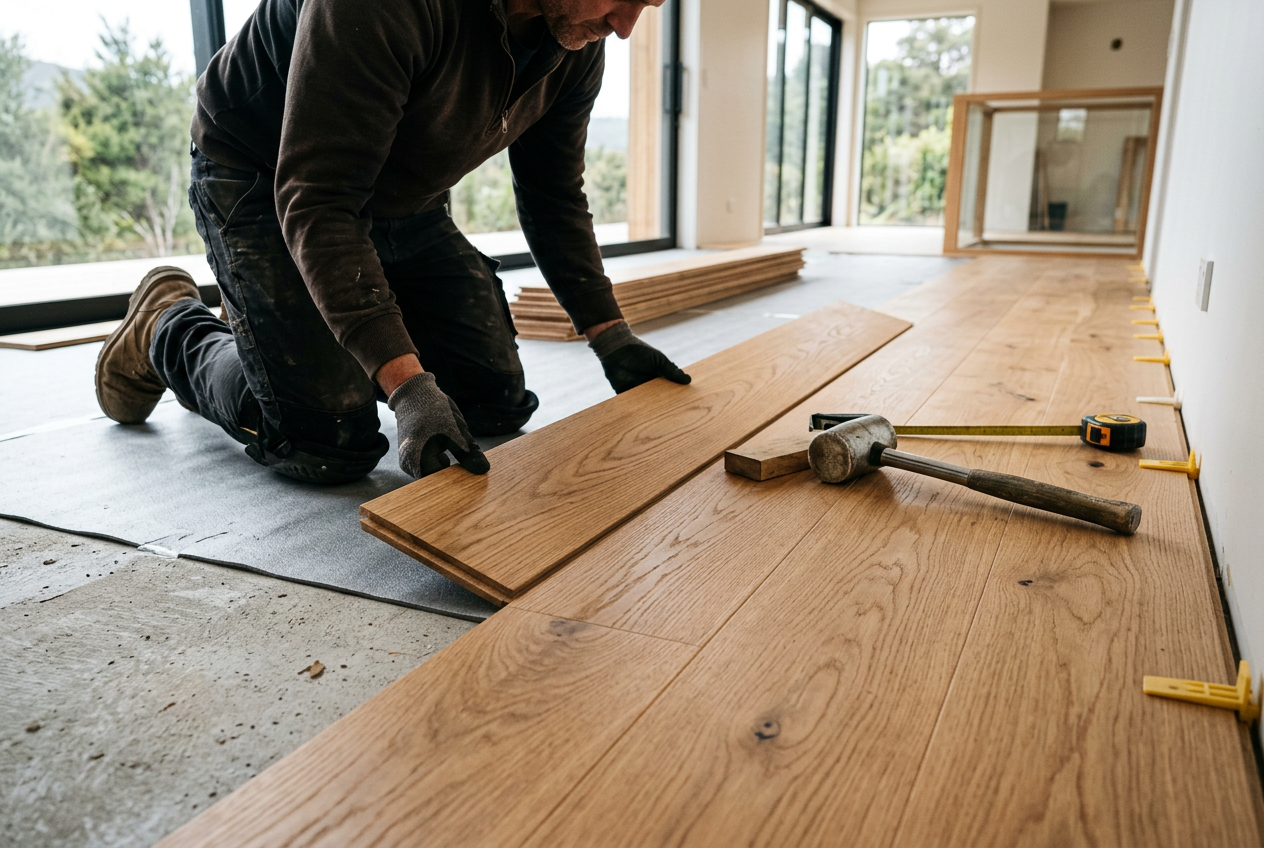
Acclimatising your flooring before laying it is one of those steps that's easy to skip — but skipping it can lead to costly problems like buckling, gapping, or cupping after installation. Whether you're laying solid timber, engineered wood, laminate, or vinyl planks, understanding the acclimatisation process will save you headaches down the track.
What Is Acclimatisation and Why Does It Matter?
Acclimatisation is the process of allowing flooring materials to adjust to the temperature and humidity conditions of the room where they'll be installed. Most flooring — especially wood-based products — expands and contracts with changes in moisture content. If you lay flooring straight from a cool, dry warehouse into a warm, humid NZ home, the boards will absorb moisture and expand after installation, causing them to buckle or push against each other.
New Zealand's climate varies significantly from the humid north of the North Island to the drier, cooler South Island. This makes acclimatisation particularly important here, as the gap between storage conditions and in-home conditions can be significant. BRANZ research highlights that moisture-related movement is one of the most common causes of timber flooring failure in NZ homes.
Which Flooring Types Need Acclimatising?
Not all flooring behaves the same way. Here's a quick guide:
| Flooring Type | Acclimatisation Required? | Typical Duration |
|---|---|---|
| Solid timber | Yes — essential | 5–14 days or more |
| Engineered timber | Yes — recommended | 3–7 days |
| Laminate | Yes — recommended | 48–72 hours |
| Luxury vinyl plank (LVP) / SPC | Usually not required | Check manufacturer specs |
| Ceramic / porcelain tile | No | N/A |
| Carpet | No | N/A |
Solid timber is the most sensitive and requires the longest acclimatisation period. Engineered timber is more dimensionally stable but still benefits from time in the room. Laminate contains a wood-fibre core that can swell if exposed to humidity changes. Luxury vinyl plank (LVP) and stone plastic composite (SPC) products are largely waterproof and dimensionally stable, but always check the manufacturer's installation guide — some still recommend a short settling period.
How to Acclimatise Flooring Correctly
Doing it right is straightforward — it just takes a bit of planning:
- Bring the flooring into the room where it will be installed, not just into the garage or hallway.
- Open the packaging or stack boards with spacers between them (called stickering) to allow air to circulate around all surfaces.
- Maintain normal living conditions in the room — keep the heating or ventilation running as you normally would. Don't artificially heat or cool the space.
- Check the subfloor moisture before and after acclimatisation using a moisture meter. For timber subfloors, moisture content should generally be within a few percentage points of the flooring itself — refer to your flooring manufacturer's guidelines for acceptable tolerances.
- Don't rush it. If conditions are particularly humid (common in Auckland and Northland summers), allow extra time.
Subfloor Moisture — A Critical Check
Acclimatising the flooring itself is only half the job. Your subfloor must also be dry and stable. Concrete slabs are a common culprit — freshly poured or recently wet concrete can hold significant moisture. Use a concrete moisture test (such as a calcium chloride test or a relative humidity probe) before laying any timber-based flooring over a slab. Products from Ardex and Mapei include moisture barriers and levelling compounds designed for NZ conditions.
NZ Building Code and Standards Considerations
The NZ Building Code doesn't prescribe specific acclimatisation times, but it does require that building work — including flooring — be fit for purpose and durable. Flooring that fails due to poor installation practice (including skipping acclimatisation) may not meet the durability requirements under the Code. If your home is a rental, the Healthy Homes Standards also require adequate subfloor moisture control, which ties directly into flooring performance.
Common Mistakes to Avoid
- Storing flooring in the garage or outside — temperature and humidity there won't match the living space.
- Laying over a damp subfloor — this is the single biggest cause of timber flooring failure.
- Rushing the process — a few extra days of acclimatisation is far cheaper than relaying an entire floor.
- Ignoring the manufacturer's instructions — always read the installation guide specific to your product. Warranties can be voided if acclimatisation steps aren't followed.
When to Call a Professional
While acclimatisation itself is something any homeowner can manage, the actual laying of timber and engineered flooring involves precise techniques — expansion gaps, secret nailing, adhesive application — that are best left to an experienced flooring installer. A professional will also have the right tools to test subfloor moisture accurately and identify any issues before they become expensive problems.
If you're unsure about your subfloor condition, dealing with an older home, or laying flooring in a high-moisture area, it's well worth getting a qualified flooring installer to assess the job. You can find experienced local flooring professionals on tradedirectory.co.nz.