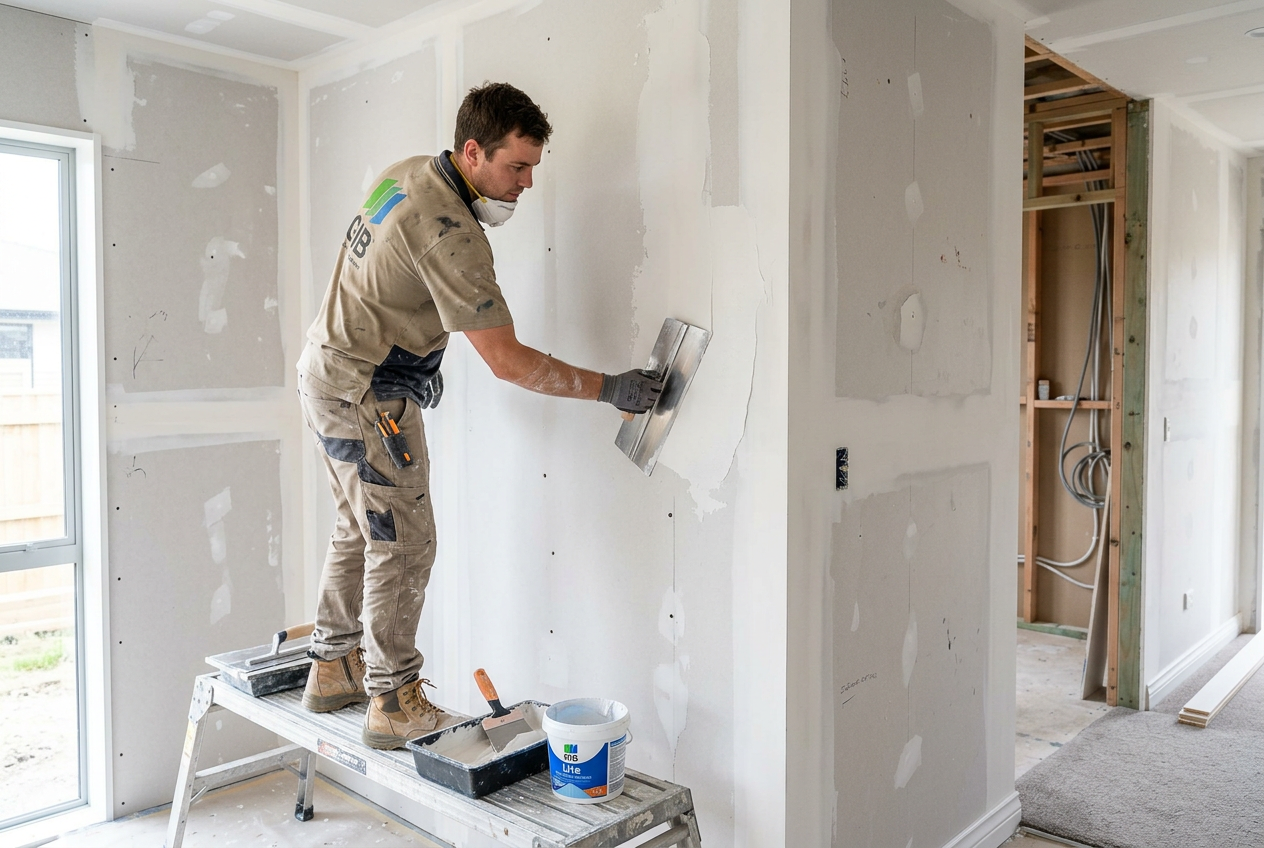
Choosing the right plasterboard for a bathroom or wet area is one of those decisions that really matters — get it wrong and you could be facing mould, structural damage, and costly repairs down the track. In New Zealand, the Building Code sets clear requirements for wet area linings, and standard plasterboard simply doesn't cut it where moisture is involved.
Why standard plasterboard fails in wet areas
Ordinary standard-grade plasterboard (sometimes called white board or regular GIB) has a gypsum core that absorbs moisture readily. In a bathroom environment — with steam, condensation, and the occasional splash — this can lead to the core softening, paper facing delaminating, and mould taking hold behind tiles or linings. Over time, the wall can lose structural integrity entirely.
The NZ Building Code clause E3 (Internal Moisture) requires that internal linings in wet areas resist the penetration of moisture to protect the building structure. Using the wrong board is a compliance issue, not just a performance one.
What counts as a "wet area"?
Under the Building Code, wet areas generally include:
- Shower enclosures and bath surrounds
- Areas within splashing distance of a basin, bath, or shower (typically within 1.5 m horizontally and up to 1.8 m above the floor, though your specific design may vary)
- Laundries and utility rooms with tubs or washing machine connections
- Any wall or ceiling that regularly receives direct water contact
Always check with your local council or a Licensed Building Practitioner if you're unsure about the extent of the wet zone in your project.
The right boards for wet areas
Moisture-resistant plasterboard (MR board)
Moisture-resistant (MR) plasterboard — sometimes called green board due to its distinctive green-coloured paper facing — is the standard choice for bathroom walls and ceilings that are not in direct water contact but are in a humid environment. It has a treated core and facing that resist moisture absorption far better than standard board.
GIB is the dominant plasterboard brand in New Zealand, and their GIB Aqualine® range is specifically designed for wet area use. It comes in moisture-resistant and more robust wet-area grades. Always check the manufacturer's technical data sheet to confirm the product is appropriate for your specific application.
Tile backer boards
For areas that will be directly tiled — such as shower walls — a dedicated tile backer board or cement-based board is often the best choice. These boards are essentially waterproof and provide a stable, non-absorbent substrate for tiles and adhesive. Products like Hardiebacker from James Hardie are widely used in NZ for this purpose.
Comparison: which board where?
| Location | Recommended Board Type |
|---|---|
| Bathroom ceiling (no direct water) | MR plasterboard (e.g. GIB Aqualine®) |
| Bathroom walls, no tiling | MR plasterboard |
| Shower walls to be tiled | Tile backer board (e.g. Hardiebacker) |
| Shower walls, direct water, no tile | Not recommended — use a full waterproofing system |
| Laundry walls near tub | MR plasterboard minimum |
Waterproofing membranes — don't skip this step
Even with the correct board, waterproofing membranes are required in shower enclosures and other direct-wet zones under NZ Building Code clause E3. Products from Ardex, Mapei, and Sika all offer membrane systems suitable for NZ wet areas. The membrane is applied over the substrate before tiling and must be installed to the manufacturer's specifications — including correct coverage, overlap at junctions, and curing time.
Skipping or skimping on waterproofing is one of the most common causes of bathroom leaks and subsequent damage in NZ homes. BRANZ research consistently highlights wet area failures as a significant source of building defects.
Healthy Homes and rental properties
If you're a landlord, note that the Healthy Homes Standards include requirements around moisture and drainage. Ensuring your wet area linings are compliant is part of maintaining a healthy, legally compliant rental property.
Fixing and finishing wet area boards
- Use corrosion-resistant (galvanised or stainless) screws and framing in wet areas — standard steel fixings will rust.
- Joints and penetrations should be sealed with appropriate wet-area compounds or tape systems as specified by the board manufacturer.
- If painting rather than tiling, use a moisture-resistant paint rated for wet areas. Resene and Dulux both offer suitable bathroom paint ranges.
- Ensure adequate ventilation — an extractor fan ducted to outside is strongly recommended and may be required under the Building Code.
When to call a professional
While a confident DIYer can install plasterboard in some situations, wet area work is high-stakes. Incorrect installation can void product warranties, breach the Building Code, and lead to expensive damage. Consider hiring a qualified plasterer or builder for:
- Any shower or bath surround installation
- Tile backer board installation and waterproofing
- Remediation of existing water-damaged linings
- Any work requiring a building consent
If your bathroom renovation involves moving or adding plumbing, that work must be carried out by a licensed plumber registered with the Plumbers, Gasfitters and Drainlayers Board. Similarly, any electrical work (such as adding a heat lamp or extractor fan circuit) must be done by a registered electrician under the Electrical Workers Registration Board.
You can find qualified local plasterers, builders, and tilers on tradedirectory.co.nz.