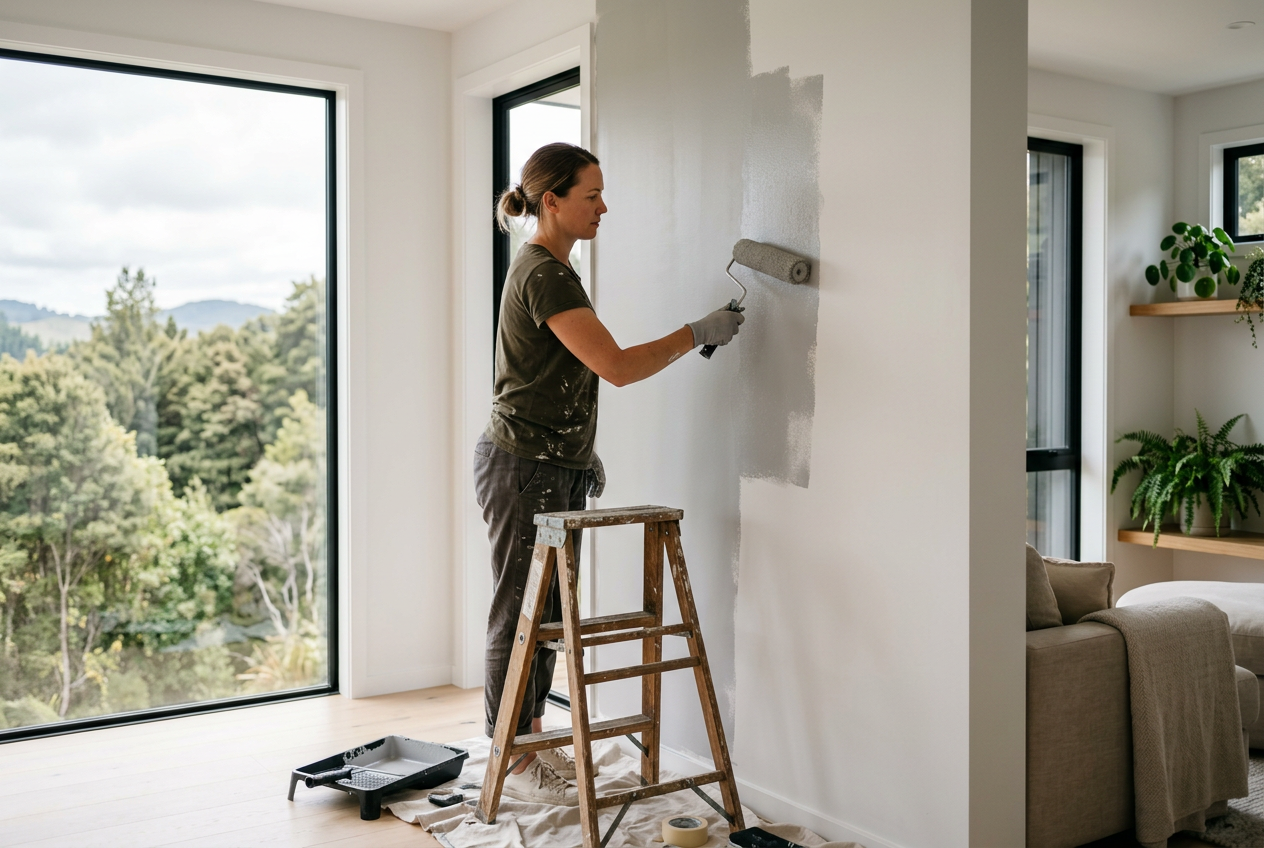
Using leftover interior paint on a garden shed might seem like a thrifty idea, but it's generally not a good long-term solution. Interior paints are formulated for stable indoor conditions and simply aren't built to handle the UV radiation, rain, temperature swings, and humidity that a New Zealand garden shed faces year-round. You can do it in a pinch, but expect the finish to fade, peel, and fail much sooner than a proper exterior coating would.
Why Interior and Exterior Paints Are Different
Paint manufacturers formulate interior and exterior products quite differently. Interior paints are designed for low-traffic, climate-controlled environments. They prioritise washability, low odour, and a smooth finish — not weather resistance.
Exterior paints, by contrast, contain:
- UV-resistant pigments to prevent fading in sunlight
- Flexible binders that expand and contract with timber as temperatures change
- Mould and mildew inhibitors suited to outdoor humidity
- Water-shedding properties to resist rain penetration
New Zealand's climate varies enormously — from the humid, wet conditions in Auckland and the West Coast to the harsh UV and frost cycles in Central Otago. A shed painted with interior paint in any of these regions is likely to show peeling and chalking within a season or two.
What Happens If You Use Interior Paint Outside
If you go ahead and use interior paint on your shed, here's what you can typically expect:
- Rapid fading — interior pigments aren't stabilised against UV, so colours dull quickly
- Peeling and flaking — the binder can't flex with the timber's natural movement
- Mould growth — without mould inhibitors, damp conditions encourage surface mould
- Moisture ingress — once the film breaks down, bare timber is exposed to rot
- More frequent repainting — you'll likely be back at it within 1–2 seasons
In short, you may save a few dollars upfront but spend more time and money fixing the problem later.
Better Options for Painting Your Shed
Use a Proper Exterior Paint
The right product makes a big difference. Look for a quality exterior waterborne or solvent-based paint rated for timber. Well-known NZ brands like Resene, Dulux, and Wattyl all offer exterior paint ranges specifically designed for outbuildings and fences. Their technical data sheets will confirm suitability for your substrate.
Consider a Solid Stain or Decking Oil
For rough-sawn or rustic timber sheds, a solid exterior stain or penetrating timber oil can be a great alternative to paint. These products soak into the wood rather than sitting on top, so they're less prone to peeling.
Don't Skip the Primer
Whatever topcoat you choose, always use a compatible exterior primer on bare or previously unpainted timber. This seals the surface, improves adhesion, and helps the topcoat last longer. Check with your paint supplier that the primer and topcoat are from a compatible system.
Surface Preparation Is Everything
Even the best exterior paint will fail quickly on a poorly prepared surface. Before you open a tin:
- Clean the surface — remove dirt, mould, and cobwebs with a scrub brush and a diluted exterior cleaner or sugar soap
- Sand or scrape any loose or flaking existing paint back to a firm edge
- Fill gaps and cracks with an exterior-grade flexible filler
- Allow the timber to dry — painting damp timber is one of the most common causes of paint failure
- Check for rot — replace any soft or rotted boards before painting
What About Using Up Leftover Paint?
If you're determined to use up that leftover interior paint, one practical compromise is to use it as an undercoat or sealer coat only, then apply a proper exterior topcoat over it. Check with your paint supplier first, as compatibility between products matters. Alternatively, many councils and community recycling programmes accept unwanted paint — check with your local council or look for a Resene PaintWise drop-off point, which accepts old paint for responsible disposal.
| Paint Type | UV Resistance | Moisture Resistance | Flexibility | Suitable for Sheds? |
|---|---|---|---|---|
| Interior waterborne | Low | Low | Low | Not recommended |
| Exterior waterborne | High | High | Medium–High | Yes |
| Exterior solvent-based | High | Very High | High | Yes |
| Solid exterior stain | Medium–High | High | High | Yes |
Does Painting a Shed Need a Building Consent?
In most cases, repainting an existing shed does not require a building consent — it's considered routine maintenance. However, if you're making structural changes or the shed itself was built without consent, that's a separate matter. Always confirm with your local council if you're unsure. You can find general guidance on consent exemptions at MBIE Building Performance.
When to Call a Professional
Most homeowners can paint a garden shed themselves — it's a straightforward DIY job. However, consider hiring a professional painter if:
- The shed is large or has difficult access (working at height safely is important — see WorkSafe NZ for ladder safety guidance)
- There's significant rot, damage, or mould that needs expert assessment
- You want a high-quality, long-lasting result with a warranty
- You're unsure which products are right for your specific timber or climate
A qualified local painter can advise on the best system for your shed and get the job done efficiently. You can find experienced painters in your area right here on tradedirectory.co.nz.