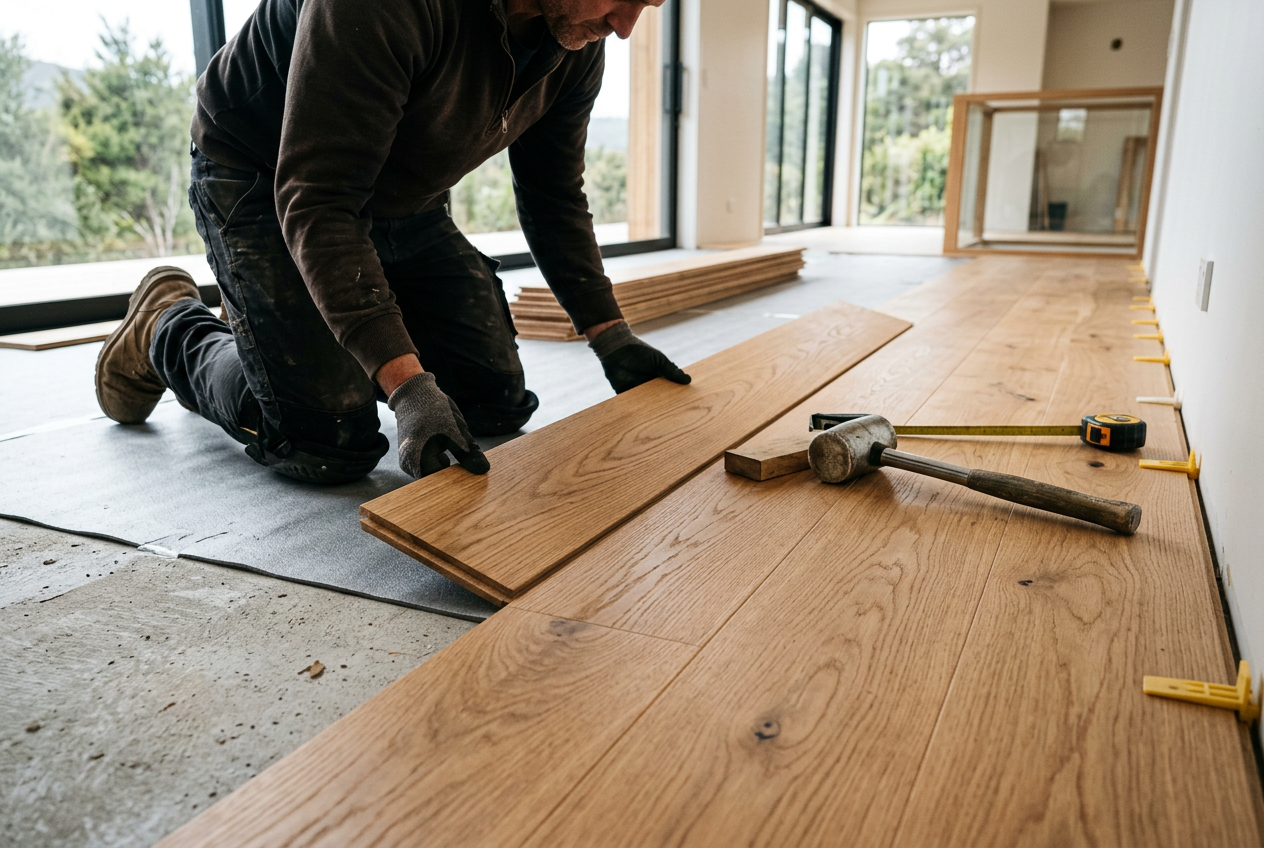
Damp concrete is one of the most common — and most overlooked — causes of flooring failure in New Zealand homes. Whether you're renovating an older slab home or finishing a new build, laying flooring directly over a moisture-laden concrete floor can lead to warped timber, mouldy carpet, bubbling vinyl, and even structural damage. The good news is that with the right preparation, you can tackle this problem safely and confidently.
Why Concrete Slabs Get Damp
Concrete is naturally porous and can hold or transmit moisture in several ways:
- Rising damp – groundwater wicking up through the slab, common in older homes without a proper sub-slab membrane
- Residual construction moisture – new slabs can take many weeks or even months to fully cure and dry out
- Condensation – temperature differences between the slab and the air above it cause moisture to form
- Leaks or drainage issues – plumbing leaks or poor site drainage can saturate a slab from below or the sides
Many New Zealand homes — particularly those built before the 1980s — were constructed without an effective damp-proof membrane (DPM) under the slab, making rising damp a real and ongoing issue.
How to Test Your Concrete for Moisture
Before you buy a single plank of flooring, always test your slab for moisture. There are a few methods:
Plastic sheet test (simple DIY method)
Tape a 600 mm × 600 mm piece of clear plastic sheeting flat to the concrete, sealing all edges with tape. Leave it for 24–48 hours. If moisture or condensation appears under the plastic, your slab has a moisture problem.
Calcium chloride test
This is a more quantitative method where a measured amount of calcium chloride is left under a sealed dome on the slab for a set period. The weight gain indicates the moisture emission rate. Flooring manufacturers often specify a maximum acceptable rate.
In-situ relative humidity (RH) probes
Considered the most reliable method by industry professionals, RH probes are inserted into drilled holes in the slab to measure moisture at depth. BRANZ research supports this approach as the most accurate indicator of slab moisture conditions.
Check your flooring manufacturer's technical data sheet — most will specify a maximum allowable moisture reading before their product can be installed.
NZ Building Code Considerations
Under the NZ Building Code, clause E3 (Internal Moisture) requires that buildings are constructed to prevent moisture from causing undue dampness or damage to building elements. If you're doing a renovation that involves flooring over a slab, you need to ensure your solution is durable and fit for purpose. For new builds, the slab and sub-slab drainage must comply with NZS 3604 and related standards.
Fixing the Problem: Moisture Mitigation Options
If your slab tests positive for moisture, don't panic — there are proven solutions:
Apply a liquid damp-proof membrane (DPM)
Epoxy or polyurethane-based DPM coatings are applied directly to the cleaned slab surface and form a moisture barrier. Products from Ardex, Mapei, and Sika are widely used by NZ flooring professionals. Always follow the manufacturer's application instructions and allow full cure time.
Install a floating subfloor system
Raised subfloor panels with a built-in moisture barrier (sometimes called a dimple mat system) create an air gap between the slab and your finished floor. This is a popular option for timber and laminate floors.
Sheet DPM
A heavy-duty polyethylene sheet (typically 0.2 mm or thicker) can be laid over the slab before installing a floating floor. Joints must be lapped and taped correctly.
| Solution | Best For | DIY Friendly? | Relative Cost |
|---|---|---|---|
| Liquid epoxy DPM | Most floor types | Moderate | Mid–high |
| Polyethylene sheet DPM | Floating floors | Yes | Low |
| Dimple mat subfloor | Timber, laminate | Yes | Mid |
| Full slab remediation | Severe rising damp | No – call a pro | High |
Choosing the Right Flooring for Damp-Prone Areas
Even after mitigation, some flooring types are better suited to concrete environments than others:
- Luxury vinyl plank (LVP) / rigid core vinyl – highly moisture-resistant, a great choice over concrete
- Polished concrete – eliminates the problem entirely by using the slab as the finished floor
- Engineered timber – more stable than solid timber, but still requires moisture levels to be within spec
- Solid hardwood – generally not recommended directly over concrete slabs with any moisture risk
- Carpet – avoid in high-moisture areas; can harbour mould and mildew
- Ceramic or porcelain tile – very moisture-resistant when properly waterproofed and grouted
When to Call a Professional
Some moisture problems go beyond a DIY fix. You should call a qualified tradesperson if:
- The slab shows signs of severe or ongoing rising damp that a surface DPM won't resolve
- There is visible mould growth on or under the slab — this may be a health hazard requiring professional remediation
- You suspect a plumbing leak beneath the slab (any plumbing work on buried pipes is restricted work under the Plumbers, Gasfitters and Drainlayers Board — it must be carried out by a licensed tradesperson)
- You're unsure about the correct product or method for your specific situation
A qualified flooring installer will have moisture meters and the experience to recommend the right solution for your home. You can find licensed local flooring professionals on tradedirectory.co.nz.
Safety Note
When applying epoxy or solvent-based DPM products, ensure the area is well ventilated and wear appropriate PPE including gloves and a respirator. Check the product's safety data sheet (SDS) before use. WorkSafe NZ provides guidance on safe use of chemical products in the home.